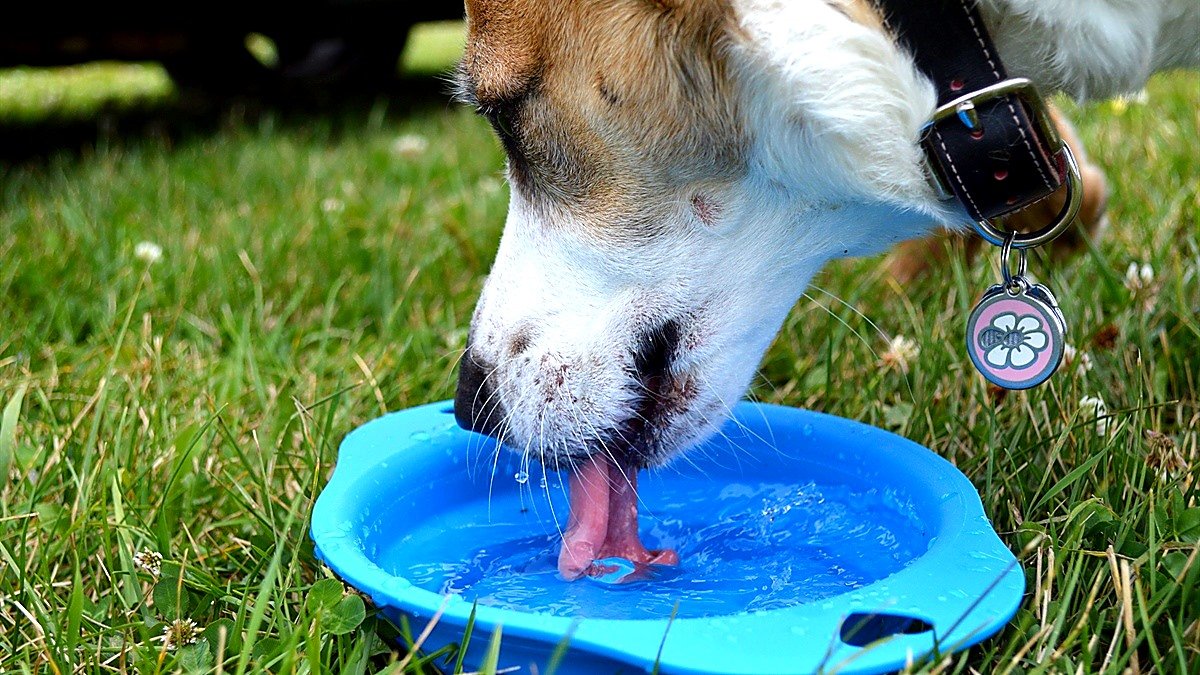
A dog drinking water at night is not unusual on its own. Dogs get thirsty after a warm evening, a salty treat, or a late game of fetch, just like people do. But if your dog has started waking you up with the sound of lapping at 2 a.m. every night, it is fair to wonder whether something has changed.
This guide explains how much water is normal for a dog, simple reasons for nighttime thirst, the medical conditions vets look for, how to measure your dog’s intake at home, and when a late-night drinking habit deserves a vet visit. If you have noticed your dog drinking water at night more often lately, start with the intake table below.
How Much Water Is Normal for a Dog?
Before deciding whether your dog drinks too much, it helps to know what “normal” looks like. According to a fact sheet from Davies Veterinary Specialists, normal water intake for dogs is about 20 to 70 ml per kilogram of body weight per day. Intake is considered clearly increased at more than 100 ml per kilogram per day.
Here is what that means for dogs of different sizes:
| Dog’s Weight | Typical Daily Range | Clearly Increased (Over) |
|---|---|---|
| 10 lb (4.5 kg) | About 90–315 ml (3–11 oz) | About 450 ml (15 oz) |
| 25 lb (11 kg) | About 220–770 ml (7–26 oz) | About 1,100 ml (37 oz) |
| 50 lb (23 kg) | About 460–1,610 ml (16–54 oz) | About 2,300 ml (78 oz) |
| 80 lb (36 kg) | About 720–2,520 ml (24–85 oz) | About 3,600 ml (122 oz) |
These figures are calculated from the per-kilogram range above and rounded. Dogs on dry food, active dogs, and dogs in hot weather drink toward the higher end.
The key point: a dog drinking water at night is less important than the total amount your dog drinks across the whole day.
Simple Reasons a Dog Drinks at Night
Most of the time, a dog drinking water at night has an everyday explanation.
Warm or Dry Room
Heating, air conditioning, and summer nights can all dry the air or warm the room. A dog sleeping near a heater or in a stuffy bedroom may wake up thirsty. A cooler room often solves a dog drinking water at night without any other change.
Late Exercise or Play
An evening walk, zoomies after dinner, or a long game of tug can leave your dog panting and needing water later. Moving playtime earlier can cut down on a dog drinking water at night. Our guide on why a dog snorts after drinking water covers what happens when thirsty dogs gulp too fast.
Salty Treats or Dry Food
Jerky, cheese, table scraps, and many chews contain salt. A salty snack before bed can make your dog thirsty a few hours later, which is one of the most common reasons behind a dog drinking water at night. Dogs that switch from wet to dry food also tend to drink more overall.
Not Drinking Enough During the Day
Dogs that nap all day while you are at work, or whose water bowl runs empty by afternoon, may catch up at night. If you see your dog drinking water at night but the daily total is normal, this timing shift is often the reason.
Habit and Routine
Some dogs simply learn that a trip to the bowl is part of settling back down after waking. If the habit started with a move, a new bed location, or a schedule change, it may be behavioral rather than medical. A dog drinking water at night out of habit usually takes only a few laps.
Water Bowl Games
A few dogs splash, paw, or play with water when they are bored or restless. Our article on why a dog paws at the water bowl looks at that behavior in more detail.
Medical Causes Vets Look For
When a dog drinking water at night is part of a bigger increase in thirst, vets call it polydipsia. It usually comes with increased urination, called polyuria. The Davies fact sheet lists several conditions that can cause it:
| Condition | Other Signs You Might Notice |
|---|---|
| Kidney disease | Weight loss, reduced appetite, vomiting, bad breath |
| Diabetes mellitus | Increased appetite, weight loss, accidents in the house |
| Adrenal problems, such as Cushing’s disease | Pot-bellied look, hair thinning, heavy panting |
| Liver disease | Poor appetite, vomiting, yellowing of the gums or eyes |
| High blood calcium | Weakness, reduced appetite |
| Kidney infection | Fever, lethargy, discomfort |
| Pyometra (uterine infection) | Unspayed female, vaginal discharge, lethargy |
| Thyroid disorders | Changes in weight, coat, or energy |
| Diabetes insipidus | Very large volumes of dilute urine |
The “other signs” column is general guidance, not a diagnosis. A dog drinking water at night might be the first thing you notice simply because the house is quiet.
Pyometra deserves special mention. If your dog is an unspayed female and suddenly drinks a lot, especially a few weeks after a heat cycle, call your vet the same day. It can become life-threatening.
Drinking at Night vs. Peeing at Night
It helps to notice whether your dog is waking up to drink, to pee, or both. A dog drinking water at night after a warm evening usually settles right back down. A dog that drinks and then needs to go outside every night may be producing more urine than normal.
Vets look at thirst and urination together, since one often drives the other. Note how many times your dog asks to go out overnight, whether there are accidents, and whether the urine looks very pale or unusually large in volume. Those details, along with your notes on a dog drinking water at night, help your vet decide which tests to run first.
Puppies and Nighttime Water
Puppies have small bladders and are still learning house training, so nighttime water is handled a little differently. Many trainers pick up the bowl about an hour or two before bedtime and offer a final potty break. A puppy drinking water at night and then having accidents is usually a training and timing issue, not a medical one.
Still, a puppy that seems excessively thirsty, has very frequent accidents, or looks unwell should see a vet, since urinary infections and other problems can happen at any age.
Senior Dogs and Nighttime Waking
Older dogs wake at night more often for many reasons, including joint pain, needing to urinate, and changes in the aging brain. Some senior dogs become restless, pace, or stare at walls or doors after dark. If that sounds familiar, our article on why a dog stares at the door at night may help.
For a senior dog drinking water at night, it is worth separating two questions: is your dog waking up more, and is your dog drinking more? Waking more may point to comfort or behavior changes. Drinking more across the whole day points toward the medical causes above.
How to Measure Your Dog’s Water Intake at Home
Measuring is the best way to judge a dog drinking water at night, and it gives your vet useful information.
- Use one bowl. Pick up extra bowls so all water comes from a single source for the test.
- Measure what you put in. Use a measuring cup and write down the amount each time you fill the bowl.
- Measure what is left. At the same time the next day, pour the leftover water into the measuring cup.
- Subtract. The difference is roughly what your dog drank, minus a little for spills and evaporation.
- Repeat for two or three days.
Compare the average to the table above. If you notice your dog drinking water at night and the daily total is regularly above the “clearly increased” level, book a vet visit and bring your notes.
Should You Take the Water Bowl Away at Night?
Taking the bowl away is a common response to a dog drinking water at night, but the right answer depends on why it is happening. Many trainers suggest picking up water an hour or two before bed for young puppies during house training. For healthy adult dogs, a small amount of water left out overnight is generally fine.
Do not limit water for a dog that is drinking noticeably more than usual until your vet has checked for a medical cause. Dogs with kidney disease or diabetes can become dehydrated quickly if water is restricted.
How to Handle a Dog Drinking Water at Night (Healthy Dogs)
If your vet has ruled out a medical problem, a few changes may help:
- Keep water available all day, and refill the bowl before you leave for work.
- Move exercise earlier in the evening so your dog has time to rehydrate before bed.
- Skip salty treats after dinner.
- Keep the bedroom cool, and move the dog bed away from heaters and vents.
- Add moisture to meals, such as a little water on dry food or some wet food, if your vet agrees.
- Keep a steady bedtime routine, including a last potty break.
When to Call Your Vet
A dog drinking water at night is worth a vet visit if your dog:
- Drinks more than the “clearly increased” level for its weight on most days
- Has started drinking much more within the last few weeks
- Is urinating more, having accidents, or asking to go out at night
- Shows weight loss, vomiting, reduced appetite, or lethargy
- Is an unspayed female drinking noticeably more
Your vet will likely start with a physical exam, blood work, and a urine test. Bringing your water measurements saves time and helps narrow down the cause.
Frequently Asked Questions
Is a dog drinking water at night normal?
An occasional drink is normal, especially after warm weather, exercise, or a salty snack. A new nightly habit combined with higher total intake is worth checking.
Why is my senior dog drinking water at night?
Older dogs may drink more because of kidney disease, diabetes, or hormone problems, or they may simply wake more often. Measure daily intake and talk to your vet.
Should I worry if my dog drinks a lot and pees a lot?
Yes, if it continues for more than a few days. Increased thirst and urination together are a classic sign that your vet should run blood and urine tests.
Can dry food make a dog drink more at night?
Yes. Dry food contains little moisture, so dogs eating kibble naturally drink more water than dogs on wet food.
This article is general information and not a substitute for veterinary advice. Never restrict water for a dog that is suddenly drinking more without talking to your vet first. If your unspayed female dog is drinking heavily and seems unwell, contact a veterinarian the same day. Last verified September 2026.
Sources
- American Kennel Club, Why Is My Dog Drinking So Much Water?: causes of excessive thirst in dogs and warning signs.
- VCA Animal Hospitals, Testing for Increased Thirst and Urination: how vets investigate increased drinking and urination.
