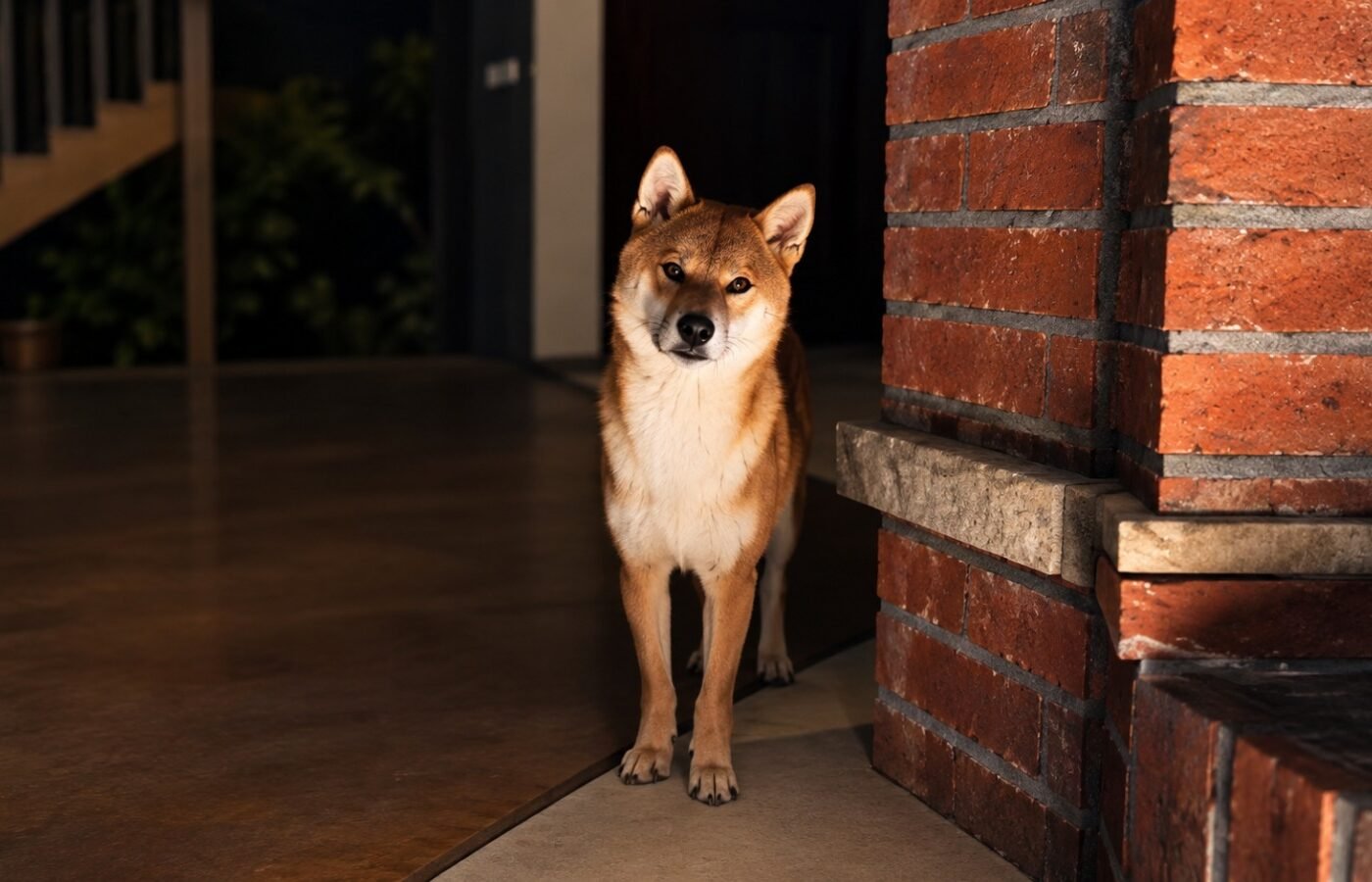
A dog stares at the door at night for one of a handful of reasons, and most of the time the explanation is boring and harmless — though not always. If you’ve caught your dog frozen in place at 2 a.m., eyes locked on the front door, you’ve probably already run through the worst-case scenarios in your head.
This guide walks through why a dog stares at the door at night when it’s normal curiosity, when it points to anxiety, and when it signals something worth mentioning to your vet — especially in senior dogs.
Quick Answer
- Most of the time, a dog stares at the door at night simply because they heard or smelled something you can’t detect
- Waiting for a family member to come home, or habit built around routine, is another common trigger
- When a dog stares at the door at night alongside pacing, whining, or panting, separation anxiety is a likely cause
- In senior dogs, a dog stares at the door at night as an early sign of canine cognitive dysfunction syndrome (CDS) more often than owners realize
- Rarely, a blank, unresponsive stare can indicate a focal seizure — worth mentioning to your vet if it recurs
The Simplest Explanation: Your Dog Heard or Smelled Something
The most common reason a dog stares at the door at night is also the least interesting one: their senses are simply better than yours. A dog’s hearing range extends to roughly 45,000 Hz compared to about 20,000 Hz for humans, and their sense of smell is estimated to be tens of thousands of times more sensitive. When a dog stares at the door at night, they may be reacting to a raccoon in the yard, a neighbor’s cat, a car door two houses down, or a scent drifting in that you’ll never notice. This kind of alert, momentary staring usually resolves on its own within a minute or two once the sound or smell passes.
Waiting, Habit, and Routine
Dogs are creatures of routine, and the door often represents something specific in their daily pattern — the spot where a family member walks in after work, the exit to the backyard for a final bathroom break, or simply the direction of a room they’re not allowed into. If someone in your household regularly comes home late, a dog stares at the door at night around that same time out of learned habit, whether or not that person is actually due back yet. This is one of the more benign reasons behind the behavior, and it typically doesn’t come with signs of distress — the dog is alert, but not panicked.
When It Signals Separation Anxiety
Not every case is this simple. When a dog stares at the door at night while also pacing, panting, whining, drooling, or refusing to settle down and sleep, separation anxiety or a broader anxiety condition is a more likely explanation. This tends to show up most in dogs who were recently adopted, recently experienced a change in household routine, or who have a history of being left alone for long stretches during the day. In these cases, a dog stares at the door at night out of hypervigilance rather than curiosity — part of their attention stays locked on the door regardless of what’s actually happening outside.
If this pattern sounds familiar, especially in an older dog whose anxiety seems to have appeared or worsened recently, our Separation Anxiety in Senior Dogs guide goes deeper into the signs and what actually helps, since anxiety in senior dogs often has different underlying causes than anxiety in younger dogs.
Senior Dogs: Could It Be Cognitive Dysfunction Syndrome?
This is the reason worth taking most seriously if your dog is a senior. Canine cognitive dysfunction syndrome (CDS) — sometimes described as dog dementia — affects roughly 28% of dogs between 11 and 12 years old, with rates climbing higher in older dogs. Veterinarians at Cornell University’s College of Veterinary Medicine describe CDS as a progressive, age-related decline in brain function similar to Alzheimer’s disease in humans, commonly remembered by the acronym DISH: Disorientation, altered Interactions with family, disrupted Sleep-wake cycles, and House-training lapses.
Nighttime restlessness is one of the most reported early signs of CDS, and a dog that stares at the door at night, paces, or seems confused about a familiar space fits squarely into that pattern. Dogs with CDS often sleep more during the day and become more active, vocal, or disoriented after dark — a shift sometimes called “sundowning,” borrowing the term used for similar patterns in human dementia. If your senior dog only recently started staring at the door at night, and it comes with any of the other DISH signs, that combination is worth describing to your veterinarian in detail rather than dismissing as your dog just getting “quirky” with age.
A Less Common but Important Possibility: Focal Seizures
According to the American Kennel Club’s veterinary guidance, dogs can experience partial or focal seizures that look nothing like the dramatic, full-body convulsions most people associate with seizures. Instead, a focal seizure can present as a dog staring fixedly at one spot — a wall, a corner, or a door — sometimes with a glassy or unresponsive expression, before returning to normal within seconds or minutes. These episodes can stem from epilepsy or other underlying causes and are often manageable with medication once diagnosed. If your dog stares at the door at night in a way that looks less like alert curiosity and more like a trance they can’t be pulled out of by their name or a treat, it’s worth documenting the date, time, and duration of each episode to share with your vet.
What to Do When Your Dog Stares at the Door at Night
- Watch how long it lasts. A dog that stares at the door at night for a few seconds to a minute and then relaxes is behaving normally. Staring that goes on for many minutes, or that happens every single night at the same time with no clear trigger, deserves closer attention.
- Check what’s actually happening outside. A motion-activated camera pointed at your yard or driveway can confirm whether wildlife, delivery patterns, or neighborhood activity are why a dog stares at the door at night in the first place.
- Look for accompanying body language. Relaxed ears and a loose body suggest curiosity when a dog stares at the door at night. A stiff body, raised hackles, tucked tail, or repetitive pacing point toward anxiety instead.
- Rule out a need to go outside. Especially in senior dogs, a dog stares at the door at night simply because they need a bathroom break more urgently than they used to.
- Keep a simple log. For older dogs or anything that seems unusual, note the date, time, and what else was happening. This kind of pattern is exactly what a veterinarian needs to tell normal behavior apart from an early medical sign.
When to Call the Vet
Most of the time, a dog stares at the door at night simply because of sharp senses at work — nothing more. Call your veterinarian if the staring is new, happens nightly without an obvious trigger, comes with disorientation or house-training accidents, or includes episodes where your dog seems unreachable for a stretch of time. Those patterns — particularly when an older dog suddenly stares at the door at night far more than before — are exactly the kind of detail that helps a vet distinguish between normal alertness, anxiety, cognitive decline, and a neurological issue like focal seizures.
Why Does a Dog Stare at the Door at Night? The Bottom Line
In the vast majority of cases, a dog stares at the door at night simply because of something heard or smelled, or a routine built around your household’s comings and goings. The exceptions worth paying attention to are anxiety-driven staring that comes with pacing or whining, and — especially in senior dogs — nighttime restlessness tied to cognitive dysfunction syndrome or, less commonly, focal seizures. Tracking when your dog stares at the door at night and what else is happening at the time is the simplest way to tell an ordinary quirk from something your vet should know about.
FAQ
Is it normal for a dog to stare at the door at night?
Yes, in most cases. Dogs have far sharper hearing and smell than humans, and a dog stares at the door at night usually just as a brief reaction to something outside.
Why does my senior dog suddenly stare at the door at night?
New or worsening nighttime staring in an older dog can be an early sign of canine cognitive dysfunction syndrome, which affects roughly 28% of dogs aged 11-12 and often includes disrupted sleep-wake cycles.
Can anxiety cause a dog to stare at the door at night?
Yes. When a dog stares at the door at night due to separation anxiety, it’s often paired with pacing, panting, whining, or difficulty settling down.
When should I worry about a dog that stares at the door at night?
If a dog stares at the door at night every single night without an obvious trigger, or the staring comes with disorientation, house-training lapses, or unresponsive “trance-like” episodes, it’s worth a veterinary visit.
Every dog is different — if nighttime staring is frequent, worsening, or paired with other behavior changes, a veterinary exam is the most reliable way to rule out a medical cause. Last verified September 2026.