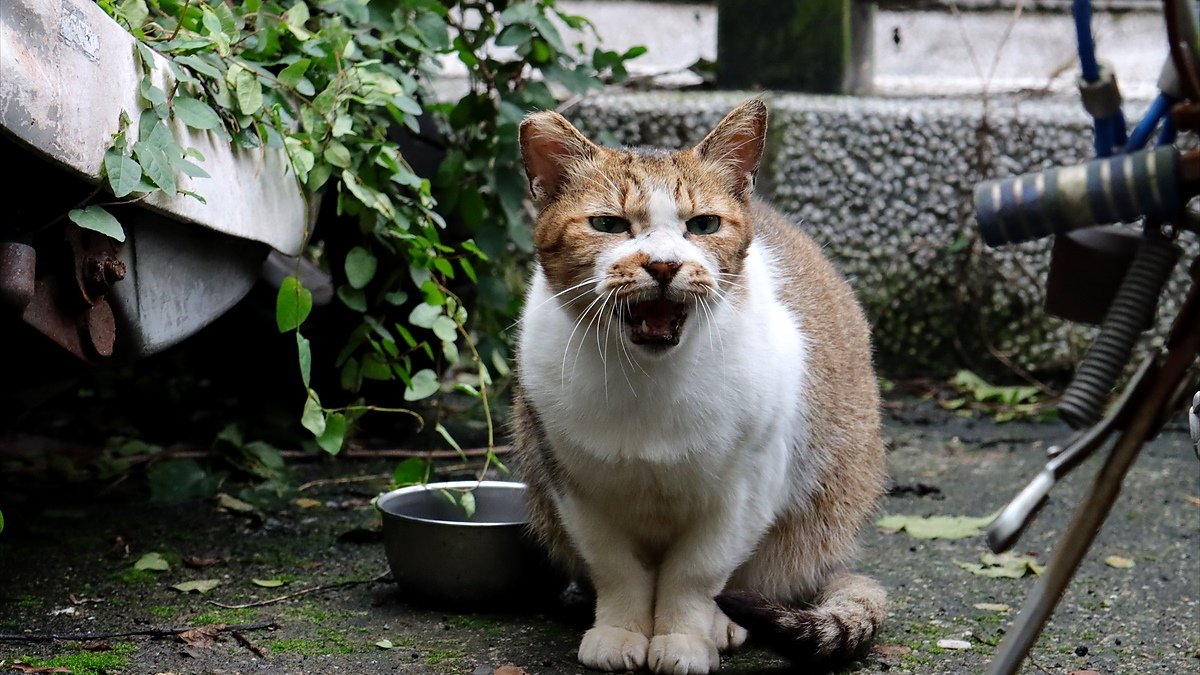
A cat meowing after eating can look like plain greed, and sometimes that is exactly what it is. But a cat that keeps calling right after a full meal can also be bored, in the habit of begging, or unwell. The trick is telling those apart, because the fixes are very different.
Quick answer: A cat meowing after eating is often hunger, a diet, a learned begging habit or boredom. It can also point to diabetes, hyperthyroidism, worms or mouth pain. The vet-reviewed pages we read say to see a vet first if the behavior is new, especially with weight loss or increased thirst, and to treat it as a behavior problem only after illness is ruled out.
Why a cat meowing after eating happens
Dr. Brad Hinsperger, a practicing veterinarian, lists medical and behavioral causes in his guide to why a cat is constantly hungry.
The Cats.com guide to cats begging for food covers many of the same causes. The table groups them.
| Possible cause | What you may notice | Source |
|---|---|---|
| Really still hungry or on a diet | Loud protests, a cat that finishes its meal and asks for more | Cats.com |
| Another pet is eating its food | Your cat is not getting its full portion | Cats.com |
| Dislikes the food | Leaves food in the bowl but begs for something else | Cats.com |
| Learned begging | Meowing has been rewarded with food or attention before | Kingsdale, Cats.com |
| Boredom | Staring at the bowl, stealing food, begging after meals | Kingsdale |
| Diabetes | Eating more but losing weight, drinking and urinating more | Kingsdale |
| Hyperthyroidism | Hungry on normal food, weight loss, faster heart rate | Kingsdale |
| Worms | Poor coat, diarrhea, vomiting, worms in the stool | Kingsdale, Cats.com |
| Mouth pain | Dribbling, pawing at the mouth, eats wet food but leaves kibble | Cats.com |
A caution: none of the pages we read is about meowing specifically after a meal. They cover begging, constant hunger and excessive meowing, so we have applied them to a cat meowing after eating.
Is a cat meowing after eating still hungry?
Sometimes, yes. Cats.com lists signs of hunger as vocalizing, following you, rubbing against your legs, batting at you and nibbling your fingers. It also says cats on a weight-loss program might still feel hungry after they have eaten their entire meal, and that you can expect loud protests when you start restricting food. If the ravenous behavior does not improve, it suggests talking to your vet about gradually switching to a less calorie-dense diet that the cat can eat more of.
WebVet, in a vet-reviewed article on why cats meow so much, adds that cats have a sharp internal clock. It says an empty bowl, a late meal or the approach of the usual feeding time sets off a vocal reminder, and lists predictable meowing around mealtimes as usually normal. For some cats, then, meowing around food is routine rather than a problem.
Other causes of a cat meowing after eating
Cats.com says a cat sharing a home with other pets may be losing its portion to them, so feed them separately to check. A cat that dislikes its food may leave it and beg for something else, and it suggests trying wet food or new flavors. Some cats are simply greedy, which carries an obesity risk, so talk to your vet if your cat is gaining weight.
Habit and boredom: when a cat meowing after eating wants attention
Dr. Hinsperger says cats learn quickly that begging gets attention and sometimes a reward. If you have given in with treats or extra food, a cat meowing after eating may have learned that being “constantly hungry” works. His advice is to avoid giving in and to give attention and interaction at times other than feeding.
Cats.com agrees: feeding a cat every time it begs rewards the begging and makes it more likely to repeat. It suggests playtime or a cuddle instead, and says some owners use an automatic feeder so the cat does not associate them with food.
Boredom is the other behavioral cause. Dr. Hinsperger notes that indoor cats without enough exercise and mental engagement may spend long periods staring at their bowl, meow excessively, steal food or beg even after meals. He suggests interactive toys, scratching posts and playtime, and says puzzle feeders make the cat work for food and provide a mental challenge. Importantly, he says to consider behavior only if a vet has ruled out medical causes.
When a cat meowing after eating is a medical sign
This is the part not to skip. Dr. Hinsperger says medical causes of excessive hunger need to be ruled out first, and he describes the most common ones he sees:
- Diabetes. The body cannot use insulin properly, so it behaves as if it is starving. He says to watch for eating more but still losing weight, plus increased thirst and urination. A vet confirms it with blood tests and a urinalysis.
- Hyperthyroidism. An overactive thyroid speeds up metabolism, so the cat is hungry despite eating its normal food or more. Other signs include weight loss, increased heart rate, vomiting, and changes in the meow or general behavior. Most affected cats are middle-aged or older, and a blood test diagnoses it.
- Internal parasites. Roundworms and tapeworms rob the cat of nutrients, so it can feel hungry on a balanced diet. He lists poor coat, diarrhea and visible worms in the stool as other signs.
- Malabsorption. Conditions such as inflammatory bowel disease stop the gut absorbing food properly, which can cause hunger and weight loss, sometimes with chronic diarrhea or vomiting.
WebVet describes the hyperthyroid picture behind a cat meowing after eating as a ravenous appetite paired with weight loss, with restlessness and loud vocalizing, often at night. It adds that the meow that worries a vet is rarely meowing alone but meowing plus a second change, such as weight loss, increased thirst, hiding or litter box changes. That pairing is the cue to book a visit.
Mouth pain in a cat meowing after eating
Not every cat that cries around food is hungry for more. Cats.com says dental disease, mouth ulcers, abscesses and tumors can make eating painful. It lists dribbling saliva, bleeding and pawing at the mouth as signs, and says cats with oral pain often eat their wet food but leave dry kibble. A cat meowing after eating may be hungry but struggling to eat.
If your cat is also leaving food, our guide to signs a senior cat is in pain lists other quiet signs to look for.
What to try for a cat meowing after eating
For a cat meowing after eating, the sources agree on an order: rule out illness first, then adjust feeding and enrichment.
- See your vet first. Dr. Hinsperger recommends a physical exam, likely bloodwork and a fecal exam for parasites.
- Keep a log. He suggests noting how much and when your cat eats and any weight loss, muscle wasting, increased thirst or increased urination, plus changes in routine.
- Measure meals. He recommends feeding the right amount for age, size and activity, using measuring cups, and offering small meals through the day instead of one or two large ones. He says most cats will not regulate their food intake, so food should not be left out all day.
- Do not reward begging. Both Dr. Hinsperger and Cats.com say giving in reinforces it.
- Add enrichment. Interactive toys, puzzle feeders, climbing space, daily play, and moving the feeding spot are on his list.
For the urinary side of vocal changes, see our guide to why a cat meows after peeing.
When a cat meowing after eating needs the vet
Call your vet if the meowing is new or getting worse, or comes with weight loss, increased thirst or urination, hiding, a change in appetite, vomiting or litter box changes. WebVet lists those as reasons to call, and says straining in the litter box with little or no urine is an emergency in any cat. Cats.com says not to ignore begging until you know there is no underlying health issue.
Age matters for a cat meowing after eating. WebVet says a senior cat, roughly ten years and older, who suddenly meows more should be treated as a medical question first.
Related reading: cat sneezes after eating
How we checked this
We opened three pages in full: the Kingsdale Animal Hospital article (updated February 2026), the Cats.com begging guide and the WebVet article on why cats meow so much, all linked above. Catster, Rover, Kinship and PetMD blocked or redirected our access, so none was used.
Kingsdale is a clinic blog by one veterinarian, Cats.com is a general cat site, and WebVet carries affiliate links. None addresses meowing right after a meal directly. We did not test anything ourselves. This is general information, not a diagnosis.
FAQs
Why is my cat meowing after eating?
The sources list still being hungry, a diet, a stolen portion, disliking the food, a begging habit, boredom, mouth pain and medical conditions such as diabetes and hyperthyroidism.
Is a cat meowing after eating normal?
It can be. WebVet says predictable meowing around mealtimes is usually normal. A new or increasing change for your cat is what deserves attention.
Can a cat meowing after eating be a sign of diabetes?
Dr. Hinsperger says diabetes can drive hunger, and to watch for eating more yet losing weight, with more thirst and urination. Only a vet can confirm it.
Can hyperthyroidism cause a cat meowing after eating?
Yes. Dr. Hinsperger says an overactive thyroid can leave a cat hungry despite eating its usual food, and may change the meow. WebVet notes loud vocalizing at night.
Should I feed my cat more when it is meowing after eating?
Not automatically. Dr. Hinsperger says to measure food and avoid giving in to begging. If your cat is on a diet, Cats.com suggests asking your vet about a less calorie-dense food it can eat more of.
Could worms explain a cat meowing after eating?
They can. Dr. Hinsperger says parasites can leave a cat hungry on a balanced diet, and a vet can check with a fecal exam.
Can mouth pain make a cat meow after eating?
Cats.com says dental disease and other mouth problems can make eating painful, with dribbling, pawing at the mouth, or eating wet food but leaving kibble.
How do I stop my cat meowing after eating?
Rule out illness first, then follow the sources: measured meals, no rewards for begging, and more play and puzzle feeders.
When is a cat meowing after eating an emergency?
WebVet says straining in the litter box with little or no urine is an emergency in any cat.
This article is general information, not veterinary advice or a diagnosis; your vet can check your cat’s weight, bloodwork and mouth. Last verified October 2026.
Sources
- Cornell Feline Health Center, Hyperthyroidism in Cats: signs of hyperthyroidism, including increased appetite.
