Cats are notoriously good at hiding pain, which means the signs a senior cat is in pain are almost never as obvious as crying out or limping dramatically. Most of the time, pain in an older cat shows up as small behavioral shifts — a habit that quietly stops, a spot they no longer jump to, a texture of fur that starts looking a little rougher than it used to.
This guide covers the real, research-backed signs a senior cat is in pain, why cats mask discomfort so effectively, and how a validated veterinary tool can help you read your cat’s face for pain cues most owners miss entirely.
Quick Answer
- Signs a senior cat is in pain are usually behavioral rather than vocal — cats rarely cry out even with significant chronic pain
- Reduced grooming, hesitation to jump, and litter box avoidance are three of the most reliable indicators
- Radiographic studies show up to 90% of cats over age 12 have some degree of degenerative joint disease, one of the most common causes behind signs a senior cat is in pain
- The validated Feline Grimace Scale can help identify facial signs a senior cat is in pain that most owners overlook
- Because cats hide pain so effectively, any noticeable behavior change in a senior cat deserves a veterinary visit rather than a wait-and-see approach
Why Cats Hide Pain So Well
In the wild, showing visible weakness or pain makes an animal a target for predators, and this instinct hasn’t disappeared just because a cat lives on a couch. Signs a senior cat is in pain are subtle specifically because cats have evolved to mask discomfort rather than announce it, which is very different from dogs, who tend to vocalize or visibly favor an injured limb more readily. This masking instinct means that by the time obvious symptoms appear, a cat may have been dealing with chronic discomfort for months already — which is exactly why learning the subtler signs a senior cat is in pain matters so much for early intervention.
Reduced or Changed Grooming
Among the clearest signs a senior cat is in pain is a change in self-grooming, since a cat with arthritis or joint pain often can’t comfortably twist and reach certain areas anymore — particularly the lower back and rump. This can show up as an unkempt, matted, or greasy-looking coat in spots the cat used to keep immaculate, or as a cat that suddenly overgrooms one specific area obsessively, sometimes to the point of hair loss, in response to localized pain.
Interestingly, unlike the signs a senior cat is in pain covered here, the opposite pattern — a cat that starts grooming or licking you more than usual — is generally unrelated to pain and is its own distinct behavior worth understanding on its own terms. Our Cat Licks My Shoulder guide covers that affectionate, bonding-driven version of licking, which is a helpful contrast: healthy affectionate grooming behavior looks and feels very different from the withdrawal and self-neglect that often signals pain.
Hesitation to Jump or Climb
Among the most consistently reported signs a senior cat is in pain — and one of the easiest to spot early — is a sudden reluctance to jump onto furniture, windowsills, or counters your cat used to access easily. This isn’t laziness — arthritis pain makes the impact of landing genuinely uncomfortable, so a cat may start taking a longer route, using intermediate steps, or simply giving up on a favorite high perch altogether. Given how common this particular sign is, radiographic studies confirming these joint-related signs a senior cat is in pain have found evidence of degenerative joint disease in up to 90% of cats over 12 years old, making joint pain one of the single most likely explanations behind reduced jumping in any senior cat.
Litter Box Changes
Pain — especially arthritis in the hips, knees, or spine — can make the physical act of climbing into a litter box or holding a squatting position genuinely painful. Litter-box-related signs a senior cat is in pain here include hesitating at the box entrance, urinating or defecating just outside it rather than inside, or appearing uncomfortable and quick to leave mid-use. Because a low-sided litter box is much easier for an arthritic cat to enter and exit, a simple box swap is sometimes enough to resolve what looks like a behavioral or house-training problem but is actually a pain-driven mobility issue.
Behavioral Withdrawal and Touch Sensitivity
Among the more direct signs a senior cat is in pain: suddenly avoiding being picked up, flinching or growling when touched in a specific spot, or withdrawing to hide more than usual. This is especially telling when it represents a real change from your cat’s normal personality — a previously affectionate cat that starts avoiding contact, or a social cat that starts spending most of the day hidden away, is communicating something even without a single vocalization.
Reading Your Cat’s Face: The Feline Grimace Scale
| Facial Feature | What Changes With Pain |
|---|---|
| Ear position | Ears rotate outward/flattened rather than upright |
| Orbital tightening | Eyes appear squinted or partially closed |
| Muzzle tension | Muzzle appears tense, rounded, or “pinched” |
| Whisker position | Whiskers pull forward and away from the face |
| Head position | Head drops below the shoulder line |
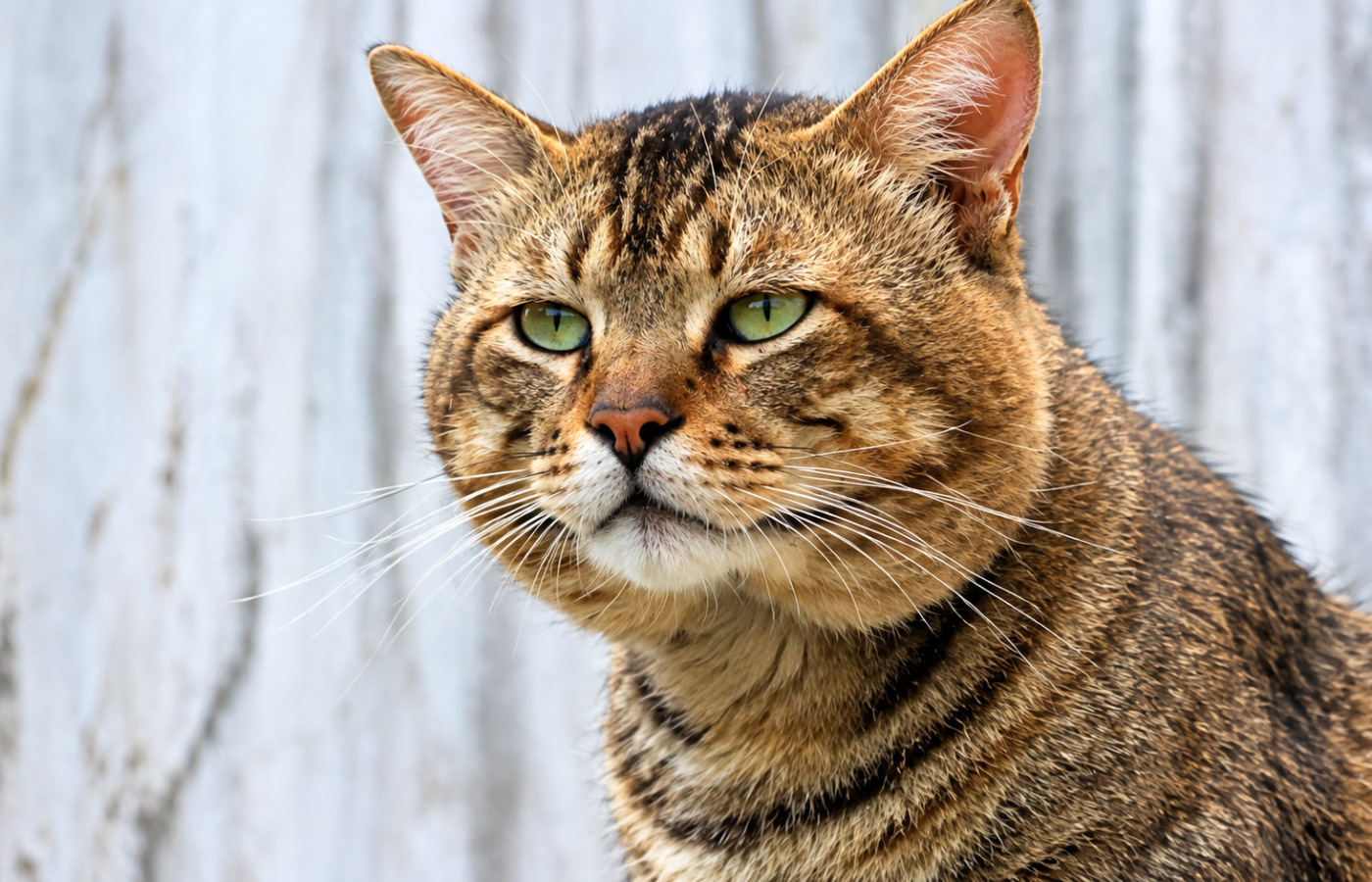
Veterinary researchers have developed and validated the Feline Grimace Scale specifically to catch facial signs a senior cat is in pain — a scoring tool based on five specific facial features that reliably shift when a cat is in pain. Each feature is scored, and a total score above a validated threshold indicates the cat likely needs pain intervention. This tool was developed specifically because cats’ facial expressions carry more reliable pain information than most owners realize — learning to recognize even a couple of these features gives you a genuinely science-backed way to check for pain, not just a guess.
Appetite and Weight Changes
Chronic pain, especially dental pain, can show up as one of the less obvious signs a senior cat is in pain: a shift in how a cat eats rather than whether it eats at all. A cat with sore teeth or jaw discomfort might start avoiding dry kibble in favor of wet food, drop food while chewing, chew only on one side of its mouth, or take noticeably longer to finish a meal it used to eat quickly. Weight loss despite normal or increased appetite can also point toward a painful condition working against the body’s ability to maintain muscle mass, which is why unexplained weight changes in a senior cat are always worth mentioning at a vet visit alongside any of the other signs a senior cat is in pain discussed here. Recognizing these eating-related signs a senior cat is in pain early can prevent significant weight loss before it becomes a separate health problem of its own.
Changes in Sleep and Activity Patterns
A senior cat sleeping more is often written off as simply normal aging, but a genuine shift in sleep quality and posture is one of the quieter signs a senior cat is in pain, and one owners most often miss entirely. Cats in pain often choose to rest in unusual positions — avoiding curling up tightly, sleeping in a hunched posture, or picking spots that require no jumping or climbing to reach. A previously active cat that becomes noticeably more sedentary, stops engaging with toys, or seems restless and unable to settle comfortably at night may be dealing with discomfort that disrupts normal rest rather than simple age-related slowing down.
Signs a Senior Cat Is in Pain: What Sudden Changes Mean
Any of the individual signs a senior cat is in pain matter more when they represent a genuine change from your cat’s baseline personality and habits rather than a lifelong quirk. A cat that has always been a bit standoffish isn’t necessarily in pain; a cat that used to greet you at the door every day and suddenly stops is showing a real behavioral shift worth investigating. Keeping a rough mental (or written) baseline of your senior cat’s normal habits — favorite jumping spots, grooming routine, litter box behavior, general sociability — makes it much easier to notice when something genuinely changes.
When to See the Vet
Given how effectively cats mask pain, the safest approach with any senior cat showing behavioral changes is to schedule a veterinary visit rather than waiting to see if things improve on their own. Veterinary guidelines generally recommend senior cats (roughly age 8 and older) see a vet twice yearly rather than annually, specifically because conditions like arthritis, dental disease, and hyperthyroidism are common in this age group and progress gradually enough that a once-a-year check can miss meaningful changes. Mentioning specific observed changes — which spots your cat stopped grooming, when the litter box hesitation started, which areas seem sensitive to touch — gives your vet much more to work with than a general “she seems different lately.”
Signs a Senior Cat Is in Pain: The Bottom Line
Because cats are built to hide weakness, the real signs a senior cat is in pain are almost always behavioral and gradual rather than dramatic — reduced grooming, hesitation to jump, litter box avoidance, and withdrawal from touch or interaction. With degenerative joint disease affecting the large majority of cats over 12, and validated tools like the Feline Grimace Scale confirming that facial expressions carry real pain information, there’s no need to guess. Any noticeable change from your senior cat’s normal baseline is worth a veterinary visit rather than an assumption that it’s “just old age.”
FAQ
Do senior cats cry out when they’re in pain?
Rarely. The real signs a senior cat is in pain are far more likely to be subtle behavioral changes — reduced grooming, hesitation to jump, litter box avoidance — than direct vocalization.
How common is arthritis in senior cats?
Very common, and one of the most frequent causes behind signs a senior cat is in pain. Radiographic studies have found evidence of degenerative joint disease in up to 90% of cats over age 12.
What is the Feline Grimace Scale?
A validated veterinary tool that scores five facial features — ear position, eye squinting, muzzle tension, whisker position, and head position — to assess pain in cats.
How often should senior cats see a vet?
Roughly twice a year for cats age 8 and older, since conditions common in senior cats often progress gradually between checkups — frequent enough to catch new signs a senior cat is in pain before they become severe.
Behavioral changes in a senior cat, however subtle, are worth a veterinary evaluation rather than an assumption of normal aging. Last verified September 2026.