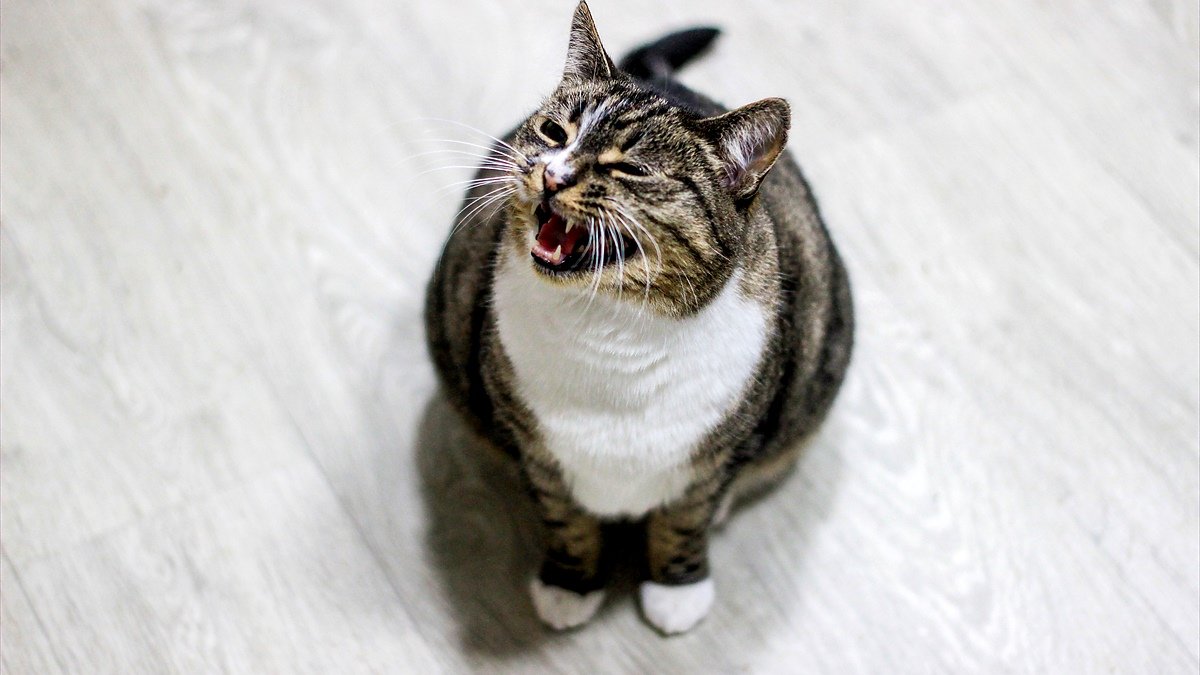
If your cat meows after peeing, the first question is not “why” but “since when.” If your cat meows after peeing and always has, it is usually just a personality quirk, while a cat that suddenly starts crying out when it urinates may be in pain. This guide separates a harmless cat meows after peeing habit from a painful one, explains the urinary problems behind new meowing, lists the signs that make it an emergency, and covers what veterinary sources say owners can do at home. Every claim below comes from two pages we read in full, a veterinary school article and a cat-health guide.
Quick answer: If your cat meows after peeing and has always done so, with no other signs, it is most likely a quirk. If a cat meows after peeing as a new behavior, it could signal a medical problem. A cat that cries out and strains in the litter box without passing urine needs a veterinarian straight away.
When your cat meows after peeing and it is just a quirk
Cats.com puts it plainly: if your cat meows after peeing and always has, with no other signs, it is most likely not something of concern and may just be a habit. The article admits there is no firm scientific evidence for why cats do it, and offers two theories.
The first is vulnerability. Cats must stay still while toileting, which in the wild would leave them open to attack, so a cat might call out to ask for your protection. The second is simpler: the cat may simply be announcing that it is about to go, a heads-up so you know to clean up quickly.
So if your cat meows after peeing in the same tone it has used for years, it is probably just talking. The change is what matters, and when your cat meows after peeing for the first time, take a closer look.
When your cat meows after peeing and may be in pain
Cats.com’s key takeaway is that if a cat meows after peeing or in the box as a new behavior, it could signal a medical problem. Texas A&M’s veterinary school, in a Pet Talk article, explains why. Urinary behavior is something owners should watch closely, because it can reveal feline lower urinary tract disease, or FLUTD.
FLUTD is an umbrella term for disorders affecting the bladder and urethra. Texas A&M says it includes urinary tract infections, bladder stones and feline interstitial cystitis (FIC), which causes signs of bladder inflammation without a bladder infection. According to Texas A&M, cats with FLUTD show signs of lower urinary tract inflammation, including:
- Straining to urinate
- Vocalizing when urinating
- Urinating small amounts frequently
- Passing blood in the urine
- Urinating outside of the litter box
Cats.com adds excessive grooming of the genital area to its list of FLUTD signs. If your cat meows after peeing and also shows any of these, treat the meowing as a symptom, not a habit.
The emergency: when a blocked cat meows after peeing
The most serious cause comes with a clear warning from both sources. Texas A&M explains that some cats with FIC or bladder stones become “blocked,” meaning the urethra is obstructed and the cat cannot urinate. Cats with urethral obstruction often vocalize and strain to urinate without passing urine. Texas A&M says this is more common in male cats than female cats, and that urethral obstruction is a medical emergency because it can lead to life-threatening complications.
Cats.com agrees: if a cat meows after peeing, or tries to, and strains without passing any urine, contact your veterinarian straight away. It explains that male cats are mainly affected because their urethras are long and narrow compared with those of female cats.
This is the line that matters most whenever a cat meows after peeing, or tries to pee. Crying plus straining plus no urine is not something to wait out overnight.
Possible causes
| Possible cause | What it involves | Source |
|---|---|---|
| Habit or quirk | Long-standing meowing with no other signs | Cats.com |
| FIC (feline idiopathic cystitis) | Bladder inflammation without infection; stress is a big factor | Texas A&M, Cats.com |
| Urinary tract infection | Bacteria traveling up the urethra; more common in older cats | Cats.com |
| Bladder stones | Minerals irritate the bladder lining | Cats.com |
| Urinary obstruction | Straining and crying with no urine; an emergency | Texas A&M, Cats.com |
| Constipation | Straining to poop, small hard dry stools, tense belly | Cats.com |
FIC and stress
Cats.com calls feline idiopathic cystitis the most common cause of FLUTD, so it matters here. It is most often seen in cats between 2 and 7 years of age. “Idiopathic” means the cause is unknown, but stress is a big factor. The other contributing factors it lists are living with other cats, being overweight, eating only dry food, and having no access to the outdoors.
Both sources give some reassurance about an FIC flare. Texas A&M says that for cats with FIC who are not blocked, clinical signs often resolve after three to seven days. Cats.com says some episodes clear on their own after three to five days without any treatment. Texas A&M adds that pain medication is often needed because the condition can be painful, and that many over-the-counter pain medications are not safe for cats, so they should be prescribed by a veterinarian. Do not give your cat human painkillers.
UTIs, stones and constipation
Many owners assume that when a cat meows after peeing it has a urinary tract infection, but Cats.com says UTIs are not commonly seen in cats compared with dogs. They are caused by bacteria traveling up the urethra, and there is usually an underlying condition, such as chronic kidney disease, hyperthyroidism or diabetes, that makes infection more likely. UTIs are treated with antibiotics, usually for five to seven days, ideally chosen with urine culture and sensitivity testing.
Bladder stones form when minerals and other substances build up in the urine and irritate the bladder lining. Treatment may involve a prescription diet to dissolve stones, bladder flushing or surgical removal, depending on the type.
Do not rule out the other end, either. Sometimes the real discomfort is from defecating. Cats.com lists constipation signs such as straining to poo, small, hard, dry stools and a tense, uncomfortable belly. It says to contact your veterinarian if you suspect constipation.
What to tell your vet when a cat meows after peeing
When your cat meows after peeing, a few specific details help the visit. Note when the meowing started and whether it is new. Watch whether your cat strains, passes only small amounts, passes blood, or urinates outside the litter box, since those are the signs Texas A&M lists.
For older cats, our guide to the signs a senior cat is in pain lists other changes to watch for.
What may help at home
Both sources focus on reducing stress and increasing water intake for cats prone to FIC. For FIC-prone cats, Texas A&M recommends:
- Multiple, regularly cleaned litter boxes, preferably one more than the number of cats
- Encouraging water consumption with multiple water sources, including a fountain
- Canned food, which increases water intake
- Reducing stressors such as guests, boarding and other pets
Cats.com echoes the same advice and adds keeping litter boxes away from food and water bowls, providing safe high-up hiding places, using pheromone therapy such as plug-ins and sprays, and giving daily interaction with toys and scratching posts. For a stress-related flare, it suggests gradually increasing wet food for dry-only cats and, for cats already fed a mix, feeding only wet food while the episode clears up.
These changes support a vet’s plan; they do not replace a visit for a new, painful-sounding cat. Our review of Dr. Elsey’s cat litter covers one litter option.
Related reading: vacation cat care tips
How we checked this
We read Texas A&M’s Pet Talk article on feline lower urinary tract disease and the Cats.com guide “Why Do Cats Meow Before They Use the Litter Box?” in full, and every medical claim above comes from one of them. Neither page is about meowing specifically after urinating, so we describe both as covering meowing in the litter box in general. We did not test anything ourselves, and this is general information, not a diagnosis.
FAQs
Is it normal if a cat meows after peeing?
If your cat has always done it and shows no other signs, Cats.com says it is most likely a quirk. If the behavior is new, it could signal a medical problem.
What if my cat meows after peeing all of a sudden?
A new cat meows after peeing pattern can be a sign of pain from FLUTD, a urinary tract infection, bladder stones, or constipation. A veterinarian can tell them apart.
When is a cat meowing in the litter box an emergency?
If the cat is vocalizing and straining without passing any urine, contact a veterinarian straight away. Texas A&M calls urethral obstruction a medical emergency.
Are male cats at higher risk of a blockage?
Yes. Texas A&M says obstruction is more common in male cats, and Cats.com explains that their urethras are long and narrow.
Is stress why a cat meows after peeing?
Stress is a big factor in feline idiopathic cystitis, the most common cause of FLUTD, according to Cats.com.
How long does an FIC flare last?
Texas A&M says signs often resolve after three to seven days in cats that are not blocked, and Cats.com says some episodes clear in three to five days. Pain medication from a vet is often needed.
Can I give my cat human pain medication?
No. Texas A&M says many over-the-counter pain medications are not safe for cats, so pain relief should be prescribed by a veterinarian.
Should I watch while my cat meows after peeing?
Cats.com says cats prefer privacy and staring may put them off, so check the box afterward instead.
We built this from a Texas A&M veterinary school article and a Cats.com health guide rather than any testing of our own, and neither page covers every cause, so a cat that cries out, strains, or passes blood needs a veterinarian, not a home remedy. Last verified October 2026.
Sources
- Cornell Feline Health Center, Feline Lower Urinary Tract Disease: signs of urinary problems in cats and when to see a vet.
