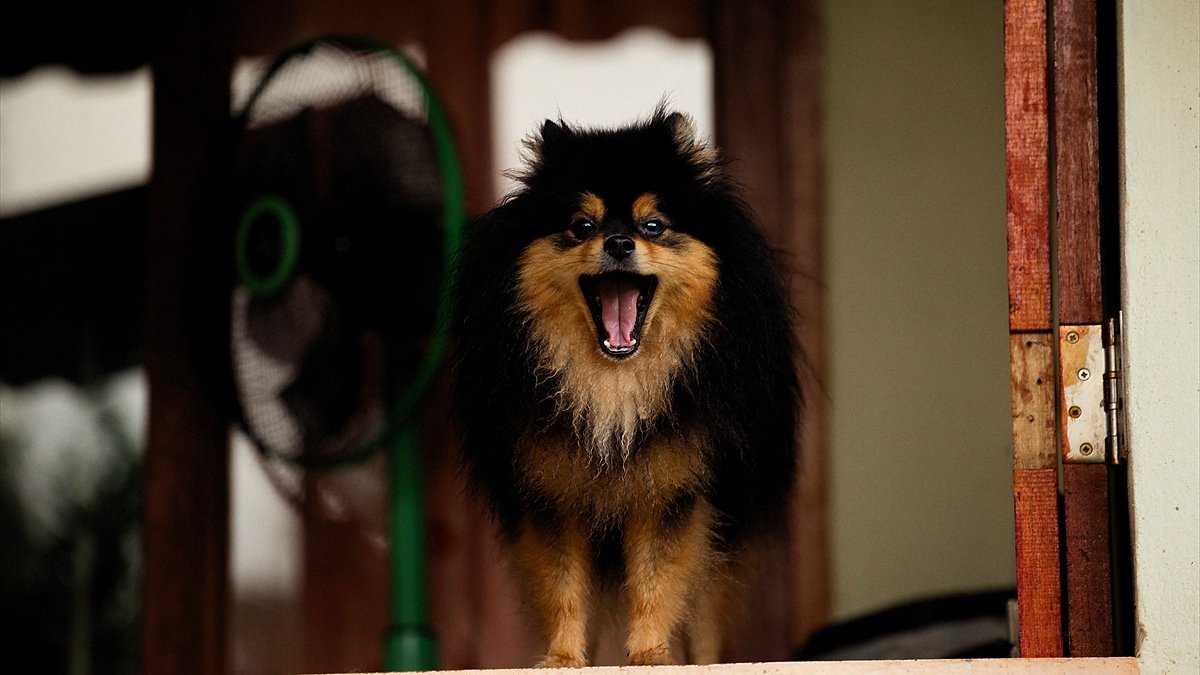
If your dog barks at visitors, you are not alone, and it does not automatically mean your dog is aggressive or badly trained. Footsteps, a doorbell and voices at the door all happen at once, and plenty of dogs react to that burst of activity. The useful question is not “how do I make it stop” but “why does my dog bark at visitors,” because the answer changes what you should do. This guide covers the common reasons a dog barks at visitors, how to read your dog’s body language, a step-by-step plan, and the signs that mean you should call a vet or a trainer.
Quick answer: A dog barks at visitors because of excitement, alerting, worry or a wish for attention. Teach your dog to go to a bed or mat when the doorbell rings, reward calm behavior, and do not punish the barking. If the barking changes suddenly, comes with fear, or is hard to manage, speak to your vet.
Why a dog barks at visitors
The PDSA, a UK veterinary charity, answers this in a vet nurse Q&A. A dog barks at visitors for many reasons: it may feel excited, be alerting you to something it noticed, be communicating with other dogs, feel frustrated, or want attention. Context matters, so watching what is happening around your dog, and its body language, helps you understand why.
PDSA describes the scene at the door: footsteps outside, the doorbell and voices can all trigger a reaction. For some dogs, barking is simply a way of letting you know someone is there. Others are excited to greet visitors, or unsure about unfamiliar people entering their space. That is why a dog barks at visitors even when it is friendly.
Common reasons a dog barks at visitors
| Reason | What it can look like | Source |
|---|---|---|
| Excitement | Barking with a wagging tail at a familiar visitor | PDSA |
| Alerting | Barking to say someone is there | PDSA |
| Worry or fear | Pacing, whining, trembling, hiding, trouble settling | PDSA |
| Wanting attention | Barking so the guest will pet and treat the dog | The Vet Desk |
| Lack of training or socialization | Scared, overexcited or unsure around new people | The Vet Desk |
| Learned habit | Barking at the postal worker, who then walks away | PDSA |
Is protection why a dog barks at visitors?
Not necessarily, says PDSA’s vet nurse. Some dogs may bark to protect, but many bark because something unexpected happens, and she advises looking at overall body language rather than assuming a dog is guarding the house. The Vet Desk, a vet-reviewed pet site, does list protection as one reason a dog barks at visitors and says it is typically the case for small dogs, which are more likely to feel threatened when someone new enters their territory. Our guide on leash reactivity in small dogs covers how small dogs react to the unfamiliar.
Why a dog barks at visitors but not at others
PDSA says some dogs react more strongly to people they see often, such as postal workers or delivery drivers, while others bark more at unfamiliar visitors. There is a twist: if your dog barks when the post arrives and the person then walks away, your dog may think the barking made them leave, even though the delivery would end anyway. PDSA says this can unintentionally reinforce the behavior, and it is one reason a dog barks at visitors at the door but not inside.
Body language when a dog barks at visitors
PDSA gives two examples: a dog that barks and wags its tail at a familiar visitor is showing excitement, while a tense dog that paces or cannot settle may feel anxious. The Quick & Dirty Tips article on barking at guests adds a checklist for when the visitor is inside. Is your dog loose and comfortable or tense? Does it approach with squinty eyes, a softly open mouth and easy wags, or pace at a distance, or lie down facing the guest head-on and vigilant?
PDSA lists signs your dog may feel anxious: excessive barking, pacing or restlessness, whining, hiding away, trembling, and finding it difficult to settle after visitors leave. If a dog barks at visitors and shows these signs regularly, PDSA says it is worth speaking to your vet.
The mat-training plan for when a dog barks at visitors
PDSA’s vet nurse says one of the best things you can do is teach a dog that barks at visitors what to do instead of rushing the door. Train your dog to go to a designated bed or mat whenever it hears the doorbell or a knock, which gives it a clear job. Her steps for a dog that barks at visitors:
- Choose a bed, mat or safe place away from the front door.
- Keep high-value treats nearby.
- Practice with the doorbell when no visitors are expected.
- Reward calm behavior.
- Gradually build up to real-life situations.
- Be patient and consistent.
With regular practice, PDSA says many dogs learn that someone arriving means going to their safe place or earning a reward. If your dog needs a broader foundation in cues like sit and down, our dog obedience training guide covers the basics.
Other methods when a dog barks at visitors
- Meet the visitor outside. Quick & Dirty Tips describes a tactic for when a dog barks at visitors out of unease: meet the visitor outside, take a short walk, then let the visitor go in first and settle for a couple of minutes before your dog enters. It notes that many dogs feel more threatened when a visitor enters their space than when they enter and find the visitor already there.
- Ask guests to ignore a shy dog. The same article says anxious dogs usually get more anxious when guests try to engage them, so the guest should ignore the dog, avoid looming over it, and not grab or follow it if it retreats.
- Set a dog that barks at visitors up for success. The Vet Desk suggests enough food and exercise, keeping the dog away from the door during visits, inviting guests one at a time and briefly at first, and briefing guests on what to do.
- Teach a “quiet” cue. The Vet Desk describes a friend knocking, rewarding your dog with a treat and praise once it stops barking, repeating in short sessions several times a day, and slowly adding harder situations such as deliveries.
- Ignore the sound. Diggs, a dog-crate brand, suggests ignoring both the barking and the knock, then rewarding a settled dog with a high-value treat.
Should I scold a dog that barks at visitors?
No, says PDSA’s vet nurse. Punishing a dog that barks at visitors can often make things worse, because shouting may add to the noise when your dog is already excited or anxious. She recommends rewarding the calm behaviors you want. The Vet Desk agrees that punishing a dog for training mistakes will make it more afraid of visitors and of you.
Crates, other rooms and “jobs”
If your dog stays tense, the Quick & Dirty Tips author argues that a crate in another room can be kinder than leaving it on guard in the living room. Her reasoning is that a dog with a stuffed chew toy practices lying down absorbed in the chew, and it will still be aware of the visitor. Both Quick & Dirty Tips and Diggs describe the crate as a refuge, so the idea assumes your dog already sees it as a positive place.
When a dog barks at visitors and it is more than a greeting
Normal barking is different from barking that suggests aggression. Quick & Dirty Tips says that if your dog never quite relaxes while someone visits, if barks are mixed with growls, if it advances and retreats, or if it ever snaps, nips or bites, you should get competent professional help.
PDSA gives three reasons to speak to your vet: the barking has changed suddenly, your dog shows fear or anxiety, or the behavior is hard to manage. A vet can rule out underlying health concerns and discuss whether more behavioral support may help.
Related reading: why your dog stares at the door at night
How we checked this
We read four pages in full: the PDSA vet nurse Q&A on barking at the door, The Vet Desk’s guide to barking at visitors (reviewed by a veterinarian, updated October 2025), the Quick & Dirty Tips article on barking at guests, and the Diggs guide to barking at visitors. We did not test any method ourselves, and Diggs sells crates, which we flag above. The Tempe Pet Hospital post that inspired this topic is titled “how to introduce your pet to strangers,” and we adapted the idea to why a dog barks at visitors. This is general information, not training or veterinary advice for your own dog.
FAQs
Is it normal if a dog barks at visitors?
Yes. PDSA says barking when people come to the house is normal for many dogs, whether friends visit, deliveries arrive or post drops through the letterbox.
Does protection explain why a dog barks at visitors?
Not necessarily. PDSA says many dogs bark because something unexpected happens, and advises reading overall body language rather than assuming guarding.
How do I stop a dog that barks at visitors when the doorbell rings?
PDSA recommends a bed or mat routine: choose a spot away from the door, keep treats nearby, practice with the doorbell when no one is coming, and reward calm behavior.
Should I punish a dog that barks at visitors?
No. PDSA says punishment can make things worse, and The Vet Desk says it can make your dog more afraid of visitors and of you.
Does a dog that barks at visitors have to be aggressive?
No. Quick & Dirty Tips says growling mixed with barking, advancing and retreating, snapping, nipping or biting is the sign to get professional help.
What if a dog barks at visitors out of fear?
Look for pacing, whining, trembling or hiding. PDSA says to speak to your vet if your dog regularly becomes distressed when people come to the house.
Does meeting guests outside help a dog that barks at visitors?
Quick & Dirty Tips describes it as a tactic for many uneasy dogs: meet the visitor outside, walk together, then let the visitor go in first and settle.
When should I call a vet if a dog barks at visitors?
PDSA lists three reasons: the barking has changed suddenly, your dog shows fear or anxiety, or the behavior is hard to manage.
We built this from four published pages rather than any testing of our own, and the Diggs page comes from a crate seller, so treat it as one view among several; if your dog growls, snaps or lunges at guests, a vet or qualified trainer should see it in person. Last verified October 2026.
Sources
- American Kennel Club, Expert Tips to Help Curb Excessive Dog Barking: why dogs bark and training tips for barking at visitors.
