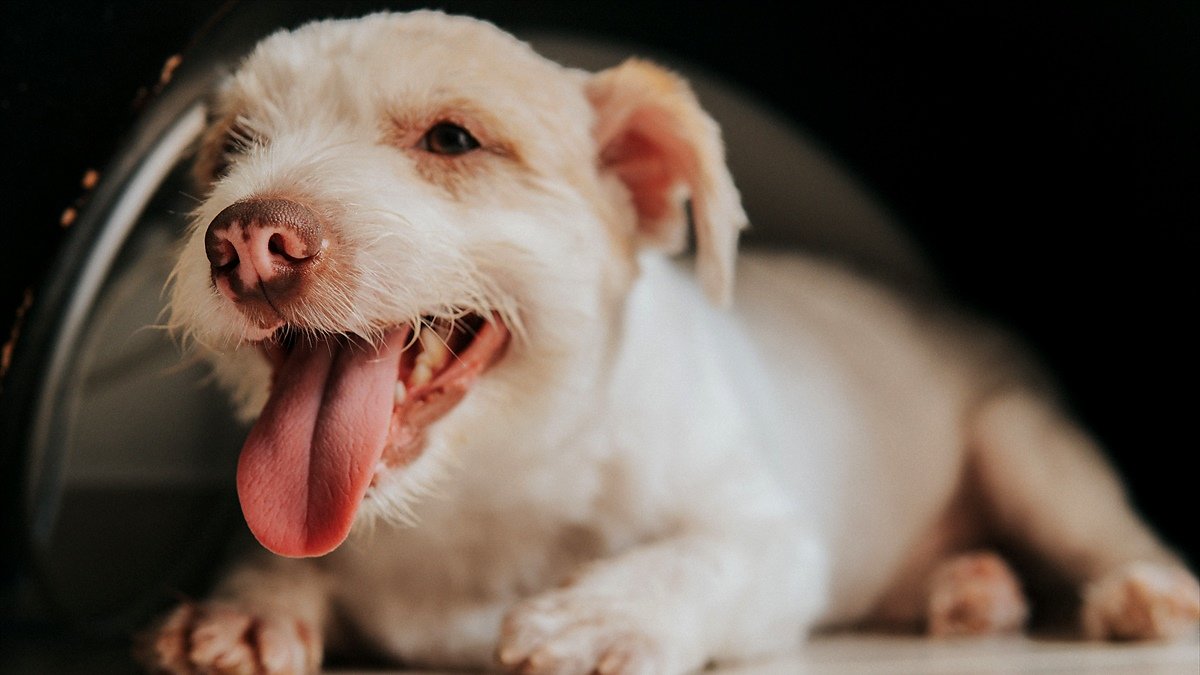
Finding a dog panting at night in a cool, quiet house is unsettling, because there is no walk, no sun and no game to explain it. Sometimes it is simple warmth, and other times the panting is the one visible sign of pain, anxiety or a medical problem that is easier to spot when the house goes still. This guide explains how normal panting works, the most common reasons for a dog panting at night, the numbers a veterinarian looks at, and the signs that mean you should call a vet right away.
Quick answer: Brief panting from warmth or restlessness is usually fine, but a dog panting at night with no obvious cause, one that does not settle with rest and a cooler room, or one that is a change from normal deserves a vet call. Pale, blue or bright red gums, collapse, or labored breathing mean go now.
How panting normally works
Dogs do not sweat the way people do. The PetSmart Learning Center explains that they have sweat glands only in their paw pads, so panting is the main way they release body heat: air moves quickly across the moist surfaces of the mouth and airway, and the evaporation carries heat away. An AKC article quoting a veterinarian makes the same point: sweating plays only a minor role in keeping dogs cool.
That is why context matters so much. Normal panting follows exercise, excitement or warm weather, and it settles down once your dog rests or cools off. PetSmart puts the key question simply: does the panting make sense for the situation? Heavy panting after a walk on a warm day is expected, but at 11 p.m. on a cool evening with no apparent reason, a dog panting at night warrants attention.
When a dog panting at night is probably fine
Occasional nighttime panting can be normal, particularly if a dog is warm or unsettled. PetSmart says so directly in its FAQ. A dog panting at night in a warm room or after a play session is likely just cooling down. The AKC article says breathing should improve within about five to ten minutes once a dog has had a chance to rest.
Two quick checks can explain a lot: is the room warm or stagnant, and is your dog on a new medication? PetSmart notes that some medications, including steroids, can cause increased panting.
If you find a clear, harmless cause, PetSmart suggests moving your dog to a cooler spot, offering fresh water and letting it rest; most healthy dogs settle within a few minutes.
Signs that a dog panting at night is not normal
PetSmart lists the patterns that deserve closer attention. Watch more carefully if the panting:
- Continues despite rest and a cool environment
- Started suddenly with no obvious trigger
- Sounds louder or more labored than usual
- Comes with restlessness, drooling or a reluctance to move
Those patterns do not automatically mean something is seriously wrong, but PetSmart suggests sharing them with your vet if they persist or worsen. The article’s night-specific advice is more precise: persistent or sudden nighttime panting that is a change from your dog’s usual behavior may signal pain, anxiety, or a medical condition such as Cushing’s disease or cognitive changes. If it continues for more than a night or two, it recommends checking in with your vet.
Common causes of a dog panting at night
| Cause | What it can look like | Source |
|---|---|---|
| Heat or poor airflow | Panting that eases once the dog cools down | PetSmart |
| Pain (arthritis, injury, digestive upset) | Panting at rest, sometimes the only sign | PetSmart, AKC |
| Anxiety and stress | Triggered by storms, separation or unfamiliar places | PetSmart, AKC |
| Heart or respiratory disease | Panting or fast breathing at rest, tiring easily | AKC |
| Cushing’s disease | Panting at rest in middle-aged or senior dogs | AKC |
| Medication such as steroids | Increased panting after starting a new drug | PetSmart |
| Toxin exposure | Panting with drooling, vomiting or lethargy | AKC |
Pain and a dog panting at night
PetSmart calls pain one of the more commonly overlooked causes of panting. Pain-related panting often happens at rest and may be the only outward sign. The AKC article gives arthritis as an example and says dogs with back pain or abdominal discomfort often present as panting and anxious.
Other signs of pain it lists are vocalizing, trembling, limping, restlessness, rapid breathing, and licking or biting at the site of an injury. If your dog is panting at night and also pacing, whining or changing position over and over, pain is worth raising with your vet, particularly in an older dog.
Anxiety and a dog panting at night
Stress can show up physically. The AKC vet describes dogs that start panting just from the stress of a clinic visit, and says anxious dogs may also pant because of loud noises like thunder or fireworks. PetSmart lists thunderstorms, travel, separation and unfamiliar environments as common triggers.
If a dog panting at night follows one of those triggers, such as a storm or being left alone, anxiety is worth considering. Our guide to separation anxiety in senior dogs covers how it looks and what helps.
Medical causes of a dog panting at night
PetSmart lists heart disease, respiratory conditions, Cushing’s disease, anemia and certain hormonal imbalances as medical causes that can increase panting. These conditions may not be obvious early on, which is why routine exams matter.
The AKC article adds detail on two of them:
- Heart and respiratory conditions: Congestive heart failure can involve fluid building up in the lungs, leading to excessive panting or rapid breathing when a dog is at rest.
- Cushing’s disease: In middle-aged and senior dogs, panting at rest can be a sign of Cushing’s, caused by too much cortisol. One of the first signs owners notice is often a pot-bellied appearance.
A dog panting at night that is also drinking more, tiring quickly or coughing is giving your vet useful clues. Our post on a dog drinking water at night covers the thirst side of that picture.
The numbers vets look at
The AKC article quotes a veterinarian with figures worth knowing:
| Measure | Figure given |
|---|---|
| Normal dog body temperature | 99.5 to 102.5°F |
| Normal resting breathing rate | 20 to 35 breaths per minute |
| Very concerning breathing rate | 40 to 60 breaths per minute |
| Temperature in hyperthermia | 104.5°F or higher |
Normal gums should be pale pink. If the gums or tongue turn dark red, blue or purple, the article says it is a sign the dog is not getting enough oxygen and needs immediate treatment.
If you want to track your dog panting at night, counting breaths while your dog is calm and resting gives you a number to share with your vet. Do this when your dog is not actively panting, because the AKC figures are for the resting rate.
Emergency signs
Go to an emergency clinic, or call your vet immediately, if a dog panting at night shows any of the following, according to PetSmart:
- Gums that are pale, white, blue or bright red
- Weakness, staggering or collapse
- Confusion, disorientation or glazed eyes
- A rapid heart rate or labored, noisy breathing
- Vomiting or diarrhea alongside panting
- Panting that continues despite rest and cooling
Flat-faced breeds such as French Bulldogs, Bulldogs and Pugs are a special case. PetSmart says they cannot pant as efficiently as other dogs and are at significantly higher risk of overheating, so any breathing change in these breeds warrants prompt veterinary attention.
What to do right now
If a dog panting at night is breathing heavily and you cannot find a clear reason, PetSmart suggests these steps while you decide whether veterinary care is needed:
- Move your dog to a cool, shaded or air-conditioned space.
- Offer small amounts of cool, not cold, water, and do not force drinking.
- Apply cool water to the skin, especially around the head, neck, armpits and groin, and use a fan.
- Stop all activity and let your dog rest quietly.
- Avoid ice or very cold water, which can slow internal cooling.
If a dog panting at night does not improve within a few minutes, or any warning sign is present, call your veterinarian right away.
What to tell your vet
For a dog panting at night, note when the panting started, how long it lasts, what the room temperature is, and whether your dog was exercised or stressed beforehand. Mention any new medication, and anything your dog could have eaten. If you suspect a toxin, the AKC article advises sharing what your dog ingested, with a photo of the product if possible. PetSmart also recommends knowing your dog’s normal panting baseline.
Related reading: why your dog stares at the door at night
How we checked this
We read the PetSmart Learning Center’s guide to dog panting and the AKC’s “Why Does My Dog Pant?” article in full, and every number and warning sign above comes from one of them. We did not test anything ourselves, and this article is general information, not a diagnosis.
FAQs
Is it normal for a dog to pant at night?
Occasionally, yes, especially if the dog is warm or unsettled. PetSmart says persistent or sudden nighttime panting that is a change from usual may signal pain, anxiety or a medical condition.
Why is my dog panting at night when it is not hot?
Pain, anxiety, medication, and medical conditions such as heart disease or Cushing’s disease can all cause a dog panting at night without heat as the trigger.
How many breaths per minute is normal for a resting dog?
The AKC article quotes a veterinarian who gives 20 to 35 breaths per minute as a normal resting rate, and 40 to 60 as very concerning.
How long should a dog pant after resting?
The AKC article says breathing should improve within about five to ten minutes of rest. If your dog is not improving, or is getting worse, call your vet.
Can pain cause a dog panting at night?
Yes. PetSmart calls pain one of the more commonly overlooked causes, and says pain-related panting often happens at rest.
Can anxiety cause a dog panting at night?
Yes. Thunderstorms, separation and unfamiliar environments are common triggers, according to PetSmart.
What gum color is an emergency?
Pale, white, blue or bright red gums, according to PetSmart. AKC says dark red, blue or purple gums mean the dog needs immediate treatment.
Do flat-faced dogs need extra care?
Yes. PetSmart says breeds like French Bulldogs and Pugs cannot pant as efficiently and are at higher risk of overheating, so any breathing change needs a prompt vet call.
Our summary combines PetSmart’s panting guide and an AKC article quoting a veterinarian, and the temperature and breath-rate numbers are reference points from those pages, not a substitute for an exam; if your dog cannot settle, call your vet instead of waiting out the night. Last verified October 2026.
Sources
- American Kennel Club, Why Does My Dog Pant? What to Know: why dogs pant and when panting is a concern.
