Choosing pet food is no longer just about finding a bag with an appealing ingredient list. Pet parents increasingly want to know where ingredients come from, how animals are raised, how food is tested, and whether a recipe actually meets nutritional needs. Open Farm Pet Food: A Smarter Approach to Healthy and Responsible Pet Nutrition focuses on those questions by combining ingredient sourcing, traceability, animal-welfare standards, and different feeding formats.
Open Farm says its recipes use traceable ingredients and animal proteins sourced through third-party welfare standards. The company also says its products undergo quality-control and independent testing procedures, while its Freshly Crafted recipes are formulated as complete and balanced diets for dogs.
Open Farm Pet Food: Quick Facts
| Feature | Details |
| Brand | Open Farm |
| Main products | Dog food, cat food, treats, supplements, bone broth |
| Food formats | Dry, wet, fresh, freeze-dried and other meal formats |
| Key sourcing focus | Traceability, animal welfare and sustainability |
| Protein standards | Third-party certified animal-welfare standards |
| Testing | Ingredient inspections and third-party finished-product testing |
| Nutrition approach | Complete and balanced recipes across many formulas |
| Fresh food | Freshly Crafted dog food with personalized meal plans |
| Main audience | Dogs and cats with different dietary preferences and needs |
Open Farm’s product range has expanded beyond traditional kibble. Its current selection includes dry food, wet food, freeze-dried options, fresh food, treats, supplements and bone broth. The brand’s official Open Farm Pet Food collection provides details on its current products and feeding formats.
What Is Open Farm Pet Food?
Open Farm is a pet-food company built around the idea that pet parents should have more information about what goes into their animals’ bowls. Rather than focusing only on the final ingredient list, the company emphasizes where ingredients originated and the standards used to produce them.
Its transparency system allows customers to enter the lot code from a product and view sourcing information for ingredients in that particular lot. Open Farm also says its transparency system can provide access to safety-testing information for finished products.
That approach is one of the brand’s clearest differences. A conventional ingredient list tells you what is present, but traceability can provide additional information about the origin of those ingredients.
The company also says its animal proteins come from suppliers meeting third-party animal-welfare standards. Its sourcing pages reference certifications including Certified Humane and Global Animal Partnership for applicable ingredients.
Why Open Farm’s Ingredient Sourcing Matters
Ingredient quality is one of the central ideas behind Open Farm’s product philosophy. The company says it prioritizes animal proteins from suppliers with third-party animal-welfare certifications and works with seafood suppliers using sustainability standards.
For example, Open Farm identifies some of its salmon as wild-caught Pacific salmon and describes it as Ocean Wise Recommended. It also lists ingredients such as oats, quinoa, pumpkin, chickpeas and non-GMO produce in selected recipes.
The company says its recipes are made without artificial flavors and preservatives such as ethoxyquin. It also states that its meat and poultry are raised without antibiotics or added growth hormones. These are Open Farm’s stated sourcing and formulation policies, rather than a claim that every pet will experience a particular health benefit from the food.
That distinction matters. A premium ingredient list does not automatically make one recipe appropriate for every dog or cat. Age, size, activity level, allergies, medical history and individual tolerance still matter when selecting a diet.
Open Farm Dog Food Options
Open Farm offers several categories of dog food, giving owners more flexibility than a single kibble line.
Its dry-food range includes ancient-grain recipes, grain-free recipes, RawMix products and formulas designed around specific nutritional needs. The company describes its dry diets as complete and balanced where applicable, with different formulas intended for different dogs.
Ancient Grains
Ancient-grain recipes are designed for owners who want grains included in their dog’s diet. Open Farm uses ingredients such as grains alongside animal proteins and other plant ingredients in selected formulas.
This can be a useful option for owners who do not specifically need a grain-free diet but still want a food emphasizing identifiable ingredients and sourcing information.
Grain-Free Recipes
Open Farm also sells grain-free formulas. Some recipes use proteins such as chicken, salmon, lamb or other animal sources depending on the product.
However, grain-free should not automatically be interpreted as healthier. Dogs have different nutritional requirements, and a grain-free diet should be selected for a specific reason rather than simply because the label sounds more premium.
RawMix
RawMix combines kibble with freeze-dried components. Open Farm describes certain RawMix recipes as containing bone broth-coated kibble with additional freeze-dried meat components. Some formulas are available with ancient grains, while others are grain-free.
This format may appeal to owners who want something different from conventional kibble without feeding an entirely raw diet. Open Farm’s RawMix dog food range includes several recipes and protein combinations.
Open Farm Freshly Crafted Dog Food
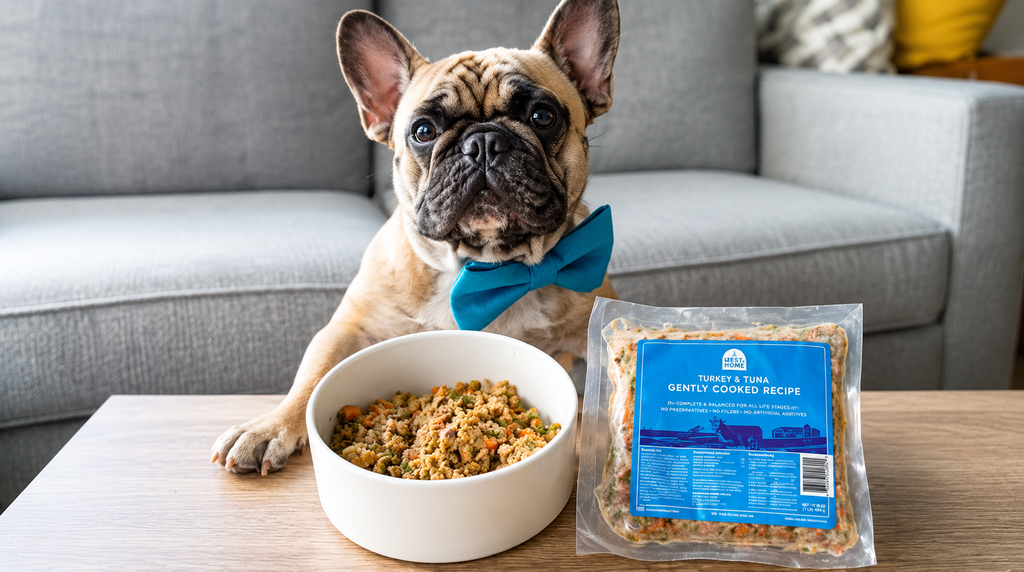
Fresh food is another major part of the brand’s current lineup. Open Farm’s Freshly Crafted program uses personalized meal plans based on information such as a dog’s age, breed, size, weight and other characteristics.
The company says its Freshly Crafted recipes contain human-grade ingredients, third-party certified proteins and non-GMO fruits and vegetables. It also states that the recipes are veterinary approved and formulated to provide complete and balanced nutrition under AAFCO standards.
The fresh meals are available in different formats, including scoop-and-serve recipes, grain-inclusive options, rolls and meatballs. That variety can make the program more practical for dogs with different feeding preferences.
Open Farm also provides transition guidance. Its recommendation is generally to move gradually from the old food to the new food over about seven to ten days, while slowing down if digestive upset occurs. Details about its Freshly Crafted dog food are available through the company’s product range.
Open Farm Cat Food
Open Farm also produces food specifically for cats. Its cat range includes dry food, wet food and freeze-dried options.
Some of its cat recipes use proteins such as salmon, turkey and other animal ingredients, with sourcing information provided through the company’s transparency system.
Cat owners should still evaluate the specific nutritional statement on the product they choose. Cats have different dietary requirements from dogs, so a dog formula should never be treated as a substitute for a complete feline diet.
How Open Farm Handles Food Safety
Transparency is useful only when it is backed by meaningful quality control. Open Farm says its ingredients are inspected when received and that its finished products undergo independent laboratory testing.
According to the company, finished products are tested for pathogens including salmonella and E. coli, along with other potential contaminants such as mycotoxins. Open Farm says products are not bagged until the relevant testing results have been received.
The company also states that its manufacturing partners operate under recognized food-safety certifications and that its facilities are located in the United States, Canada and Iceland.
For pet owners, this is an important part of evaluating premium food. Ingredients matter, but manufacturing controls, storage, handling and testing are equally important parts of food quality.
Open Farm Pet Food and Animal Welfare
Animal welfare is another major part of the brand’s identity. Open Farm says it works with meat suppliers that meet third-party welfare standards and describes requirements covering factors such as access to space, natural behaviors and responsible handling.
Its sourcing information identifies certifications including Certified Humane and Global Animal Partnership. For seafood, the company says its standards prioritize ecosystem sustainability, limiting bycatch and reducing damage to marine habitats.
This gives consumers something more concrete to evaluate than a general claim such as “ethical ingredients.” Still, shoppers should check the specific product and ingredient because sourcing standards can differ by protein and formula.
Is Open Farm Pet Food Worth It?
Open Farm can make sense for pet owners who place a high value on ingredient transparency, animal-welfare sourcing and multiple feeding formats.
The strongest argument for the brand is not simply that it calls its products premium. It is the amount of information the company provides about sourcing, testing and formulation. Its lot-code system is particularly useful because customers can investigate the ingredients associated with a particular product lot.
Cost is another consideration. Current Open Farm listings show that prices vary significantly by recipe and format, with some dry foods starting around the high-teens while certain specialty formulas cost substantially more.
That means the best value depends on the individual pet. A food is not necessarily a better choice simply because it costs more.
Pros and Cons of Open Farm Pet Food
Pros
- Detailed ingredient traceability
- Multiple dog and cat food formats
- Third-party animal-welfare standards for applicable proteins
- Sustainability-focused seafood sourcing
- No artificial flavors or preservatives such as ethoxyquin, according to the company
- Freshly Crafted options with personalized feeding plans
- Independent finished-product testing described by the company
- Wide selection for different feeding preferences
Cons
- Premium positioning can mean a higher food budget
- The wide selection can make choosing a formula confusing
- Not every recipe is appropriate for every pet
- Grain-free is not automatically superior to grain-inclusive food
- Sourcing and nutritional details should be checked for the specific recipe rather than assumed across the entire range
Who Should Consider Open Farm?
Open Farm may be a strong option for pet parents who want more information about the origins of their pet’s food and prefer brands that emphasize animal-welfare and sustainability standards.
It may also appeal to owners who want flexibility. The range includes traditional kibble, wet food, freeze-dried options and fresh meals, allowing owners to select a format based on their dog’s or cat’s preferences.
However, pets with diagnosed medical conditions should have their diet selected with appropriate veterinary guidance. Even a high-quality commercial food can be unsuitable for an individual animal.
How to Choose the Right Open Farm Formula
Start with the pet, not the marketing label.
First, identify the animal’s life stage and nutritional requirements. Then consider protein preferences, food sensitivities, activity level and feeding format.
Next, check the product’s nutritional statement and ingredient list. If you are buying a product with a particular protein because of a sensitivity, confirm the full formula rather than relying on the front of the package.
Finally, use Open Farm’s traceability system when available. The ability to investigate the sourcing information associated with a lot can help turn a general purchasing decision into a more informed one. The company’s ingredient transparency information explains how customers can review sourcing and product information.
FAQs About Open Farm Pet Food
Is Open Farm Pet Food good?
Open Farm offers recipes built around traceable ingredients, animal-welfare sourcing and different nutritional formats. Whether a specific recipe is good for an individual pet depends on that pet’s nutritional needs and tolerance.
Is Open Farm dog food complete and balanced?
Open Farm identifies its applicable dog foods as complete and balanced, while its Freshly Crafted recipes are specifically described by the company as complete and balanced under AAFCO standards. Always check the nutritional statement on the exact product you purchase.
Does Open Farm use humanely raised meat?
Open Farm says it works with third-party certified animal-welfare suppliers and identifies standards including Certified Humane and Global Animal Partnership for applicable ingredients.
Can I trace Open Farm ingredients?
Yes. Open Farm provides a lot-code transparency system that can show sourcing information associated with a particular product lot.
Does Open Farm make fresh dog food?
Yes. Its Freshly Crafted program offers fresh dog food and personalized meal plans based on factors such as a dog’s age, breed, size and weight.
Is Open Farm grain-free?
Some Open Farm recipes are grain-free, while others contain grains. The company currently offers both options, so owners can choose according to their pet’s nutritional needs and preferences.
Does Open Farm test its food?
Open Farm says its finished products undergo independent third-party testing for pathogens and other potential contaminants, and that testing information can be accessed through its transparency system.
Is Open Farm suitable for cats?
Open Farm has dedicated cat-food products, including dry, wet and freeze-dried options. Cat owners should select a formula specifically designed to meet feline nutritional requirements.
Must read our other blogs:
Care Credit Pet: A Complete Guide to Managing Veterinary Healthcare Costs