
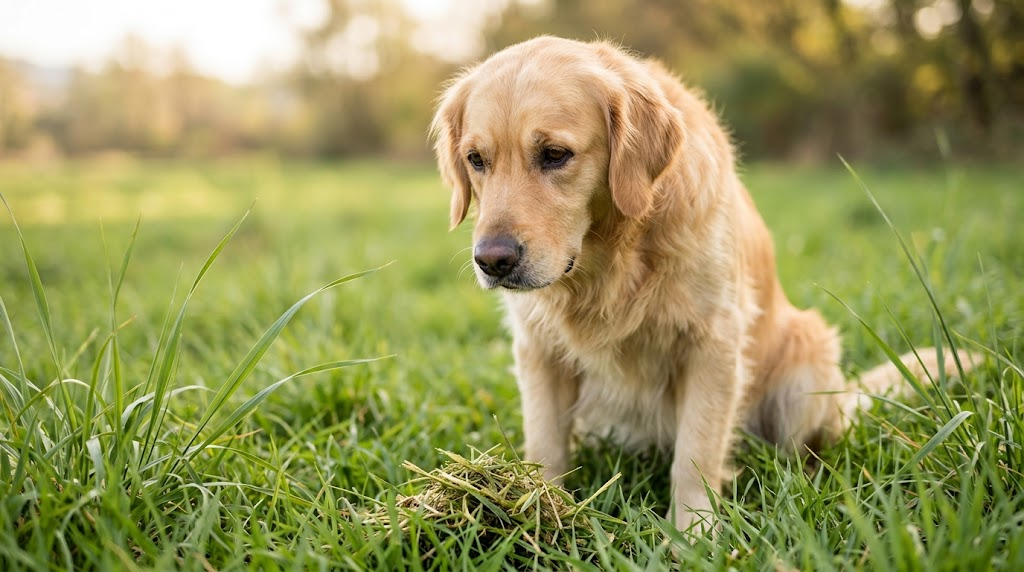
If you are wondering why is my dog vomiting after eating grass, the grass may not be the only reason. Some dogs vomit because grass blades irritate the throat or stomach, while others may already feel nauseated before they start grazing.
One episode of vomiting after eating a small amount of untreated grass is not always a sign of illness. However, repeated vomiting, weakness, abdominal pain, blood in the vomit, or possible exposure to toxins should not be ignored.
Why Is My Dog Vomiting After Eating Grass?
If you are asking why is my dog vomiting after eating grass, several explanations are possible. Dogs eat grass for different reasons, and vomiting afterward does not necessarily mean they ate grass specifically to make themselves sick.
A common belief is that dogs instinctively eat grass when they have an upset stomach so they can vomit. Veterinary evidence does not strongly support that explanation. Most dogs that eat grass do not vomit afterward, suggesting that intentional self-induced vomiting is not the usual reason for this behavior.
For additional background, Purina explains why dogs eat grass and vomit and discusses several possible reasons behind the behavior.
Quick Guide: Why Dogs Vomit After Eating Grass
| Possible Reason | What It Means | When to Worry |
| Grass irritation | Grass blades may irritate the throat or stomach and trigger gagging or vomiting. | Vomiting happens repeatedly or your dog seems uncomfortable. |
| Nausea | Your dog may already have felt sick before eating grass. | Loss of appetite, weakness, diarrhea, or repeated vomiting occurs. |
| Eating too much grass | A large amount of grass can upset the digestive system. | Persistent vomiting or abdominal discomfort develops. |
| Boredom or habit | Some dogs chew grass because they are bored or enjoy the behavior. | Grass eating suddenly becomes excessive or unusual. |
| Contaminated grass | Grass may contain pesticides, herbicides, parasites, or animal waste. | You suspect chemical or toxin exposure. |
| Underlying illness | Vomiting may be caused by a condition unrelated to grass. | Blood, severe pain, dehydration, weakness, or repeated vomiting appears. |
1. The Grass Triggered Gagging
Long blades of grass can irritate a dog’s throat as they are swallowed. That irritation may cause gagging, which can then lead to vomiting.
This is particularly possible when a dog eats grass quickly or consumes a large amount. The vomiting may therefore be a physical reaction rather than an intentional attempt to empty the stomach.
So, if you are wondering why is my dog vomiting after eating grass, simple throat irritation is one possible explanation.
2. Your Dog Was Already Nauseated
The timing can make grass look like the cause when it may actually be part of the sequence.
A dog with an upset stomach may start licking or eating things around it, including grass. If the dog is already nauseated, swallowing grass can stimulate gagging and make vomiting more likely.
Digestive upset can have many causes, including eating something unusual, infections, parasites, food intolerance, toxins, pancreatitis, and other gastrointestinal problems.
This is why why is my dog vomiting after eating grass cannot always be answered by blaming the grass itself.
3. Your Dog Likes the Taste or Texture
Some dogs simply enjoy eating grass.
Fresh grass can be appealing because of its taste, texture, or moisture. Dogs are natural scavengers, and grazing may be a normal behavior for some individuals.
Occasional grazing does not automatically mean your dog has a nutritional problem or an upset stomach.
However, if your dog suddenly starts eating much more grass than usual and then vomits repeatedly, the change deserves attention.
4. Boredom Can Encourage Grass Eating
Dogs that do not receive enough exercise or mental stimulation may develop repetitive behaviors.
Grass chewing can become something to do when a dog is bored, especially when it spends long periods alone outdoors. Exercise, interactive play, training, and puzzle toys can give your dog healthier ways to stay occupied.
However, boredom should not automatically be blamed for excessive grass eating. If the behavior suddenly becomes intense, a veterinarian can help rule out medical causes.
5. Fiber May Play a Role
Grass contains fiber, and fiber is important for normal digestion.
This has led to the theory that dogs may sometimes seek out grass because they want additional roughage. But eating grass does not prove that a dog has a dietary deficiency.
Dogs eating a complete and balanced diet are generally unlikely to develop a nutrient deficiency simply because they occasionally graze. If your dog has persistent digestive problems, discuss its diet with your veterinarian rather than adding supplements on your own.
6. The Grass Could Be Contaminated
The biggest risk may sometimes come from what is on the grass rather than the grass itself.
Lawns can be treated with pesticides, herbicides, fertilizers, or other chemicals. Grass can also become contaminated with fecal material from other animals, potentially exposing dogs to intestinal parasites.
For this reason, avoid allowing your dog to eat grass when you do not know how the area has been treated. Keeping your dog away from unfamiliar plants is also important because some plants can be toxic.
If chemical exposure is possible, do not wait for repeated vomiting before seeking veterinary advice.
7. Something Other Than Grass May Be Causing the Vomiting
This is one of the most important possibilities to consider.
A dog may eat grass shortly before vomiting even though the underlying problem is unrelated. Vomiting can occur after dietary indiscretion, toxin exposure, infections, parasites, pancreatitis, gastrointestinal disease, or ingestion of a foreign object.
If you repeatedly ask why is my dog vomiting after eating grass, consider what else your dog may have eaten during the previous several hours.
If vomiting keeps happening, do not assume the grass is responsible. The vomiting itself may be the symptom that needs attention.
Is It Normal for a Dog to Vomit After Eating Grass?
Occasional vomiting after eating grass can happen, but it should not be considered an inevitable result of grass eating.
Most dogs that eat grass do not vomit afterward. That makes the popular idea that dogs routinely eat grass to trigger vomiting less convincing.
If your dog vomits once and quickly returns to normal, you can monitor it closely. Pay attention to energy level, appetite, water intake, bowel movements, and whether vomiting happens again.
Understanding why is my dog vomiting after eating grass starts with looking at the complete situation rather than one symptom.
A recurring pattern is more concerning than one isolated episode.
Why Is My Dog Vomiting Yellow Bile After Eating Grass?
Yellow or green vomit often contains bile.
A dog may vomit bile when the stomach is empty, and a nauseated dog may lick or eat grass before vomiting. This can make it appear that the grass caused the episode when the dog may have already been experiencing stomach discomfort.
For additional veterinary discussion about grass eating and the common belief that dogs eat grass to make themselves vomit, Vetster explains the possible reasons dogs eat grass.
If yellow-bile vomiting keeps happening, however, speak with your veterinarian rather than assuming it is harmless.
When Should You Worry About Dog Vomiting?
The most important thing is to look at the entire picture.
If you are still asking why is my dog vomiting after eating grass, check whether any other symptoms are present.
Contact your veterinarian if your dog has repeated vomiting or develops symptoms such as:
- Lethargy or unusual weakness
- Loss of appetite
- Diarrhea
- Abdominal pain
- Dehydration
- Fever
- Blood in the vomit
- Repeated vomiting over several hours
- Possible ingestion of medication, chemicals, or a toxic plant
- Possible ingestion of a foreign object
Repeated attempts to vomit without bringing anything up are especially concerning. This can occur with serious conditions such as bloat and warrants urgent veterinary attention.
Do not give human medications to your dog unless a veterinarian specifically recommends them.
Can Eating Too Much Grass Cause Problems?
Yes. A small amount of untreated grass is very different from consuming large quantities.
Excessive grass eating can cause gastrointestinal irritation. Large amounts may also contribute to digestive problems and, in some cases, an obstruction.
There is also the risk of parasites or chemical exposure when dogs graze in contaminated or treated areas.
If your dog suddenly starts eating unusually large amounts of grass, consider that a change worth discussing with your veterinarian.
How to Stop Your Dog From Eating Grass
You do not necessarily need to stop occasional grazing completely.
The first step is to control where your dog eats grass. Avoid lawns treated with chemicals and areas where toxic plants or animal waste may be present.
If your dog constantly tries to graze, training can help. Teach a reliable “leave it” command and reward your dog for turning away from the grass.
You can also redirect the behavior with a toy, short training session, walk, or food puzzle. Dogs that are bored may benefit from additional physical and mental activity.
If grass eating has suddenly increased, however, look for an underlying reason instead of treating it only as a training problem.
What Should I Do Right After My Dog Vomits?
First, observe your dog carefully.
Take note of how many times your dog vomited and what the material looked like. Look for blood, unusual objects, grass, or other material that could provide clues about what your dog swallowed.
Also consider whether your dog may have eaten garbage, medication, chemicals, unfamiliar food, a toxic plant, or something that could cause an obstruction.
If you want to understand why is my dog vomiting after eating grass, recording what happened before the vomiting can help your veterinarian identify possible causes.
If your dog vomits repeatedly or develops other concerning symptoms, contact your veterinarian. Vomiting can range from temporary digestive upset to a sign of a more serious condition.
Avoid giving your dog over-the-counter human stomach medicines unless your veterinarian tells you to use them.
Frequently Asked Questions
Do dogs eat grass to make themselves vomit?
Not necessarily. This is a common belief, but most dogs that eat grass do not vomit afterward. A dog may already be nauseated, or grass may trigger gagging after it is swallowed.
Should I worry if my dog eats grass and throws up once?
One isolated episode is not automatically an emergency if your dog quickly returns to normal. Continue watching for repeated vomiting, appetite changes, weakness, diarrhea, or other unusual symptoms.
Why does my dog eat grass when it has an upset stomach?
The exact reason is not known. A nauseated dog may lick or eat nearby objects, including grass. The grass may then trigger gagging and vomiting rather than the dog deliberately eating it to induce vomiting.
Is grass safe for dogs?
Small amounts of ordinary grass are generally not considered dangerous, but chemically treated grass, toxic plants, contaminated areas, and excessive consumption can create risks.
Why is my dog eating grass and vomiting yellow bile?
Yellow vomit commonly contains bile. A dog with an empty stomach may vomit bile, and nausea can cause a dog to lick or eat grass before vomiting. Repeated yellow-bile vomiting should be discussed with a veterinarian.
Can grass cause an intestinal blockage?
Eating a large quantity of grass can cause gastrointestinal problems. Excessive grass consumption should therefore be discouraged and discussed with a veterinarian if it becomes frequent.
When should I call a vet for vomiting?
Call your veterinarian when vomiting is repeated, persistent, or accompanied by weakness, loss of appetite, diarrhea, abdominal pain, dehydration, fever, or blood. Suspected toxin or foreign-object ingestion also requires prompt veterinary advice.
Should I stop my dog from eating grass completely?
Not necessarily. Occasional grazing can be normal. The main priorities are preventing access to chemically treated lawns, unknown plants, contaminated areas, and excessive amounts of grass.
Must read our other blogs :
Nature’s Variety Reviews: 7 Best & Worst Things to Know






Leave a Reply