

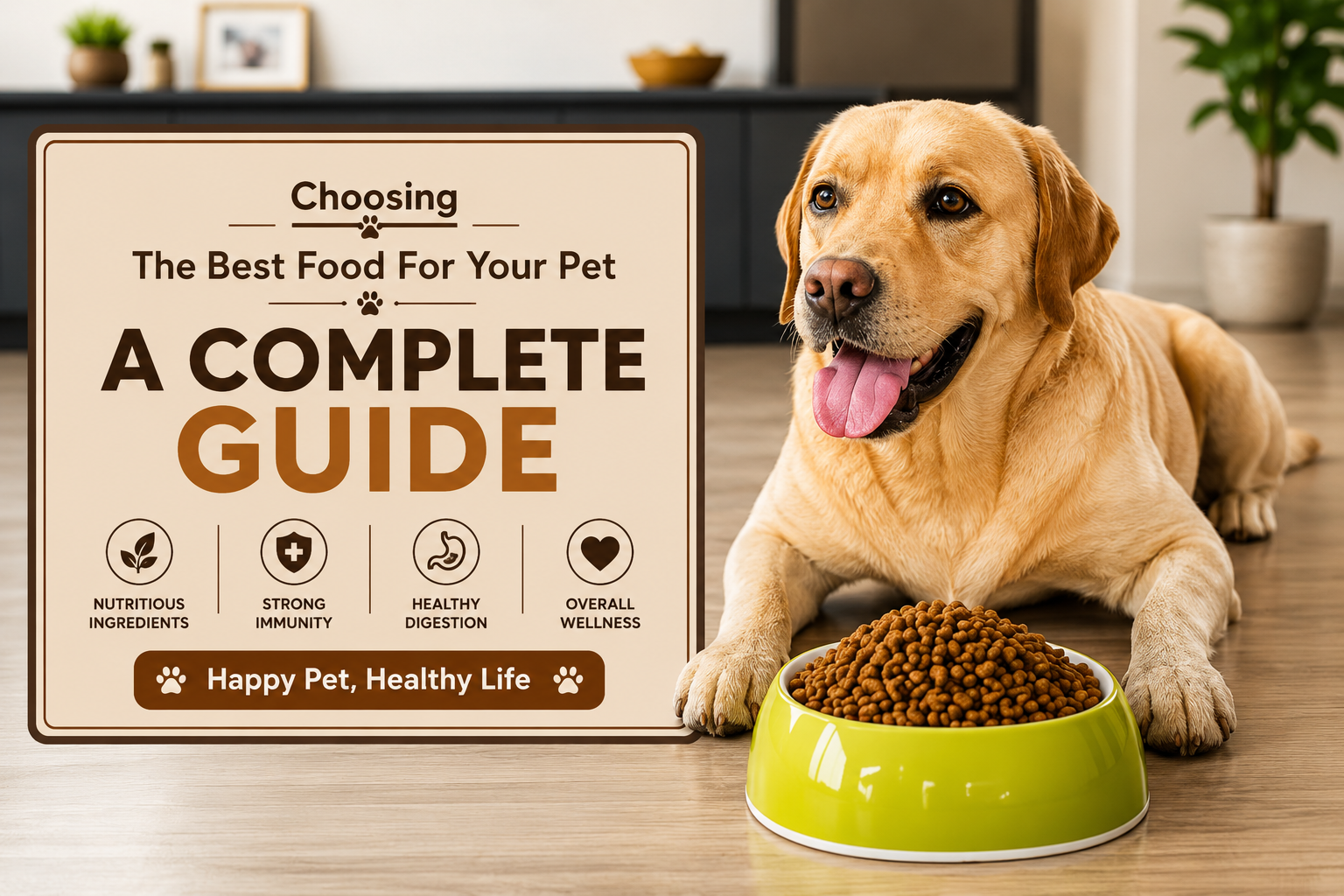
Choosing the Best Pet Food: How to Choose the Right Dog Food for Your Pet starts with one simple rule: the best food is not necessarily the most expensive or the one with the most attractive ingredient list. It should be nutritionally complete, appropriate for your dog’s life stage, and suitable for their size, activity level, health needs, and eating habits.
For most healthy dogs, a complete and balanced commercial diet is a practical choice. Veterinary guidance becomes especially important when a dog has allergies, digestive problems, obesity, kidney disease, pancreatitis, or another medical condition. If you are comparing options, this Best Pet Food: How to Choose the Right Dog Food for Your Pet guide can help you make a practical choice based on nutrition and your dog’s individual needs.
Best Pet Food: How to Choose the Right Dog Food for Your Pet
There is no single dog food that is perfect for every dog. A puppy growing rapidly has different nutritional requirements from an adult dog, while a highly active working dog may need a different calorie intake from a less active companion.
The first step is therefore to assess your dog’s individual needs rather than choosing food based only on advertising or a short ingredient list. A thoughtful approach to Best Pet Food: How to Choose the Right Dog Food for Your Pet starts with understanding what your individual dog actually needs.
Quick checklist
| What to check | Why it matters |
| Life stage | Puppies, adults, and seniors can have different nutritional requirements |
| Size and breed | Calorie and nutrient needs vary between dogs |
| Activity level | Active dogs may need more energy |
| Health status | Medical conditions can require therapeutic diets |
| Nutritional adequacy | Look for a complete and balanced statement |
| Calories | Helps prevent underfeeding or excessive weight gain |
| Food format | Dry, wet, or a combination can work |
| Feeding amount | Portions should match your dog’s individual needs |
The Dog Stop’s guide to choosing the right dog food also emphasizes that nutritional needs can vary with age, breed size, health, pregnancy, and food preferences.
What Makes a Dog Food a Good Choice?
A good dog food provides the nutrients your dog needs in appropriate amounts and proportions. Protein, fats, carbohydrates, vitamins, minerals, and other nutrients all have roles in maintaining normal body functions.
One common mistake is judging a food entirely by whether its first ingredient is meat. Ingredients are only one part of the nutritional picture. A food can have an appealing ingredient list and still be unsuitable for an individual dog, while a less flashy formula can provide complete nutrition.
A more useful starting point is the nutritional adequacy statement on the package. In the United States, AAFCO establishes nutritional profiles used for pet food labeling, and foods carrying an appropriate adequacy statement are intended to meet recognized nutritional requirements.
These basic checks are the foundation of Best Pet Food: How to Choose the Right Dog Food for Your Pet and can help you avoid choosing food based only on marketing.
Check the Life Stage Before Anything Else
Life stage should be one of the first things you consider when buying dog food.
Puppies are growing rapidly and need diets formulated for growth. Adult dogs generally need food designed for maintenance, while some older dogs may benefit from diets selected around their individual health and nutritional needs.
Large-breed puppies deserve particular attention because controlled growth is important for healthy skeletal development. Choosing the right life-stage formula is therefore an essential part of Best Pet Food: How to Choose the Right Dog Food for Your Pet.
For this reason, don’t assume that one formula should be used throughout your dog’s entire life.
Consider Your Dog’s Size, Weight, and Activity
Two dogs of the same breed can have different nutritional needs because their body condition and activity levels may differ.
A dog that spends much of the day running, training, or working may require more calories than a dog that takes short daily walks. On the other hand, a sedentary dog can gain excess weight if portions are too large.
Don’t rely only on a measuring cup if accurate portion control is important. Weighing food can provide more consistent portions and make it easier to monitor how much your dog actually eats.
Dry Food vs. Wet Food: Which Is Better?
Neither dry nor wet food automatically wins the “best” category.
Both can be appropriate when they are complete and balanced and formulated for the correct life stage. Wet food has a much higher moisture content, while dry food is convenient to store, measure, and serve.
Both options can fit into a Best Pet Food: How to Choose the Right Dog Food for Your Pet approach when the food is complete, balanced, and suitable for your dog.
Some owners also combine wet and dry food. That can work, provided the total daily amount is adjusted so the dog does not receive excessive calories.
If your veterinarian has recommended a particular diet because of a medical condition, follow that advice rather than changing formats simply because one seems more appealing.
Read the Label Without Falling for Marketing
Pet food labels can make shopping confusing. Words such as “natural,” “premium,” “grain-free,” “fresh,” or “real meat” can sound impressive, but they do not by themselves prove that a food is the right choice for your dog.
Instead, ask:
- Is the food complete and balanced?
- Is it appropriate for my dog’s life stage?
- Does the manufacturer provide nutritional information?
- Are calories clearly listed?
- Does the company have meaningful quality-control procedures?
- Does the food agree with my dog’s digestion and body condition?
Reading the label carefully is an important part of Best Pet Food: How to Choose the Right Dog Food for Your Pet, especially when comparing different formulas.
These questions are more useful than choosing a product simply because the front of the package looks impressive.
Is Grain-Free Dog Food Better?
Grain-free does not automatically mean healthier.
Many dogs can digest grains without problems, and grains can provide carbohydrates, nutrients, and energy. Grain-free should not be treated as an automatic quality upgrade.
There has also been concern surrounding reported cases of canine dilated cardiomyopathy, or DCM, in dogs eating certain grain-free or boutique diets. The issue is complex and has been investigated by veterinary and regulatory authorities.
That does not mean every grain-free food is dangerous. It does mean that “grain-free” should not automatically be treated as a nutritional upgrade.
If your veterinarian believes your dog needs a specific elimination or therapeutic diet, follow that individualized recommendation.
What About Raw Dog Food?
Raw feeding has attracted attention among pet owners who want a diet they consider more natural. However, raw diets come with food-safety and nutritional concerns.
Raw diets can carry bacterial and parasitic contamination risks. Dogs can also experience problems from raw bones, including dental damage, constipation, and gastrointestinal obstruction.
That does not mean every dog eating raw food will become sick, but these risks are important to consider before making raw feeding a regular part of your dog’s diet.
If someone chooses a raw diet despite these concerns, nutritional completeness and food safety become particularly important. Homemade raw meals should not be assumed to be balanced simply because they contain meat, organs, vegetables, or supplements.
How Much Food Should Your Dog Eat?
Portion size matters just as much as food selection.
Even a nutritionally complete dog food can contribute to weight gain if a dog regularly receives more calories than they need. Feeding guidelines on the package provide a starting point, but they are not a guarantee that every dog needs exactly that amount.
Treats should also be counted. A dog receiving several treats throughout the day may consume significantly more calories than expected.
Monitor your dog’s weight and body condition over time. If your dog is gaining or losing weight unexpectedly, discuss the change with your veterinarian.
This is particularly important for dogs undergoing weight management.
Best Food for Puppies, Seniors, and Special Needs
There is no universal “best” formula for every special category of dog.
Puppies
Choose a complete diet specifically formulated for growth. Large and giant breeds may need specialized puppy formulas because their growth patterns and nutritional requirements differ.
Senior Dogs
Age alone does not determine which food a senior dog should eat. Some older dogs remain healthy on a standard maintenance diet, while others develop conditions requiring specific nutrition.
A veterinarian can help determine whether a senior dog needs changes based on weight, kidney function, joint health, digestion, or another concern.
Dogs With Sensitive Stomachs
Digestive symptoms can have many causes. A dog with repeated vomiting, diarrhea, poor appetite, or unexplained weight loss should be evaluated rather than repeatedly switching foods.
Some dogs with gastrointestinal problems may benefit from highly digestible diets, while others may require more specialized diets.
Dogs With Suspected Food Allergies
Food allergies are different from food intolerances, and not every itchy dog has a food allergy. Environmental allergens such as pollens and grasses can also cause skin problems.
If an allergy is suspected, a veterinarian can recommend an appropriate food trial instead of relying on repeated food changes.
How to Switch Your Dog to a New Food
Avoid making a sudden change whenever possible.
A gradual transition gives your dog’s digestive system time to adjust. For many dogs, transitioning over roughly one to two weeks is a practical approach.
A simple method is:
- Start with mostly the current food and a smaller amount of the new food.
- Increase the new food gradually over several days.
- Watch stool quality, appetite, energy, and comfort.
- Slow down the transition if your dog develops digestive upset.
- Contact your veterinarian if symptoms are severe or persistent.
A slower transition may be appropriate for dogs with sensitive digestion or a history of food-related problems.
Homemade Dog Food: Is It Better?
Homemade food is not automatically healthier.
A properly formulated homemade diet can meet a dog’s nutritional requirements, but creating one without professional guidance can be difficult. A meal made from meat, rice, vegetables, and supplements can still lack essential nutrients or contain nutrients in incorrect amounts.
If you want to feed a homemade diet long term, work with a veterinary professional with appropriate nutrition expertise rather than relying on a recipe found online.
How to Choose a Trustworthy Dog Food Brand
A responsible manufacturer should be willing to provide useful information about its products.
A trustworthy company should be able to answer reasonable questions about formulation, manufacturing, quality control, nutritional analysis, and research.
Look for manufacturers that are transparent about:
- Who formulates their recipes
- Where their food is manufactured
- How ingredients and finished products are tested
- Quality-control procedures
- Calorie content
- Nutritional analysis
- Research supporting their formulas
This is a stronger approach than choosing a brand only because it has attractive packaging or a long list of ingredients.
You can also check for product recalls and discuss unfamiliar products with your veterinarian.
The Bottom Line: What Is the Best Pet Food?
The best pet food is the one that provides complete and balanced nutrition while matching your dog’s life stage, size, activity level, health status, and individual tolerance.
When choosing Best Pet Food: How to Choose the Right Dog Food for Your Pet, focus on nutritional adequacy, life stage, calories, activity level, and your dog’s individual health needs.
There is no need to chase the most expensive bag, the longest ingredient list, or the latest food trend. Start with nutritional adequacy, evaluate the manufacturer’s transparency, feed the correct amount, and watch how your dog responds.
The goal is not to find the trendiest dog food. It is to find a nutritionally appropriate food your dog can eat consistently while maintaining a healthy weight, good digestion, and overall well-being.
Your veterinarian should have the final say when your dog has a diagnosed health condition or needs a therapeutic diet.
FAQs About the Best Pet Food
1. What is the best pet food for dogs?
The best food is a complete and balanced diet appropriate for your dog’s life stage, size, activity level, and health needs. There is no single formula that is ideal for every dog.
2. Is expensive dog food always better?
No. Price alone does not establish nutritional quality. Look at nutritional adequacy, formulation, calories, manufacturer information, and how well the food suits your dog.
3. Is wet food healthier than dry food?
Not automatically. Both can be appropriate when nutritionally complete and suitable for the dog. Wet food contains substantially more moisture, while dry food is convenient to store and portion.
4. Should dogs eat grain-free food?
Not unless there is a specific reason to choose it. Most dogs tolerate grains, and grain-free should not be treated as synonymous with higher quality.
5. How often should I change my dog’s food?
You do not need to change a complete, suitable food simply for variety. If a change is necessary, transition gradually to reduce the risk of digestive upset.
6. How do I know if my dog is eating too much?
Regular weight gain, excess body fat, or changes in body condition can indicate overfeeding. Portion size should be adjusted according to your dog’s weight, activity, health, and veterinary advice.
7. Can I make my dog’s food at home?
Yes, but a long-term homemade diet should be professionally formulated. Homemade recipes can easily miss essential nutrients when they are not properly balanced.
8. What should I look for on a dog food label?
Look for an appropriate nutritional adequacy statement, life-stage suitability, feeding guidance, calorie information, and clear manufacturer information. Avoid judging the entire product from one ingredient or marketing claim.
9. When should I ask a veterinarian about dog food?
Speak with your veterinarian if your dog has persistent digestive problems, unexplained weight changes, suspected allergies, reduced appetite, or a diagnosed medical condition requiring nutritional management.
10. What is more important: ingredients or nutrition?
Nutrition is more important. Ingredients matter, but a food should first meet your dog’s nutritional requirements. A visually impressive ingredient list does not automatically make a product nutritionally superior.
Must read our other blogs:
Best Pet Food Healthy Dog Food Guide


Leave a Reply