If you’re searching for how to stop a puppy from biting, the first thing to know is that you’re not doing anything wrong — almost every puppy bites, and almost every puppy stops with consistent handling. What actually works depends less on one magic trick and more on matching your response to your puppy’s age and reading why they’re biting in the first place.
This guide walks through the training method that works, broken down by puppy age, plus the mistakes that quietly make biting worse and the warning signs that mean it’s time to call a professional.
Quick Answer
If you only have two minutes, here’s how to stop a puppy from biting in the fewest steps possible:
- Puppy biting peaks between 8–16 weeks (teething) and is almost always normal, not aggression
- The fastest fix is ending play the instant teeth touch skin, every single time, with no exceptions
- Redirect to a toy immediately after — don’t just stop the behavior, replace it
- Consistency across every person in the house matters more than any single technique
- If biting is paired with growling, stiff body language, or is getting harder instead of easier past 6 months, that’s a sign to bring in a trainer
Why Puppies Bite in the First Place
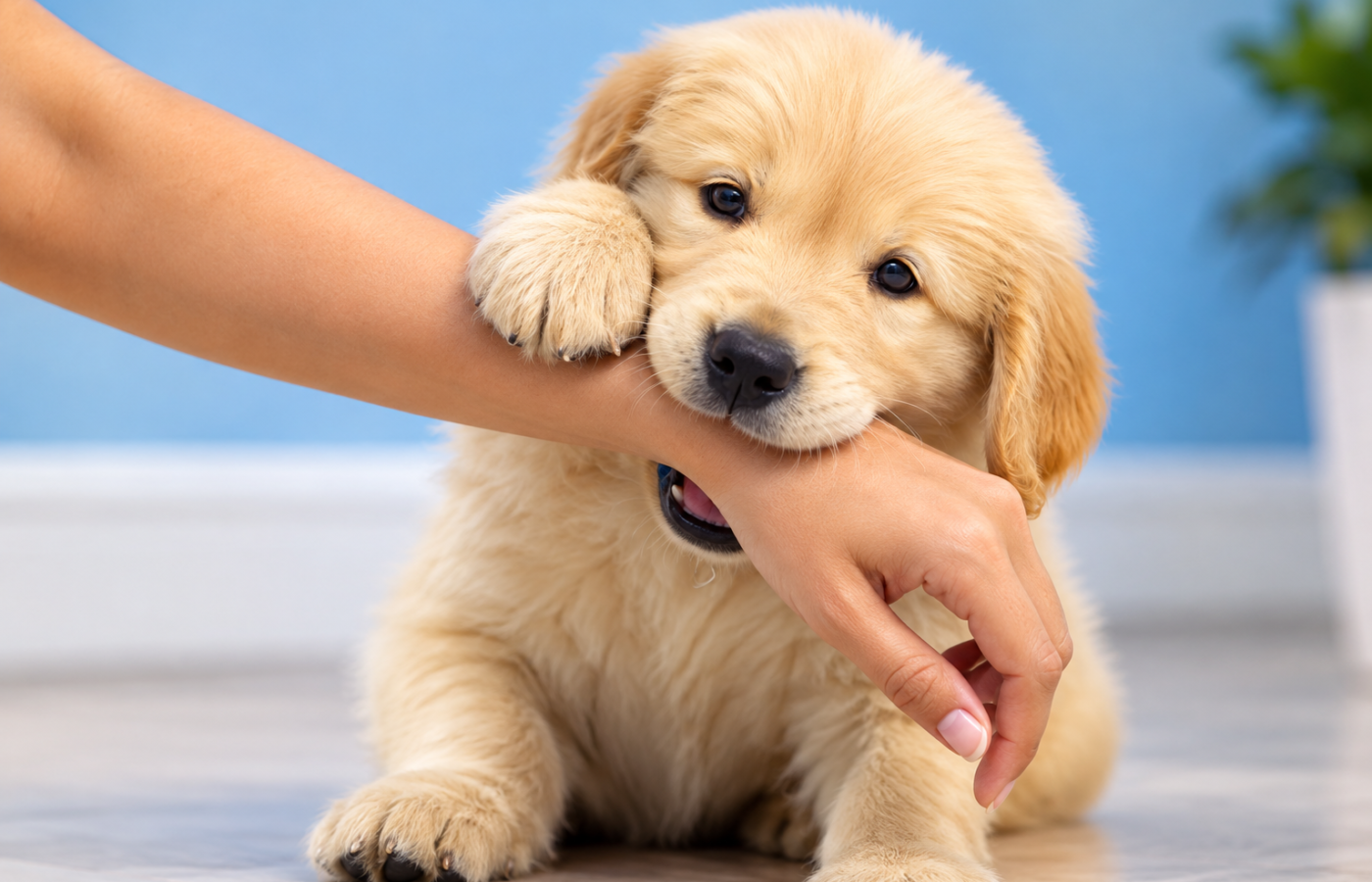
Before you can work out how to stop a puppy from biting, it helps to know why it’s happening. Puppies explore the world mouth-first, the same way human toddlers explore with their hands. Biting during play, teething (roughly 12–16 weeks), and general exploration is normal puppy behavior — it is not a sign of aggression or a “bad” dog. Understanding this matters because it changes how you respond: you’re not correcting misbehavior, you’re teaching a skill your puppy doesn’t have yet — bite inhibition, or how to control the pressure of their mouth.
The Core Method: Teaching Bite Inhibition
If there’s one method to learn for how to stop a puppy from biting, it’s this one. It’s the method most trainers and veterinary behaviorists recommend, and it works the same way whether your puppy is nipping at your hands, your pant legs, or your kids.
- The instant teeth touch skin, make a short, sharp sound — a single “Ow!” or “Ah-ah!” — then immediately go still and stop interacting.
- Remove your attention for 10–20 seconds. Turn your body away, stop talking, stop making eye contact. To a puppy, your attention is the reward; taking it away is the correction.
- If the puppy keeps biting after you go still, calmly stand up and walk away for 30–60 seconds, or place the puppy on the other side of a baby gate. This is not punishment — it’s simply ending the fun.
- When the puppy is calm, re-engage and immediately offer an appropriate toy. This step gets skipped constantly, and it’s the one that actually teaches the puppy what to do instead of just what not to do.
- Praise calm, gentle mouthing or toy engagement the moment it happens, so the puppy gets clear feedback about which behavior earns your attention.
Some puppies get more excited by a high-pitched “ow,” treating it like a play noise. If that happens, skip the sound and go straight to going still and disengaging — the sudden loss of attention is the actual lesson either way.
A Step-by-Step Guide by Puppy Age
There’s no single answer for how to stop a puppy from biting that works the same way at every stage. Biting looks different — and needs a different response — depending on the stage your puppy is in.
8–16 Weeks: Teething and Exploration
Figuring out how to stop a puppy from biting at this stage starts with accepting that this is peak biting season, driven mostly by teething discomfort and normal exploration. Keep a chew toy within arm’s reach at all times so you can redirect instantly. Frozen washcloths or specifically designed teething toys help with the gum discomfort that drives a lot of this stage’s biting. Expect this to be the hardest stretch — that’s normal, not a sign your approach isn’t working.
4–6 Months: Adolescent Testing
The approach to how to stop a puppy from biting has to shift a little here. As baby teeth fall out and adult teeth come in, biting often continues but starts to feel more like testing boundaries during play than pure teething. This is the stage to tighten consistency: every person in the household needs to respond the same way, every time, or the puppy gets mixed signals about what’s actually off-limits.
6+ Months: Should Be Tapering Off
At this point, how to stop a puppy from biting becomes less about technique and more about consistency paying off: by six months, most puppies bite significantly less if the training above has been consistent. If biting is still frequent, getting harder rather than softer, or showing up alongside growling or stiff body language, that’s the point to bring in a certified trainer rather than keep troubleshooting alone — see the red-flag section below.
7 Techniques That Actually Work
These are the techniques that come up again and again in any real answer to how to stop a puppy from biting — use them together rather than picking just one.
| Technique | How to Use It | Best For |
|---|---|---|
| End play immediately | Stop all interaction the moment teeth touch skin | All ages |
| Redirect to a toy | Swap your hand for a chew toy the second biting starts | 8 weeks+ |
| Time-outs | Walk away or use a baby gate for 30–60 seconds | Repeated biting in one session |
| Exercise before high-risk times | Tire the puppy out before visitors or kids arrive | Overtired/overstimulated biting |
| Trade-up cues | Offer a toy before removing something the puppy has | Resource-guarding-adjacent nipping |
| Calm-mouth praise | Reward gentle mouthing or licking instead of biting | Reinforcing the behavior you want |
| Consistent household rules | Everyone uses the same response, every time | Preventing mixed signals |
Mistakes That Make Puppy Biting Worse
Most people trying to figure out how to stop a puppy from biting already do most of the method right, then undo it with one of these habits.
- Playing rough with hands. Wrestling or letting a puppy mouth your hands during play teaches that hands are toys — then it’s confusing to the puppy when biting suddenly isn’t okay.
- Punishing physically. Hitting, flicking the nose, or holding the muzzle shut can increase fear and, in some puppies, increase biting or create anxiety-based aggression later. Harsh punishment is one of the most consistent mistakes flagged by veterinary behaviorists.
- Being inconsistent across the household. If one person allows mouthing during play and another corrects it, the puppy can’t learn a clear rule.
- Only saying “no” without redirecting. Removing the unwanted behavior without offering the wanted one leaves the puppy without a replacement — and puppies default back to biting when they don’t have another outlet.
- Expecting the behavior to disappear on its own. Some tapering happens naturally with age, but a puppy left untrained can carry mouthy habits well into adulthood.
Best Redirect Toys for Puppy Biting
Redirecting to a toy is the single most useful habit in this whole guide on how to stop a puppy from biting — keep two or three of these within reach at all times during the teething months:
- Rubber chew toys rated for teething puppies (softer, more flexible than adult chew toys)
- Rope toys for gentle tug play that keeps teeth off skin
- Frozen washcloths (damp, tied in a knot, then frozen) for sore gums
- Treat-dispensing chew toys to keep a puppy occupied solo
When Puppy Biting Is a Red Flag
Before you assume you’re doing something wrong with how to stop a puppy from biting, know that most puppy biting is normal and resolves with consistent handling. It’s worth calling a certified trainer or veterinary behaviorist if you see:
- Growling, snapping, or stiff body language paired with biting
- Biting that’s getting more frequent or more intense past 6 months instead of less
- Biting directed specifically at strangers, guarding food or toys aggressively
- A puppy who seems to bite out of fear rather than play (tail tucked, ears back, trying to escape)
None of these automatically mean aggression — puppies go through awkward phases — but they’re worth a professional opinion rather than continuing to troubleshoot alone.
For a broader look at communication-based training that pairs well with bite inhibition work, see Dog Whistle Training: A Complete Guide to Effective Communication and Better Obedience, and if you want a structured curriculum beyond this guide, Dog Training Books: The Ultimate Guide to Choosing the Right Book for a Well-Trained Dog covers the best resources by training style.
The American Kennel Club’s puppy biting guide is a solid additional reference if you want more detail on the bite inhibition method specifically.
How to Stop a Puppy From Biting: The Bottom Line
Every method here comes back to the same core idea: how to stop a puppy from biting isn’t about punishment, it’s about consistently removing your attention when teeth touch skin and immediately offering something better to bite instead. Match your response to your puppy’s age, keep every person in the household on the same page, and expect the 8–16 week stretch to be the hardest part — most puppies show real improvement by 5–6 months with steady handling.
FAQ
At what age do puppies stop biting?
Most puppies significantly reduce biting by 5–6 months as adult teeth come in and training takes hold, though some mouthing during play can continue longer without consistent redirection.
Is it normal for an 8-week-old puppy to bite a lot?
Yes — 8–16 weeks is the peak biting window due to teething and exploration. It’s one of the most normal (if frustrating) puppy behaviors.
Should I yelp when my puppy bites me?
It works for many puppies by mimicking how littermates signal “too hard,” but some puppies get more excited by the sound. If yelping makes biting worse, skip straight to going still and withdrawing attention.
When should I worry about puppy biting?
If biting is paired with growling or stiff body language, is increasing rather than decreasing past 6 months, or seems fear-driven rather than playful, consult a certified trainer or veterinary behaviorist.