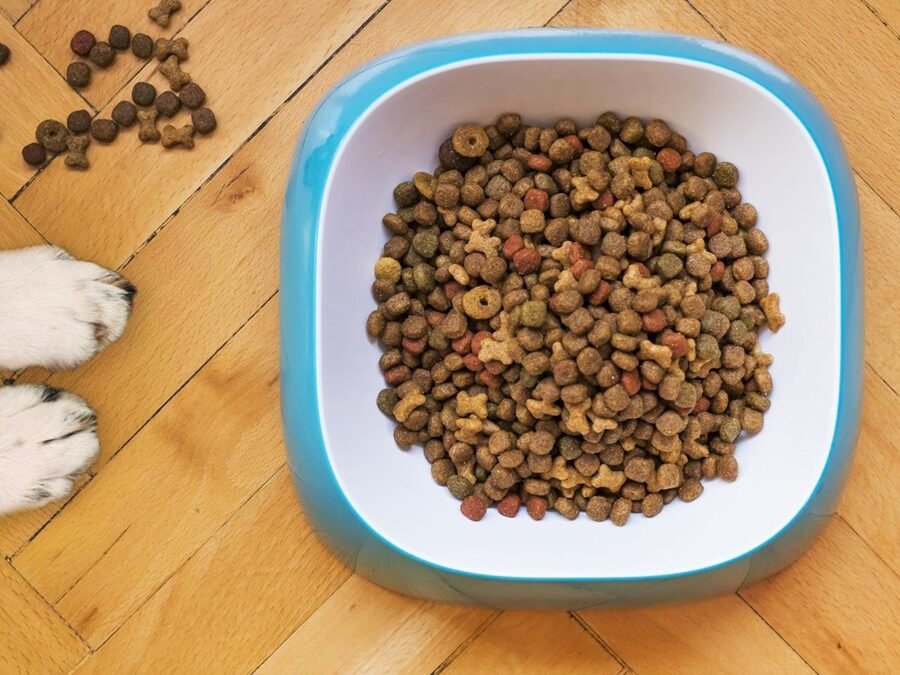
This Blue Buffalo Basics review looks at the limited-ingredient side of the Blue Buffalo lineup, built specifically for dogs with food sensitivities rather than the brand’s more mainstream Life Protection or Wilderness formulas. Every Blue Buffalo Basics recipe starts with a single named animal protein and skips chicken, beef, corn, wheat, soy, dairy, and eggs entirely — the ingredients most commonly linked to food-based reactions in dogs.
Quick Answer
- Blue Buffalo Basics is a limited-ingredient line built around one named protein per recipe
- Available proteins include salmon, lamb, turkey, and duck — no chicken or beef anywhere in the line
- Guaranteed analysis (Salmon & Potato): 20% protein, 12% fat, 6% fiber
- A 22 lb bag typically runs $65–$78 depending on retailer and recipe
- Best fit for dogs with diagnosed or suspected food sensitivities, not necessarily for a healthy dog with no issues
What Makes Blue Buffalo Basics Different From Regular Blue Buffalo
The core Blue Buffalo lineup includes plenty of chicken-based recipes across its Life Protection and Wilderness lines, but Blue Buffalo Basics exists specifically for dogs who react poorly to common proteins or fillers. Each recipe is built around exactly one named animal protein, with no chicken, beef, corn, wheat, soy, dairy, or eggs anywhere in the formula — an approach vets often call an elimination-style or limited-ingredient diet, since fewer potential triggers make it easier to identify what’s actually causing a reaction.
Full Ingredient List (Salmon & Potato Recipe)
Deboned salmon, oatmeal, brown rice, salmon meal (a source of glucosamine), peas, potatoes, pea fiber, canola oil (a source of omega-6 fatty acids), natural flavor, pea protein, plus a standard vitamin and mineral package including the brand’s LifeSource Bits antioxidant blend.
Guaranteed Analysis (Salmon & Potato Recipe)
| Nutrient | Amount |
|---|---|
| Crude Protein (min.) | 20.0% |
| Crude Fat (min.) | 12.0% |
| Crude Fiber (max.) | 6.0% |
| Moisture (max.) | 10.0% |
| Omega-3 Fatty Acids (min.) | 1.0% |
| Omega-6 Fatty Acids (min.) | 1.5% |
That protein percentage is noticeably more moderate than a high-protein grain-free competitor — worth knowing since Blue Buffalo Basics is positioned around digestibility and ingredient simplicity rather than maximizing protein content.
Available Proteins and Recipes
Blue Buffalo Basics comes in several single-protein options, each marketed under the “Skin & Stomach Care” line:
- Salmon & Potato — grain-free, built around omega fatty acids for skin and coat
- Lamb & Potato — grain-free, available in both standard and large-breed formulas
- Turkey & Potato — includes a Healthy Weight version for dogs needing weight management alongside sensitivity support
- Duck & Potato — a less common protein source, useful for dogs who’ve already reacted to more typical proteins
Having this range means owners can rotate proteins if a dog reacts to one specific source, without leaving the Blue Buffalo Basics line entirely.
How to Transition Your Dog to Blue Buffalo Basics
Switching to Blue Buffalo Basics works best as a gradual transition, especially since dogs starting this diet often already have a sensitive digestive system. A typical approach mixes a small percentage of Blue Buffalo Basics with your dog’s current food for the first two to three days, then gradually increases that ratio over one to two weeks. Rushing this transition can trigger temporary digestive upset that’s easy to mistake for a reaction to the new food itself, when it’s really just a normal adjustment period. If you’re specifically trying to identify a food allergy, most vets recommend staying on a single Blue Buffalo Basics protein for at least eight to twelve weeks before drawing conclusions, since food-allergy symptoms can take that long to fully resolve.
What Sets the “Skin & Stomach Care” Label Apart
Every recipe in this line carries the “Skin & Stomach Care” designation, which isn’t just marketing language — it reflects the specific formulation goals behind Blue Buffalo Basics. Beyond the single-protein, limited-ingredient structure, the recipes lean on omega-3 and omega-6 fatty acids from canola oil and, in the salmon recipe, the fish itself, both aimed at supporting skin barrier function and coat quality alongside easier digestion. This dual focus on skin and digestive health together is common in limited-ingredient diets generally, since food sensitivities in dogs frequently show up as both skin symptoms (itching, hot spots, dull coat) and digestive symptoms (soft stool, gas, vomiting) at the same time, often from the same underlying trigger.
Blue Buffalo Basics Pricing
A 22 lb bag typically runs between $65 and $78 depending on the specific recipe and retailer, putting Blue Buffalo Basics in the mid-to-premium price range — more than a basic grocery-store kibble, but generally in line with other limited-ingredient specialty diets rather than at the very top of the market.
Who Blue Buffalo Basics Is a Good Fit For
- Dogs with diagnosed or strongly suspected food allergies or sensitivities
- Dogs with chronic skin issues, itching, or digestive upset that hasn’t resolved on a standard diet
- Owners working through an elimination diet trying to identify a specific trigger ingredient
- Households wanting a chicken-free and beef-free option without switching to a raw or home-cooked diet
Who Should Consider a Different Food
- Healthy dogs with no history of food sensitivity, who don’t need the limited-ingredient approach specifically
- Owners wanting a higher-protein formula, since 20% protein is moderate rather than high compared to grain-free competitors
- Dogs already known to react to salmon, lamb, turkey, or duck specifically, since the Basics line doesn’t extend much further than these four proteins
Blue Buffalo Basics vs. Standard Blue Buffalo Life Protection
It’s worth being clear about what Blue Buffalo Basics is not competing with: it’s not really an upgrade or downgrade from the standard Life Protection Formula line, it’s a different tool for a different job. Life Protection Formula recipes typically include multiple protein sources and often feature chicken, along with a broader ingredient list overall — fine for dogs without sensitivities, but not built with elimination-diet logic in mind. Blue Buffalo Basics strips that down deliberately, trading some ingredient variety and protein percentage for a much narrower, more predictable formula. A healthy dog with no history of skin or digestive issues generally doesn’t need to switch to Blue Buffalo Basics at all — the standard line covers that dog’s nutritional needs just as well, often at a similar price point.
Does Blue Buffalo Basics Actually Help With Allergies?
Many owners report improvement in itching, dull coat, or digestive symptoms within a few weeks of switching to Blue Buffalo Basics, largely because eliminating common trigger ingredients like chicken and grain gives sensitive dogs fewer things to react to. That said, food allergies are only one of several causes of skin and digestive symptoms in dogs — environmental allergies, parasites, and other conditions can look similar. All Blue Buffalo Basics recipes meet AAFCO’s nutrient profiles for the life stages listed on the bag, but confirming an actual food allergy with your vet before committing to a specific protein long-term is still the more reliable approach than trial and error alone.
If you’re comparing limited-ingredient or specialty diets more broadly, our Orijen Six Fish Recipe Review covers a higher-protein, single-species-forward alternative worth weighing against Blue Buffalo Basics’ more moderate, digestibility-focused approach.
Blue Buffalo Basics Review: The Bottom Line
Blue Buffalo Basics earns its place as a genuinely useful option for dogs with food sensitivities — one named protein per recipe, no chicken, beef, or common grains, and a track record of helping owners identify and manage reactive ingredients. It’s not the highest-protein food on the shelf, and a healthy dog without sensitivities doesn’t need it specifically, but for the dogs it’s built for, Blue Buffalo Basics does exactly what a limited-ingredient diet is supposed to do. Weighed against the cost and effort of a full elimination trial with a specialty vet diet, Blue Buffalo Basics is a reasonable, retail-accessible starting point most owners can try without a prescription.
Signs Your Dog Might Actually Need Blue Buffalo Basics
Not every itchy or occasionally-upset dog needs a limited-ingredient diet, but certain patterns point specifically toward trying Blue Buffalo Basics or a similar formula:
- Chronic itching or skin irritation that doesn’t clear up with flea prevention or seasonal allergy treatment
- Recurrent ear infections, which are frequently linked to food sensitivities in dogs
- Digestive symptoms — soft stool, excess gas, or occasional vomiting — that persist across multiple standard food brands
- A vet has specifically recommended an elimination diet trial to identify a food-based trigger
If none of these apply, a healthy dog on a standard diet without symptoms is unlikely to see meaningful benefit from switching, and the higher price of Blue Buffalo Basics wouldn’t be justified by need alone.
FAQ
What proteins does Blue Buffalo Basics come in?
The line includes salmon, lamb, turkey, and duck recipes, with no chicken or beef anywhere in Blue Buffalo Basics.
Is Blue Buffalo Basics grain-free?
Most Blue Buffalo Basics recipes are grain-free, built around potato as the primary carbohydrate source instead of wheat, corn, or rice-heavy formulas.
How much does Blue Buffalo Basics cost?
A 22 lb bag generally runs $65 to $78 depending on the recipe and retailer, placing Blue Buffalo Basics in the mid-to-premium pricing tier.
Is Blue Buffalo Basics good for dogs with allergies?
It’s specifically designed for dogs with food sensitivities, using a single named protein and excluding common trigger ingredients, though a vet visit is still the best way to confirm an actual food allergy.
Recipes and pricing change — always check the current bag and retailer listing before switching foods. Last verified September 2026.