Dog Training Services can help owners teach practical skills, improve communication, and build better behavior at home and in public. Professional training is not only for dogs with serious problems; it can also help puppies learn manners, adult dogs improve obedience, and owners understand how their dogs learn.
The best training programs are based on consistency, clear communication, appropriate rewards, and humane methods. Whether your goal is better leash walking, reliable recall, calmer greetings, or help with a challenging behavior, a structured approach can make training more productive.
Dog Training Services: What Do They Include?
Dog Training Services can cover a wide range of needs depending on the dog’s age, temperament, previous experience, and the owner’s goals.
Common services include:
| Training Service | Main Purpose |
| Puppy training | Early manners, socialization and basic cues |
| Obedience training | Everyday commands and reliable responses |
| Private dog training | One-on-one instruction for specific needs |
| Group classes | Training around controlled distractions |
| Leash training | Better walking habits |
| Recall training | Teaching a dog to return when called |
| Behavior modification | Addressing unwanted or difficult behaviors |
| Advanced training | Tricks, sports and specialized skills |
Training can happen in a home, training facility, outdoor setting, group class, or through online instruction. The right setting depends on what the owner wants to achieve.
Dogs Trust’s training resources cover techniques, basic skills, home training, activities outside the home, unwanted behaviors, and extra tricks. Dogs Trust dog training guide
A good trainer should not simply train the dog while the owner watches. Owners need to understand the exercises so they can continue practicing them after the session ends.
Why Is Dog Training Important?
Training gives dogs a clearer understanding of what their owners want. It also gives owners practical ways to communicate without constantly relying on physical control.
Basic behaviors such as sit, stay, come, leave it, and loose-leash walking can make everyday situations easier. A dog that understands these skills may be easier to manage during walks, visits, travel, grooming, and other routines.
Training can also strengthen the relationship between an owner and a dog. Dogs Trust explains that training can be enjoyable for both dogs and owners while helping build a lifelong bond.
Training should not be viewed as a one-time event. Dogs continue learning throughout their lives, and previously learned behaviors often need reinforcement when circumstances change.
Positive Reinforcement Dog Training
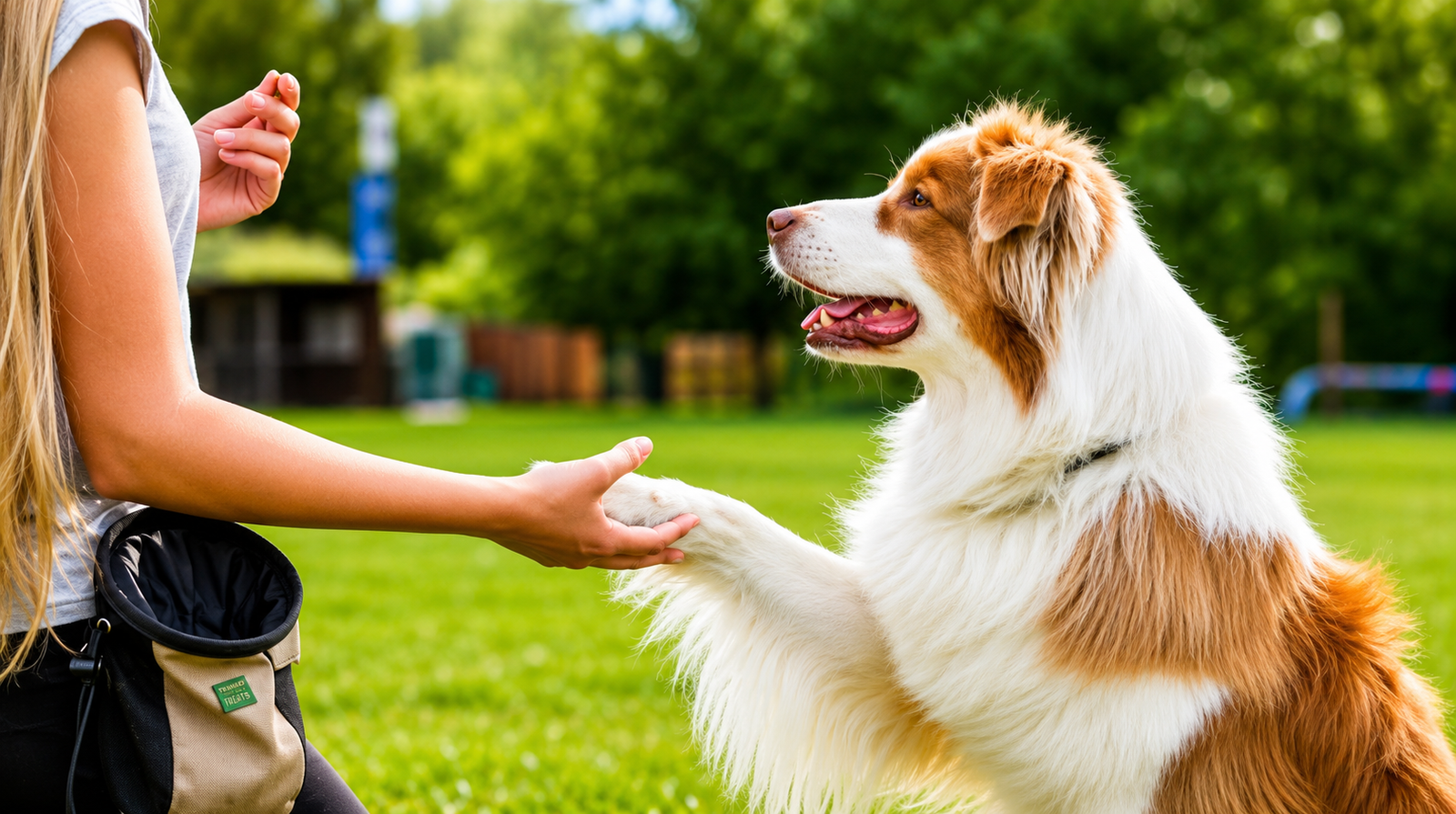
Positive reinforcement is one of the most widely used reward-based approaches to dog training. The basic idea is simple: when a dog performs a behavior the owner wants, the dog receives something valuable, such as food, play, praise, or access to something enjoyable.
For example, suppose a dog sits instead of jumping on a visitor. If the dog receives attention for sitting, that behavior becomes more useful to the dog than jumping.
Timing matters. The reward should come close to the desired behavior so the dog can make the connection.
Training should also match the dog’s ability. A behavior that is reliable inside the house may not work immediately in a busy park. Owners should increase distractions gradually rather than expecting a dog to perform perfectly in every environment.
Reward-based training does not mean giving treats constantly without structure. Rewards should be connected to specific behaviors and used as part of a clear training plan.
How to Teach a Dog New Behaviors
A new behavior is easier to teach when it is broken into manageable steps.
Start somewhere quiet where the dog can concentrate. Give the cue or encourage the desired behavior, then reward the dog immediately when the correct response happens.
Repeat the exercise several times, but avoid making the session unnecessarily long.
Golden Paws step-by-step guide to teaching new dog behaviors
As the dog becomes more consistent, gradually introduce distractions, distance, duration, or different locations. If the dog suddenly struggles, make the exercise easier again.
This progression is important because dogs do not automatically understand that a behavior learned in one place applies everywhere.
For example, a dog may perform “come” perfectly in a quiet living room but ignore the same cue when another dog is nearby. That does not necessarily mean the dog is being stubborn. The environment has simply made the task much harder.
Basic Skills Every Dog Should Learn
Sit
Sit is one of the easiest foundation behaviors to teach and can become useful in many everyday situations.
Owners can ask for a sit before meals, before opening a door, or when greeting people. The important part is consistency.
Stay
Stay teaches a dog to remain in a particular position until released. Begin with very short periods and slowly increase duration and distance.
Come
Reliable recall is an important safety skill. Begin recall practice in a secure, low-distraction environment before increasing distance and distractions.
Leave It
Leave It can help a dog disengage from something it should not pick up or approach.
Drop It
Drop It teaches a dog to release an object voluntarily. This can be useful when a dog grabs toys, household objects, or something unsafe.
Loose-Leash Walking
Walking politely on a leash requires practice because outdoor environments contain many competing distractions.
Start somewhere quiet and reward the dog for staying near you with a loose leash. Gradually practice in busier environments.
Puppy Training Services
Puppies are constantly learning, which makes early training especially valuable. However, puppy training should be appropriate for the puppy’s age and developmental stage.
Common puppy training goals include:
- Responding to their name
- House training
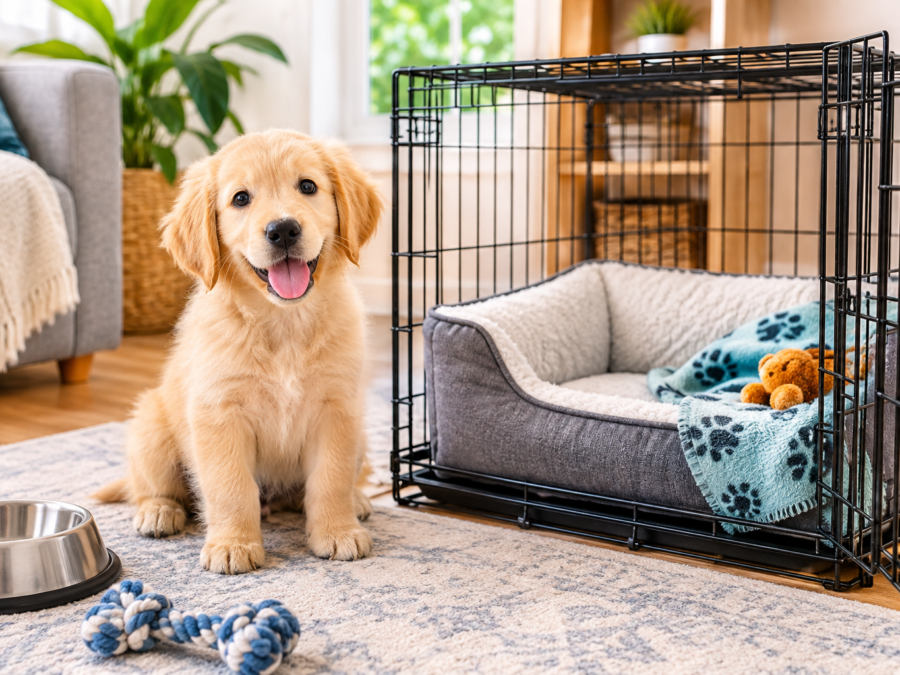
- Crate training
- Basic obedience
- Gentle handling
- Appropriate play
- Bite inhibition
- Recall
- Leash skills
- Socialization
- Calm behavior
Puppies should not be expected to behave like fully trained adult dogs. Their attention span, physical control, and ability to handle distractions are still developing.
Early experiences should also be positive and controlled. Introducing a puppy to new people, surfaces, sounds, environments, and handling can help build useful life skills when done appropriately.
Can Older Dogs Be Trained?
Yes. An older dog can learn new behaviors.
Adult dogs may have established habits, but that does not mean training is impossible. In fact, many adult dogs can make significant progress when training is consistent and the owner understands what motivates them.
An adopted dog may need additional time to adjust to a new environment. Owners should avoid overwhelming a newly adopted dog with too many demands immediately.
Training should start with achievable behaviors and gradually become more difficult.
Age is not the only consideration. Physical health can also affect behavior and learning. If an older dog’s behavior changes suddenly, a veterinary check can help rule out medical factors.
Common Problems Addressed by Dog Training Services
Professional trainers are often contacted because owners are struggling with a particular behavior.
Jumping on People
Dogs may jump because they have learned that jumping produces attention. Teaching an alternative behavior, such as sitting, gives the dog another way to interact.
Everyone in the household should follow the same rule. If jumping sometimes earns attention, the dog may continue trying it.
Barking
Barking has many possible causes, including excitement, fear, frustration, territorial responses, and attention-seeking.
The solution depends on the reason behind the barking. Simply trying to stop the noise without understanding its cause may not solve the underlying problem.
Leash Pulling
Leash pulling can make walks stressful for both the dog and owner. Training should reward appropriate walking behavior and begin in environments where the dog can concentrate.
Chewing
Chewing is natural for dogs. Owners can reduce unwanted chewing by managing access to household objects and providing appropriate chew items.
Digging
Some dogs dig because they enjoy it, while others may dig due to boredom, instinct, anxiety, or an attempt to escape. Training should be combined with environmental management and appropriate enrichment.
Separation-Related Problems
Dogs that become extremely distressed when left alone may require more specialized help.
If a dog destroys objects, vocalizes excessively, eliminates indoors, or shows severe distress specifically when alone, a qualified behavior professional can help determine an appropriate plan.
Behavior Modification for Dogs
Behavior modification is different from teaching a simple command.
If a dog is fearful of strangers, for example, teaching “sit” alone may not solve the fear. The dog may need a carefully managed program that changes how it responds to the situation.
The same applies to serious aggression, intense anxiety, resource guarding, or severe reactivity.
Owners should not deliberately expose a fearful or aggressive dog to situations that could trigger dangerous behavior simply to “teach it a lesson.”
For serious cases, veterinary advice and qualified behavior support may be appropriate.
How to Choose a Professional Dog Trainer
Choosing the right trainer is one of the most important parts of using Dog Training Services.
Dog training is not regulated in exactly the same way as many veterinary professions, so owners should research a trainer’s education, experience, methods, and professional credentials.
Useful questions include:
- What training methods do you use?
- What happens when a dog makes a mistake?
- Have you worked with this type of behavior before?
- What qualifications or certifications do you hold?
- Can I observe a class?
- Will you teach me how to continue the training?
- Do you work with a veterinarian or behavior professional when needed?
Gentle Beast’s comprehensive training guide discusses equipment, finding a trainer, training methods, puppy foundations, problem behaviors, advanced training, and professional certifications. Gentle Beast ultimate dog training guide
Credentials can be useful, but they should not be the only factor. A trainer should also be able to explain their methods clearly and make the owner feel comfortable asking questions.
Private Training vs. Group Classes
Both options can be useful.
Private training provides individualized attention. It may be especially helpful when the owner has a specific behavior problem or wants training in the home.
Group classes provide opportunities to practice around controlled distractions. They can be useful for puppy training and basic obedience.
Some dogs benefit from both. A dog might attend a group obedience class while receiving private help for a specific problem.
The best choice depends on the dog, the owner, and the training objective.
Dog Training Equipment
You do not need a house full of equipment to train a dog.
Basic supplies may include:
- Appropriate collar or harness
- Standard leash
- Long line for suitable recall exercises
- Small training treats
- Treat pouch
- Training mat
- Crate when appropriate
- Safe toys
- Clicker, if useful for the training method
Equipment should support training rather than replace it.
A leash, for example, does not teach a dog to walk politely by itself. The owner still needs to reinforce the behavior they want.
How Long Does Dog Training Take?
There is no universal training timeline.
A dog may learn a simple behavior within a few sessions, while reliable performance around distractions can take considerably longer.
The biggest factors include the dog’s previous learning history, motivation, environment, consistency, difficulty of the behavior, and the owner’s training skills.
Short, regular practice is often more useful than occasional marathon sessions.
For example, several brief sessions throughout the day can give a dog repeated opportunities to succeed without causing unnecessary frustration.
How to Continue Training at Home
Professional instruction is most useful when owners continue practicing between appointments.
Everyone in the household should use consistent cues and expectations.
If one person rewards a dog for jumping while another person tries to discourage it, the dog receives conflicting information.
Owners should also look for training opportunities during normal routines.
Ask for a sit before opening the door. Reward calm behavior when guests arrive. Practice recall in safe environments. Reinforce polite leash behavior during walks.
These small moments can turn everyday life into useful training practice.
Advanced Dog Training
Once a dog has a strong foundation, owners can explore more advanced activities.
These may include:
- Trick training
- Rally
- Obedience competitions
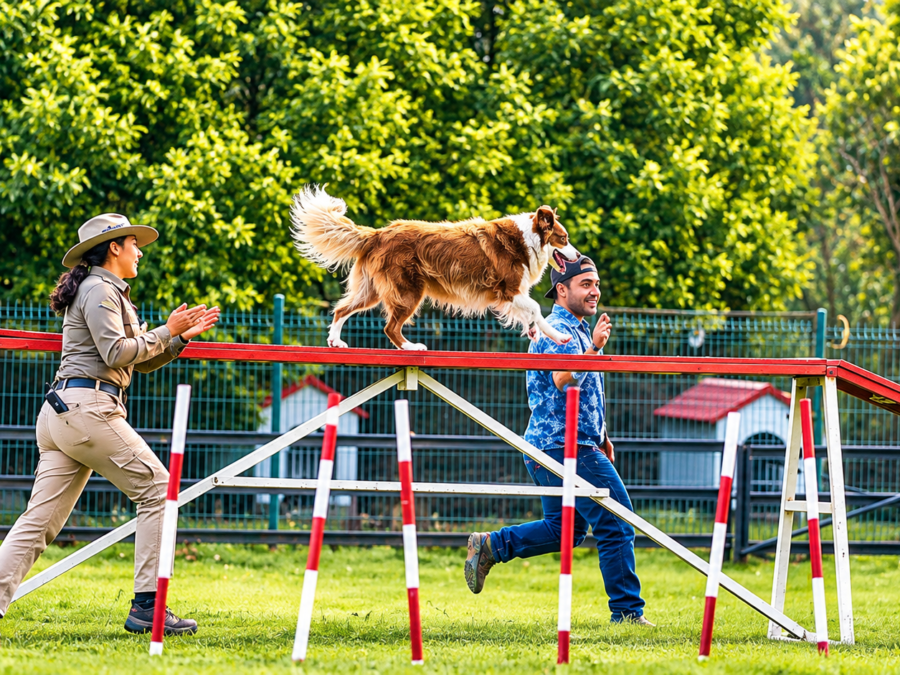
- Agility
- Nosework
- Scent activities
- Cooperative care
- Other suitable dog sports
Advanced training is not necessary for every dog, but mental challenges can provide useful enrichment.
Training can also strengthen communication between the dog and owner because both are learning to work together.
When Should You Hire Dog Training Services?
You do not have to wait for a major behavior problem before contacting a trainer.
Professional help can be useful when:
- You have recently brought home a puppy.
- Your dog pulls heavily on walks.
- Recall is unreliable.
- Your dog jumps on visitors.
- House training is difficult.
- Your dog struggles around other dogs.
- Your dog is fearful in certain situations.
- You need help creating a consistent training routine.
- You want to learn more effective training techniques.
Early guidance can prevent owners from accidentally reinforcing habits they later want to change.
Frequently Asked Questions
What do Dog Training Services include?
Dog Training Services can include puppy training, obedience, leash walking, recall, private lessons, group classes, socialization, and behavior modification.
Is professional dog training worth it?
Professional training can be valuable when an owner needs expert guidance, a structured plan, or help with a behavior that is difficult to manage independently.
What is the best method for training a dog?
Reward-based training is widely used because it teaches dogs which behaviors produce desirable outcomes. The method should be consistent, humane, and appropriate for the individual dog.
When should puppy training begin?
Puppies can begin learning appropriate behaviors early. Training should be short, positive, and matched to the puppy’s developmental stage.
Can an older dog still be trained?
Yes. Adult and senior dogs can learn new behaviors. Training may simply need to account for established habits, previous experiences, physical limitations, and the dog’s environment.
How do I find a good dog trainer?
Research the trainer’s methods, experience, education, credentials, reviews, and approach to behavior problems. Ask direct questions before booking.
Can dog training stop aggression?
Training may help manage and improve some behavior problems, but serious aggression should be handled carefully. A qualified behavior professional and veterinarian may be needed depending on the situation.
How often should I train my dog?
Short, regular sessions are generally easier for dogs to handle than long sessions. The exact schedule should depend on the behavior being taught and the individual dog.
Do dogs need training after puppyhood?
Yes. Training can continue throughout a dog’s life. Previously learned behaviors also benefit from regular reinforcement.
What should I do if my dog is not responding to training?
Make the exercise easier, reduce distractions, check your timing and rewards, and consider whether the dog understands the cue. If the problem continues, professional guidance can help identify what is going wrong.
Must read our other blogs:
Pet Urgent Care: What to Know When Your Pet Needs Immediate Veterinary Attention