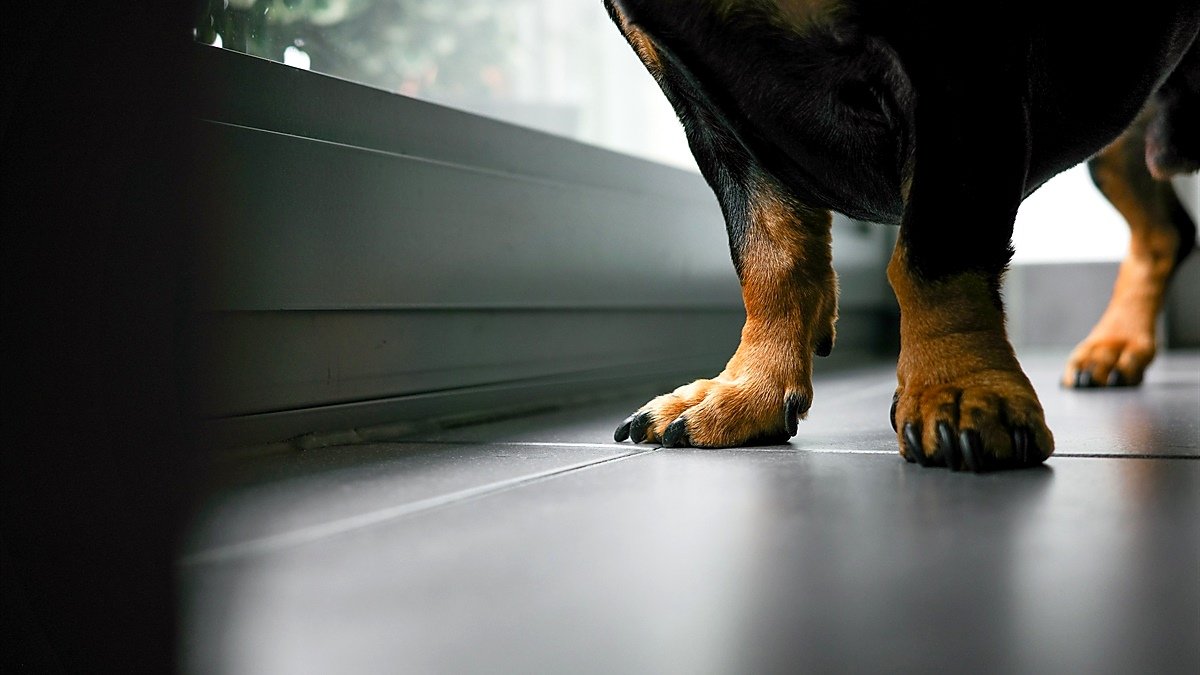
Hearing your dog nails clicking on floor tiles or hardwood is one of the easiest clues that your dog’s nails may be too long. That steady tap-tap-tap as your dog walks across the kitchen is not just a noise. It often means the nails are reaching the ground with every step.
The good news is that this is easy to fix with regular trims. This guide explains what dog nails clicking on floor surfaces means, how short a dog’s nails should be, how often to trim, how to avoid hurting your dog, and when a groomer or vet is the better choice.
What Does It Mean When You Hear Dog Nails Clicking on Floor?
According to VCA Animal Hospitals’ guide to trimming a dog’s nails, written by two veterinarians, two common signs that a dog needs a nail trim are nails touching the ground when the dog stands and audible clicking on hard floors when the dog walks.
In other words, dog nails clicking on floor surfaces usually means the nails have grown past the point where the paw pads carry the dog’s weight. Instead of the pads meeting the ground first, the nail tips make contact. That contact creates the familiar sound of dog nails clicking on floor surfaces.
Not every click means a problem, though. A dog trotting fast across a slick floor may click briefly even with fairly short nails. The clearer test is what you see when your dog stands still on a flat surface.
The Simple Standing Test
The quickest way to judge dog nails clicking on floor surfaces is a standing test. Have your dog stand naturally on a hard, level floor, then look at the paws from the side.
| What You See | What It Likely Means |
|---|---|
| A small gap between nail tips and the floor | Nails are a good length |
| Nail tips just touching the floor | Due for a trim soon |
| Nails pressing into the floor, toes pushed up | Overdue, trim as soon as possible |
| Nails curving sideways or into the pad | Overgrown, may need a groomer or vet |
If you hear dog nails clicking on floor surfaces and the standing test shows the tips touching the ground, a trim is due.
Why Long Nails Matter
It is easy to think of long nails as only a cosmetic issue, but they can affect comfort. When nails push against the floor with every step, the toes are forced upward and the foot does not sit naturally. Owners who hear dog nails clicking on floor tiles often notice their dog slipping more on smooth surfaces too.
Overgrown nails are also more likely to snag on carpet or furniture, split, or break. VCA also warns about dewclaws. These inner nails do not touch the ground, so they never wear down naturally and can grow long enough to curl back into the paw pad.
How Often Should You Trim?
VCA says most dogs need a nail trim about once a month. Activity level affects how soon you hear dog nails clicking on floor surfaces again:
| Lifestyle | Typical Trim Schedule |
|---|---|
| Walks often on pavement or concrete | May go a bit longer between trims |
| Mostly indoors, walks on grass or carpet | About every 3 to 4 weeks |
| Inactive or senior dog | May need trims every 3 weeks |
| Fast-growing nails or dewclaws | Check every couple of weeks |
Regular, small trims work better than occasional big ones. If you notice dog nails clicking on floor surfaces only a few weeks after a trim, your dog may simply need a shorter schedule.
Understanding the Quick
Inside each nail is the quick, which contains blood vessels and nerves. Cutting into it hurts and causes bleeding, so it is the main thing to avoid when trimming.
VCA recommends removing small amounts at a time, about 1 to 2 mm per clip. On light-colored nails, you can often see the pink quick, and VCA suggests cutting about 2 to 3 mm away from it. On dark nails, where the quick is hidden, trim only the visible tip and take tiny slices.
When nails are allowed to grow long for months, the quick can grow longer too. That makes it harder to get the nails short in one session. Frequent trims help keep the nails, and the quick, at a manageable length. If you have heard dog nails clicking on floor surfaces for months, expect to shorten them gradually over several trims.
How to Trim Your Dog’s Nails at Home
If your dog tolerates handling, trimming at home can stop dog nails clicking on floor surfaces within a few sessions.
- Pick your tool. VCA describes guillotine-style and scissor-style clippers. Grinders are another option and leave smoother edges.
- Get your dog comfortable. Touch the paws during calm moments and reward with treats before you ever trim.
- Hold the paw gently but firmly. Press lightly on the toe pad to extend the nail.
- Trim a little at a time. Take 1 to 2 mm per cut, angled roughly parallel to the floor.
- Check the nail after each cut. Stop once you get close to the quick.
- Do the dewclaws. They are easy to forget and prone to curling.
- Reward generously. End on a positive note, even if you only finish a few nails.
Clippers vs. Grinders
| Tool | Pros | Cons |
|---|---|---|
| Guillotine clippers | Quick, inexpensive | Harder to see exactly where you cut |
| Scissor-style clippers | Good control, works on thick nails | Can crush if blades are dull |
| Grinder | Smooth edges, lower risk of hitting the quick | Noise and vibration can bother some dogs; keep hair away |
VCA notes that grinders leave smooth edges and carry less risk of damaging the quick, but they need careful handling around hair and skin. Many owners use clippers for length and a grinder for smoothing. Either tool will stop dog nails clicking on floor surfaces if you use it regularly.
What to Do If You Cut the Quick
Accidents happen, even to experienced groomers. If the nail bleeds:
- Stay calm so your dog stays calm.
- Apply styptic powder to the tip of the nail. VCA notes that flour or cornstarch can work if you do not have styptic powder.
- Apply gentle pressure for a minute or two.
- Call your vet if bleeding does not stop after several minutes of pressure.
Puppies and Nail Trims
The best time to get a dog comfortable with nail care is puppyhood. Puppy nails are thin and sharp, and they grow quickly. Handling the paws daily, touching each toe, and rewarding calm behavior makes future trims far easier.
A puppy that learns early to accept trims is much less likely to grow into an adult with dog nails clicking on floor surfaces because trims became a battle.
Senior Dogs and Long Nails
Older dogs often walk less and spend more time on soft beds and carpets, so their nails wear down more slowly. At the same time, many seniors have stiff joints and weaker grip. Long nails can make it harder for them to stand up from a lying position or keep their footing on smooth floors.
For senior dogs, hearing dog nails clicking on floor surfaces is a good reminder to check the paws more often. Shorter, more frequent trims, done gently while your dog is lying down, are usually easier on aging joints.
Floors, Rugs, and Traction
Trimming solves the root problem, but your home setup also helps. Runners or rugs on slick hallways and stairs give dogs better grip while you work on getting the nails shorter. Keeping the fur between paw pads trimmed can improve traction too.
These changes do not replace trims, but they make life safer and quieter for a dog with nails that have been clicking on hard floors for a while. Once dog nails clicking on floor surfaces stops, many owners keep the rugs anyway for older dogs.
Other Reasons for Clicking Sounds
If your dog’s nails are short and you still hear dog nails clicking on floor surfaces, consider other causes:
- Very hard, smooth floors like tile amplify every step.
- Gait or posture changes can make a dog walk on its toes more than usual, especially older dogs with joint pain.
- Uneven nail wear can leave one or two nails longer than the rest.
If you notice a new limp, reluctance to walk, licking at the paws, or a broken nail, contact your vet.
When to Use a Groomer or Vet
If dog nails clicking on floor surfaces keeps coming back because your dog will not tolerate trims at home, that is okay. VCA notes that groomers and vet clinics can trim nails, and vets can offer sedation for dogs that become very stressed.
Many grooming salons offer quick nail trims without a full bath. If you are near a pet supply chain, our guide to Pet Supplies Plus grooming explains what one popular option includes.
A professional visit is a smart choice if your dog has very long or curled nails, black nails you cannot judge, a history of biting during handling, or a split or bleeding nail.
Making Nail Care Part of Your Routine
The easiest way to stop dog nails clicking on floor surfaces for good is to fold nail checks into your regular grooming. Look at the paws when you brush or bathe your dog. If your dog has skin allergies, paw checks are even more important, and our article on how often to bathe a dog with allergies covers how to fit bathing into that routine.
Short, regular trims keep nails off the floor, protect the quick, and make the whole process less of an event for both of you.
Frequently Asked Questions
Should I hear my dog nails clicking on floor surfaces at all?
Ideally, not much when your dog walks normally. VCA lists clicking on hard floors as a sign that nails need trimming. Brief clicking during fast movement on slick floors can still happen.
How short should a dog’s nails be?
Short enough that they do not touch the floor when your dog stands still on a level surface.
Can walking on pavement replace nail trims?
It can help wear nails down, but most dogs still need regular trims, especially for dewclaws.
Why do I still hear dog nails clicking on floor surfaces after a trim?
Your dog may need a slightly shorter trim, or the floor may simply be very hard and smooth. Use the standing test to check.
Is it okay to trim only a little at a time?
Yes. Small, frequent trims are safer and help keep the quick from growing longer.
This article is general information and not a substitute for veterinary advice. If a nail is cracked, bleeding heavily, or growing into the paw pad, contact your veterinarian. Ask your vet or groomer to show you how to trim safely if you are unsure. Last verified October 2026.
Sources
- VCA Animal Hospitals, How to Trim a Dog’s Nails: trimming technique and frequency.
- American Kennel Club, How to Trim Your Dog’s Nails Safely: step-by-step nail trimming guide.
