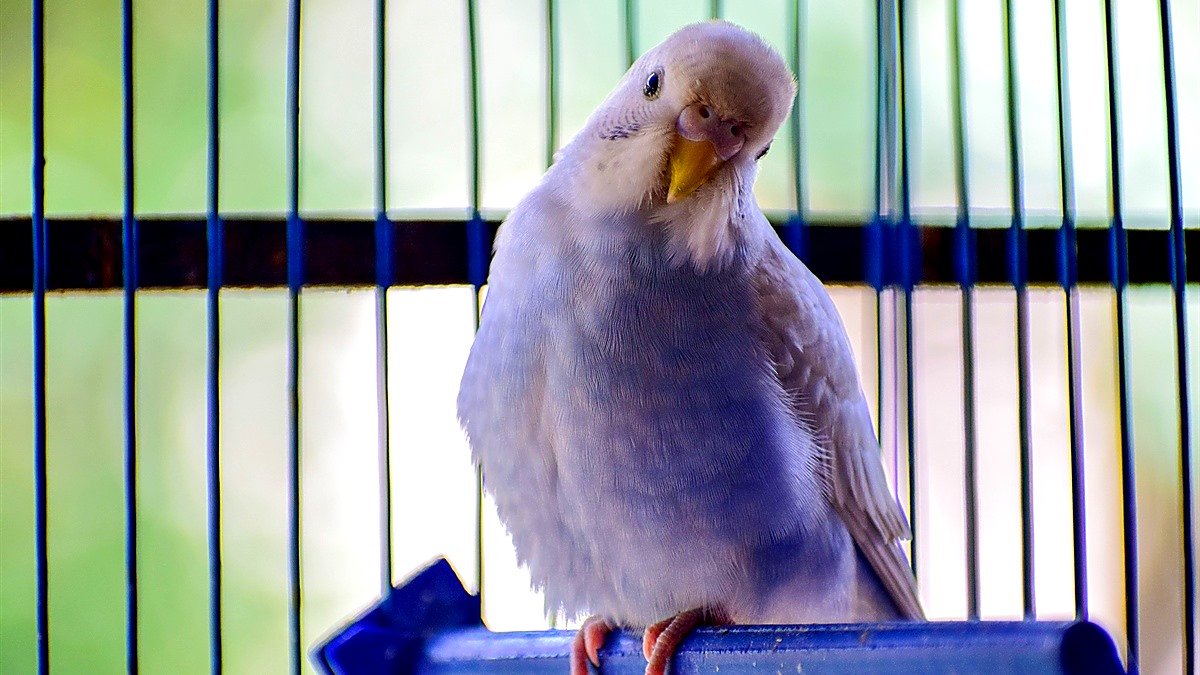
A budgie cage cover at night is one of the most debated topics among bird owners. Some swear it gives their parakeet deeper, calmer sleep. Others worry it traps heat, frightens the bird, or is just an old habit. The honest answer sits in the middle: a cover is a tool, and whether it helps depends on your home and your bird.
This guide explains why sleep matters so much for budgies, what a cover actually does, when it can backfire, how to choose a safe one, and what to do if your bird panics in the dark.
Why Sleep Matters So Much for Budgies
Budgies, also called parakeets, come from Australia. Like most pet parrots, they are tuned to a fairly steady cycle of daylight and darkness. In a busy home, though, lights, TVs, and late-night noise can stretch their “day” far beyond what their bodies expect.
The avian veterinary resource For The Birds DVM explains that birds have a light-sensitive pineal gland that sets their daily rhythm. It recommends a routine built around roughly 12 hours of day and 12 hours of night, and says restoring a regular day and night cycle usually leads to a happier, healthier bird.
Long days with too much light are linked to hormonal behavior in pet birds, such as nesting, aggression, and in females, repeated egg laying. So a proper dark, quiet night is not just about rest. It also supports your budgie’s hormones and behavior, and in bright homes, a budgie cage cover at night is one of the easiest ways to create that darkness.
What a Budgie Cage Cover at Night Actually Does
A budgie cage cover at night does three main things:
- Blocks light. It cuts out lamps, screens, streetlights, and early sunrise.
- Reduces movement. Your bird cannot see people walking past or shadows moving across the room.
- Muffles some noise. A cover will not soundproof a cage, but it can soften sudden sounds.
A budgie cage cover at night also becomes a signal. Many budgies learn that when the cover goes on, it is time to settle down. That routine alone can make bedtime easier.
Pros and Cons at a Glance
Here is how a budgie cage cover at night stacks up.
| Pros | Cons |
|---|---|
| Blocks light from screens, lamps, and windows | Heavy or tight covers can trap heat and cut airflow |
| Hides movement that can startle a sleeping bird | Some birds panic in total darkness |
| Helps build a predictable bedtime routine | Loose threads and fraying fabric can tangle toes |
| Can support a steady day and night cycle | Not needed if the room is already dark and quiet |
The key takeaway: a budgie cage cover at night is most useful in homes where the bird’s room stays bright or busy after dark.
Do All Budgies Need a Cover?
No. If your budgie sleeps in a room that gets truly dark and quiet at a set time each night, a budgie cage cover at night may add little. Some owners move the cage to a spare room or use a small separate sleep cage in a quiet spot instead.
You likely need a budgie cage cover at night if:
- The cage is in a living room where people stay up late
- A TV, computer, or hallway light is on after your bird’s bedtime
- Streetlights or car headlights shine through a nearby window
- Sunrise lights up the room much earlier than you want your bird awake
You may not need a budgie cage cover at night if the room already goes dark and quiet on a regular schedule, and your bird sleeps soundly.
How Much Sleep Does a Budgie Need?
You will often see 10 to 12 hours of sleep recommended for budgies. That lines up with the 12-hour night that For The Birds DVM describes as ideal for pet birds.
For comparison, PetMD’s budgie care sheet, written by a veterinarian, recommends full-spectrum UV lighting for 10 to 12 hours per day during the daytime. Put together, a practical schedule is about 12 hours of light and 12 hours of darkness, adjusted slightly for your household.
| Time | What Happens |
|---|---|
| 7:00 a.m. | Remove the cover or open the blinds. Offer fresh food and water. |
| Daytime | Normal light, play, and interaction |
| 6:30 p.m. | Dim the room and wind down |
| 7:00 p.m. | Put the cover on, or turn off the lights in the bird’s room |
Pick times that fit your routine, then stay consistent. If you use a budgie cage cover at night, put it on at the same time each evening. Consistency matters more than the exact hour.
How to Choose a Safe Budgie Cage Cover at Night
Not every blanket or towel makes a good budgie cage cover at night. Look for these features:
| Feature | Why It Matters |
|---|---|
| Breathable fabric, such as cotton or linen | Allows airflow and prevents overheating |
| No loose threads, loops, or fraying edges | Budgies can catch toes and nails in loops |
| Dark but not airtight | Blocks light without sealing the cage |
| Right size for the cage | Too small leaves gaps, too large drags on the floor |
| Washable | Covers collect dust, feathers, and droppings |
Avoid plastic sheets or tightly woven synthetic fabrics that trap heat and moisture. If you use an old towel or blanket, check it often for holes and pulled threads, since curious budgies may chew at the fabric from inside the cage.
How to Introduce the Cover
Some budgies accept a budgie cage cover at night right away. Others find it scary. If your bird seems nervous, go slowly:
- Start with one side. Cover only the back of the cage for a few nights.
- Add a second side. Once your bird stays calm, cover the back and one more side.
- Leave the front partly open. Many birds feel safer if they can still see a little of the room.
- Talk softly while covering. A calm voice and a steady routine help your bird connect the cover with sleep.
Never throw the cover over the cage quickly. Sudden darkness and a rush of fabric can startle a bird and cause it to flap in fear.
Night Frights: What They Are and How to Help
Night frights happen when a sleeping bird is startled in the dark and flaps wildly around the cage. They are more often discussed in cockatiels, but budgies can have them too. Common triggers include a sudden noise, car headlights sweeping across the room, a pet moving nearby, or even a household tremor.
During a night fright, a budgie can hit the cage bars and injure its wings, feet, or blood feathers. If it happens:
- Turn on a soft light so your bird can see where it is.
- Speak calmly and let your bird settle before approaching.
- Check for bleeding from feathers or feet once your bird is calm.
- Call an avian vet if you see bleeding that does not stop, or if your bird seems injured.
Some owners find that a full budgie cage cover at night makes night frights worse, because the bird cannot see anything when startled. In the comments on a BirdTricks article about covering, one owner said leaving one corner uncovered and using a night light stopped her bird’s frights. That is one owner’s experience, not a guarantee, but it is a common approach. If your bird has night frights, try a partial budgie cage cover at night plus a dim night light.
Cage Placement Matters Too
Even the best budgie cage cover at night cannot fix a poor cage location. Place the cage:
- Away from windows and doors that bring drafts, bright light, or sudden movement
- Out of the kitchen, since cooking fumes, including from nonstick pans, can be dangerous for birds
- Against a wall so at least one side feels protected
- Away from other pets that may prowl near the cage at night
A good location plus a budgie cage cover at night gives your bird the calmest setup.
How Budgie Sleep Compares to Other Small Pets
Different pets need very different night routines. A crested gecko, for example, is most active at night, so its keeper serves food in the evening, as we covered in our Repashy Crested Gecko Diet review. Budgies are the opposite and need darkness and quiet at night.
Ferrets have their own habits too. Our guide on why ferrets steal and hide things looks at another small pet with strong instincts. If you keep more than one type of pet, plan each animal’s space around its own sleep schedule.
When to Talk to an Avian Vet
Contact an avian veterinarian if your budgie:
- Sleeps much more than usual during the day, or sits fluffed up for long periods
- Has repeated night frights with injuries
- Shows hormonal behavior such as constant nesting or repeated egg laying
- Stops eating, or has changes in droppings
A budgie cage cover at night supports healthy sleep, but it cannot fix illness. Sleepiness and fluffed feathers can be signs of illness in birds, which often hide symptoms until they are quite sick.
Frequently Asked Questions
Is it cruel to use a budgie cage cover at night?
No, not when it is used correctly. A breathable cover that blocks light without cutting off airflow can help many budgies sleep better. Watch your bird’s reaction and adjust if it seems stressed.
Should I cover all four sides of the cage?
Not necessarily. Many owners cover the back and sides and leave part of the front open, especially for birds prone to night frights.
Can I use a towel as a cover?
Yes, if it is breathable and in good condition. Check often for loose threads and holes your budgie could chew or catch its toes in.
What color should a budgie cage cover at night be?
Darker colors block more light, but breathability matters more than color. Choose a fabric that lets air move freely.
What if the room gets warm?
In warm weather, use a lighter fabric or cover fewer sides so heat does not build up inside.
What if my budgie screams when I cover the cage?
Go back to a partial cover and introduce it gradually. A consistent routine and a calm voice usually help your bird adjust.
This article is general information and not a substitute for advice from an avian veterinarian. If your budgie is injured during a night fright, or seems unusually sleepy or fluffed up during the day, contact an avian vet promptly. Last verified September 2026.
