If your dog leans against the wall during naps, storms, or random quiet moments around the house, you’ve probably wondered whether it’s just a quirky comfort habit or something worth mentioning to your vet. Most of the time, a dog leans against the wall for one of a handful of harmless reasons — but there’s one specific version of this behavior that genuinely is a medical emergency, and it’s worth knowing the difference.
This guide covers every common reason a dog leans against the wall for comfort, warmth, or security, and the one warning sign — head pressing — that means you should call your vet immediately rather than waiting.
Quick Answer
- Most of the time, a dog leans against the wall simply for physical support and comfort while resting
- Cooler wall and floor surfaces make this position appealing during hot weather
- When an anxious or fearful dog leans against the wall, it’s often to reduce how much space they need to keep watch over
- When an older dog suddenly leans against the wall more than before, it often means the wall is providing support for an aching joint or injury
- Head pressing — actively pushing the forehead into a wall or corner — is a distinct, serious sign and a same-day veterinary emergency
Comfort and Physical Support
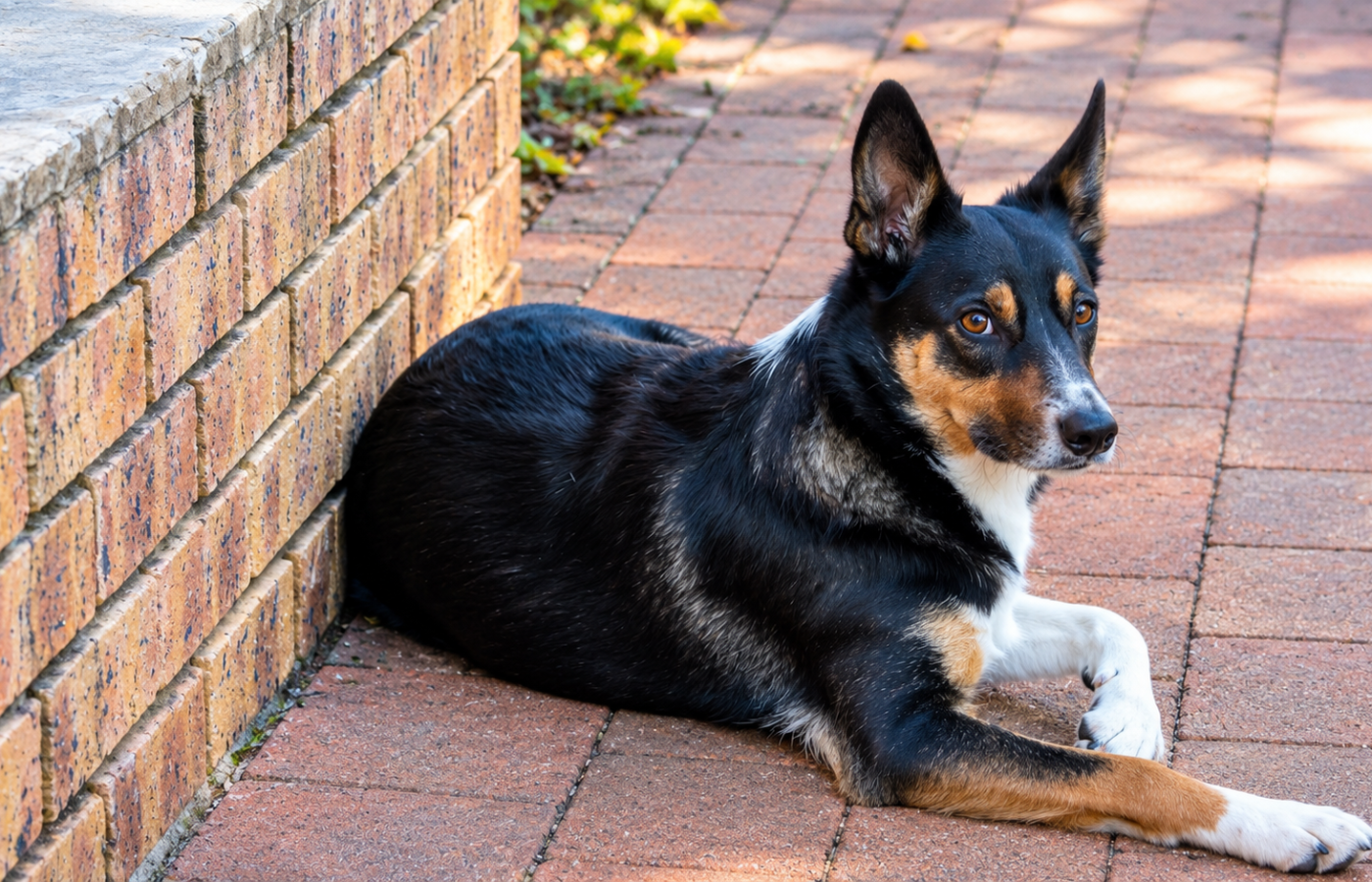
The simplest and most common reason a dog leans against the wall is basic physical comfort — of every reason a dog leans against the wall, this one applies to the largest share of cases by far. A wall offers steady support for a dog’s legs, hips, or back while resting, similar to how a person might lean into a couch cushion rather than sit fully upright. Some dogs simply develop this as a personal resting preference the same way people have a favorite sleeping position, and there’s nothing unusual about a dog that consistently chooses to lean against the wall over lying fully flat on the floor.
Staying Cool When It’s Warm
During hot weather, a dog leans against the wall partly because walls and floors — especially tile, stone, or plaster — tend to run cooler than the surrounding air, offering a bit of passive relief without needing to seek out air conditioning or shade specifically. If you notice this behavior increasing specifically during summer months, it’s likely tied to temperature regulation rather than anything behavioral or medical, and the pattern should ease up once the weather cools down again.
Feeling Safe: The Anxiety Connection
For anxious, fearful, or newly adopted dogs, a dog leans against the wall for a psychological purpose rather than a physical one. By positioning itself against a wall, a dog reduces the number of directions they need to stay alert to — effectively cutting their “watch duty” in half, since nothing can approach from behind a solid wall. This is especially common in dogs adjusting to a new home, dogs with a history of trauma, or dogs generally prone to hypervigilance, and it often shows up alongside other anxiety signs like difficulty settling in open spaces or reluctance to lie down in the middle of a room.
If this pattern sounds familiar — especially paired with other signs of chronic anxiety in an older dog — our Separation Anxiety in Senior Dogs guide goes deeper into recognizing and managing anxiety-driven behavior, since a dog leaning against the wall out of fear benefits from a different approach than one doing it purely for comfort.
When Pain Is the Real Reason
A dog leans against the wall for pain-related support more often than owners initially assume, particularly in senior dogs or dogs recovering from an injury. Aching joints, arthritis, or an unreported injury can make a wall’s steady support genuinely useful for a dog trying to stay upright or take pressure off a sore limb — when an older dog leans against the wall more than it used to, joint pain is a common explanation. If wall-leaning is new, has increased noticeably, or comes with any limping, reluctance to jump or climb stairs, or visible stiffness after rest, a veterinary check for pain or joint issues is a reasonable next step rather than assuming it’s just a comfort preference.
The Critical Warning Sign: Head Pressing
This is the single most important distinction to understand. Head pressing — a dog actively and repeatedly pushing its forehead against a wall, furniture, or into a corner, often for an extended period and seemingly without an obvious trigger — is not the same behavior as casually leaning against a wall while resting, and it should never be treated the same way. According to PetMD, head pressing is generally a sign of neurological disease, potentially involving the forebrain, and can be linked to causes ranging from brain tumors and infections to liver or kidney disease, toxin exposure, or severe electrolyte imbalances.
The key difference to watch for: when a dog leans against the wall for ordinary comfort, it stays relaxed, can be called away easily, and stops the behavior once they get up. A dog head pressing looks driven and compulsive, often continuing the behavior even when interrupted, and may be paired with other neurological signs like disorientation, circling, vision changes, or seizures. If you see true head pressing rather than casual leaning, veterinarians recommend same-day evaluation — this is genuinely one of the few behavioral signs where waiting a few days to “see if it resolves” is not the right call.
Does Breed or Age Change the Picture?
Certain dogs seem more prone to this than others, and understanding why can help you judge whether it’s worth a closer look. A senior dog leans against the wall more often simply because age-related joint stiffness and arthritis make passive support more appealing during rest, so a wall-leaning habit that develops later in a dog’s life is worth mentioning at their next wellness visit even without other symptoms. Naturally anxious breeds, or any dog with a documented history of past trauma or a rough shelter experience, may lean against the wall as a standing coping mechanism rather than an occasional habit — in these dogs, frequent wall-leaning is less likely to be random and more likely tied to their baseline anxiety level. Puppies, by contrast, rarely settle into a consistent pattern where the dog leans against the wall regularly, since the behavior tends to develop as dogs mature and establish personal resting preferences.
A Few Real-World Examples
Context helps make sense of an individual case. When a dog leans against the wall for a few minutes after a walk, then moves to a bed or the floor, it’s almost certainly just resting comfortably — nothing to act on. When a dog leans against the wall specifically during thunderstorms or fireworks, trembling slightly, is showing an anxiety response tied to a specific trigger rather than a general pattern, and comfort measures during those events (a covered crate, calming aids recommended by your vet) are more useful than addressing the wall-leaning itself. A senior dog that leans against the wall after every meal or when getting up from a nap, especially if paired with slower movement, deserves a mention at the vet regardless of how mild it looks day to day.
How to Tell the Difference: A Quick Comparison
| Behavior | Casual Wall-Leaning | Head Pressing |
|---|---|---|
| Body posture | Relaxed, resting | Tense, pushing forehead into surface |
| Duration | Comes and goes, stops easily | Persistent, hard to interrupt |
| Response when called | Comes away normally | May continue or seem unaware |
| Other symptoms | Usually none | Disorientation, circling, seizures possible |
| Urgency | Not urgent on its own | Same-day veterinary emergency |
What to Do About Casual Wall-Leaning
In most everyday cases, when a dog leans against the wall it doesn’t need to be corrected or discouraged — it’s a normal comfort behavior, and interrupting it doesn’t address whatever benefit the dog is actually getting from it (support, coolness, or a sense of security). If the behavior seems anxiety-driven, working on general confidence-building and creating a secure resting spot elsewhere in the home — a covered bed, a crate with the door left open, a corner away from foot traffic — can give an anxious dog an alternative that serves the same psychological purpose without needing the wall specifically.
When to Call the Vet
Call your veterinarian if a dog leans against the wall in a way that’s new, sudden, or paired with limping, stiffness, or reluctance to move normally — these point toward pain rather than simple comfort-seeking. Any time a dog leans against the wall alongside a noticeable change in appetite or energy, that combination is also worth mentioning at the visit. Call immediately, the same day if possible, if you observe actual head pressing: repeated, driven pushing of the forehead into a wall or corner, especially alongside disorientation, unusual eye movements, circling, or any seizure-like activity. Documenting what you see with your phone’s camera is genuinely useful here, since these behaviors don’t always repeat on command during a vet visit.
Why Does My Dog Lean Against the Wall? The Bottom Line
In the large majority of cases, when a dog leans against the wall, it’s for comfort, coolness, or a sense of security — all normal, harmless behaviors that don’t need intervention. The exceptions worth watching for are sudden onset tied to pain or injury, and especially true head pressing, which looks and behaves differently from casual leaning and warrants same-day veterinary attention rather than a wait-and-see approach.
FAQ
Is it normal for a dog to lean against the wall?
Yes, in most cases — when a dog leans against the wall occasionally and stays relaxed, it’s a normal habit, not a red flag. When a dog leans against the wall, it’s usually for physical support, cooler surfaces, or a sense of security while resting.
What’s the difference between wall-leaning and head pressing?
When a dog leans against the wall casually, it stays relaxed and easily interrupted; head pressing involves repeatedly and forcefully pushing the forehead into a wall or corner and is a neurological warning sign requiring same-day veterinary care.
Can anxiety cause a dog to lean against the wall?
Yes. Anxious or fearful dogs often lean against the wall to reduce the directions they need to stay alert to, which can look like frequent wall-leaning or resting against solid surfaces.
When should I worry that my dog leans against the wall?
If it’s sudden, paired with limping or stiffness, or looks like driven head pressing rather than relaxed resting, it’s worth a veterinary evaluation.
Behavioral signs can overlap with medical ones — when in doubt, especially with anything resembling head pressing, a same-day veterinary evaluation is the safest choice. Last verified September 2026.