How often to bathe a dog with allergies has a genuinely different answer than the usual “every 4-12 weeks” advice given for dogs without skin issues. Allergic dogs often need bathing far more frequently — sometimes weekly, sometimes even every few days during a bad flare-up — because bathing itself is part of managing the allergy, not just a hygiene routine.
This guide covers what actually drives bathing frequency for allergic dogs, how severity changes the answer, and the mistakes that can make allergic skin worse instead of better.
Quick Answer
| Situation | Bathing Frequency |
|---|---|
| Mild itching, no broken skin or odor | Every 1–2 weeks |
| Environmental allergies during pollen season | Weekly |
| Active bacterial or yeast infection | Every 2–3 days during treatment, then taper |
| Well-managed, stable allergies | Every 1–2 weeks for maintenance |
What Counts as a Dog Allergy in the First Place
Working out how often to bathe a dog with allergies starts with understanding the allergy itself.
Before working out how often to bathe a dog with allergies, it helps to know what’s actually being treated. Dog allergies generally fall into three broad categories: environmental (pollen, grass, dust, mold), food-related, and flea allergy dermatitis, where a single flea bite triggers a disproportionate skin reaction. Each type can produce similar-looking symptoms — itching, redness, chewing at paws, recurrent ear infections — which is part of why a proper diagnosis matters before settling on a bathing routine. Bathing helps manage symptoms across all three categories, but the underlying cause still needs to be identified for a complete treatment plan.
Why Allergic Dogs Need a Different Bathing Schedule
Most general bathing advice is built around a healthy dog’s coat and skin, where bathing too often strips protective natural oils. How often to bathe a dog with allergies flips part of that logic: for allergic skin, regular bathing actively removes allergens, bacteria, and yeast from the coat and skin surface before they can trigger or worsen a reaction. Under-bathing an allergic dog lets those triggers accumulate, while over-bathing with the wrong product can still cause the same dryness and barrier damage it would in a healthy dog — which is why the type of shampoo matters as much as the frequency.
How Severity Changes the Answer
Here’s how often to bathe a dog with allergies at each level of severity, from mildest to most active.
Mild Itching, No Other Symptoms
For a dog with mild itching but no broken skin, strong odor, greasy patches, or major hair loss, starting with a bath every one to two weeks using a gentle, vet-recommended shampoo is a reasonable baseline. This is close to standard bathing frequency, just on the more frequent end.
Environmental Allergies (Seasonal)
Dogs with environmental allergies — reacting to pollen, grass, or dust — often benefit from weekly baths specifically during their trigger season, since bathing physically removes allergens from the coat before they’re absorbed through the skin or ingested during grooming. Outside of peak season, frequency can often drop back toward the every-1-to-2-weeks baseline.
Active Infection
How often to bathe a dog with allergies changes the most in this scenario.
If a vet has diagnosed a secondary bacterial or yeast infection on top of the underlying allergy, bathing frequency often increases significantly during active treatment — sometimes every two to three days with a prescribed medicated shampoo — before tapering back down to a maintenance schedule once the infection clears. This is the one scenario where more frequent bathing than usual is specifically medically directed, not just a general guideline.
Well-Managed, Stable Allergies
This is often the long-term answer to how often to bathe a dog with allergies once things settle down.
Once an allergic dog’s condition is under control, whether through diet changes, environmental management, or medication, bathing frequency for maintenance typically settles around every one to two weeks — enough to keep allergens and yeast from building back up without over-drying the skin.
Step-by-Step: Bathing an Allergic Dog Correctly
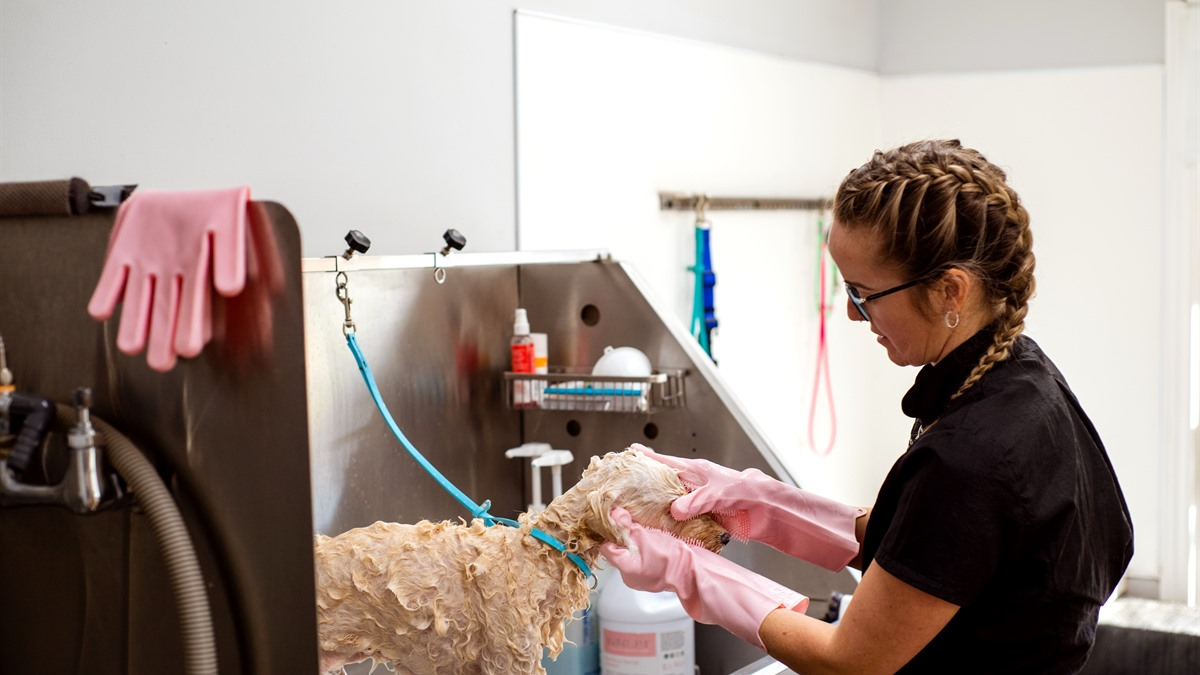
Getting how often to bathe a dog with allergies right also depends on the technique used during each bath, not just the calendar.
- Use lukewarm, not hot, water. Hot water can worsen itching and inflammation on already-irritated skin.
- Apply medicated or allergy-specific shampoo and let it sit. Many allergy shampoos need several minutes of contact time to work rather than a quick rinse — check the product instructions specifically, since this varies by formula.
- Rinse thoroughly. Leftover shampoo residue can itself irritate sensitive skin, so rinse longer than feels necessary.
- Pat dry rather than rub. Vigorous rubbing can aggravate already-inflamed skin; a gentle pat-dry with a towel is gentler.
- Avoid scented products afterward. Perfumed sprays or conditioners can reintroduce the kind of irritants a medicated bath just removed.
What Kind of Shampoo Matters as Much as Frequency
The product you use is just as important as how often to bathe a dog with allergies.
How often to bathe a dog with allergies only tells half the story — using the wrong shampoo at the right frequency can still leave a dog worse off. A vet-recommended, allergy-specific or medicated shampoo is formulated differently from a standard pet shampoo, often including ingredients that soothe inflammation or specifically target yeast and bacteria rather than just cleaning the coat. Using a human shampoo or a generic pet shampoo not suited to allergic skin can undermine even a well-planned bathing schedule.
Common Mistakes When Figuring Out How Often to Bathe a Dog With Allergies
Getting how often to bathe a dog with allergies wrong usually comes down to one of these avoidable mistakes.
- Using human shampoo. Human skin and dog skin have a different pH balance, and human shampoo can worsen irritation on allergic skin specifically.
- Stopping too early. Symptoms often improve before the underlying issue is fully resolved, and stopping a bathing routine too soon lets symptoms rebound.
- Skipping the vet entirely. Managing symptoms with bathing alone, without ever identifying the underlying allergy type, often means treating the same flare-ups indefinitely instead of addressing the root cause.
- Bathing during an active flare without the right product. Increasing frequency without also switching to an appropriate medicated shampoo can do more harm than good.
Signs You’re Bathing Too Often or Not Often Enough
Your dog’s skin and coat will usually tell you if you’ve gotten how often to bathe a dog with allergies right.
- Too often (or wrong product): Increased dryness, flaking, or a coat that feels brittle after bathing
- Not often enough: Persistent odor, greasy patches, or itching that doesn’t improve between baths
- Getting it right: Skin that looks calmer within a few bath cycles, reduced odor, and a coat that isn’t excessively dry or oily
If you’re not seeing improvement after a few weeks on a consistent schedule, that’s a sign to loop your vet back in rather than just bathing more frequently on your own — persistent allergic skin issues often need a broader treatment plan beyond bathing alone. The MedVet guide to bathing recommendations for allergic skin disease is a useful vet-written reference for more detail on this.
Building a Bathing Routine With Your Vet
A vet visit is the best way to nail down exactly how often to bathe a dog with allergies in your specific case.
Because how often to bathe a dog with allergies depends so heavily on the specific cause and severity of the allergy, the most reliable schedule is one built with your vet rather than a fixed number applied to every dog. A vet can identify whether the allergy is environmental, food-related, or flea-related, which changes not just bathing frequency but the whole management plan. If your dog’s allergies seem severe or aren’t responding to a consistent bathing routine, our Low-Cost Veterinary Clinic guide covers affordable options for getting a proper diagnosis rather than guessing at home indefinitely.
How Often to Bathe a Dog With Allergies: The Bottom Line
There’s no single universal answer to how often to bathe a dog with allergies — mild cases often do well with a bath every one to two weeks, seasonal environmental allergies may call for weekly baths during trigger season, and active infections sometimes need bathing every two to three days under a vet’s direction. The right shampoo matters as much as the schedule itself, and persistent symptoms despite consistent bathing are a sign to get your vet involved rather than bathing even more frequently on your own.
FAQ
Can I bathe my dog too often if they have allergies?
Yes — even with allergic skin, over-bathing with the wrong product can still strip protective oils and worsen dryness, so the shampoo type matters as much as frequency.
What shampoo should I use for a dog with skin allergies?
A vet-recommended, allergy-specific or medicated shampoo formulated for sensitive or allergic skin generally works better than a standard pet shampoo.
How often should I bathe a dog with seasonal allergies?
Weekly baths during peak pollen or allergy season are often recommended, tapering back to every one to two weeks outside that window.
When should I see a vet about my dog’s allergies instead of just bathing more?
If symptoms don’t improve after a few weeks of a consistent bathing routine, or if you notice broken skin, strong odor, or hair loss, it’s time for a vet visit rather than adjusting the bathing schedule alone.
Is it normal for allergic dogs to need baths more than once a week?
During an active flare-up or a diagnosed infection, yes — more frequent bathing is sometimes specifically recommended short-term, then tapered once symptoms improve.
Can diet affect how often I need to bathe my dog for allergies?
Yes — if the allergy is food-related, addressing the diet directly can reduce flare-ups over time, which may also reduce how often intensive bathing is needed.
Every dog’s allergies have different triggers and severity — a veterinarian can help build a bathing and treatment plan specific to your dog’s actual condition. Last verified September 2026.