Crate training a puppy works best as a slow, predictable process rather than something you rush through in a weekend — most puppies genuinely adjust within a few weeks, though a small number take a few months, and that’s normal too. Done right, the crate becomes your puppy’s own space, not a punishment, and it makes house training, travel, and alone time dramatically easier.
This guide walks through the exact step-by-step process, an age-based schedule for how long your puppy can actually hold their bladder, and the mistakes that most often derail crate training a puppy before it gets started.
Quick Answer
- Crate training a puppy typically takes a few weeks of consistent short sessions, not one long session
- Start with the door open and treats inside — never force a puppy into the crate
- How long a puppy can hold their bladder depends almost entirely on age, not willpower
- Whining should be met with silence and patience, not release — releasing during whining teaches a puppy that whining works
- The crate should never be used as punishment; it should be the most boring, safe, comfortable place in the house
Why Crate Training a Puppy Actually Works
Dogs are naturally den animals, and a properly introduced crate taps into that instinct — it becomes a small, enclosed space that feels safe rather than confining. Crate training a puppy also does double duty for house training, since puppies instinctively avoid soiling the space they sleep in, which builds bladder control faster than free-roaming a young puppy around the house.
How Long Can a Puppy Actually Stay in a Crate?
This is the single most important thing to get right when crate training a puppy — asking too much too soon is the #1 reason it fails.
| Puppy Age | Daytime Crate Time | Overnight |
|---|---|---|
| 8–10 weeks | 30–60 minutes | Not yet — expect 1–2 night wake-ups |
| 10–12 weeks | Up to 2 hours | 3–4 hours before a bathroom break |
| 3–4 months | Up to 3 hours | 4–5 hours |
| 4–6 months | Up to 4 hours | 5–6 hours |
| 6+ months | Up to 6 hours | Most of the night |
As a rule of thumb, puppies and senior dogs should never be crated for more than 3–4 hours during the day regardless of age, even once they’re physically capable of holding it longer — a crate isn’t meant to be a full-day containment solution.
Step-by-Step: Crate Training a Puppy From Day One
- Introduce the crate with the door open. Place it in a common area, toss treats inside, and let your puppy explore and enter on their own terms. Never push or force a puppy into the crate — that single mistake can undo weeks of progress.
- Feed meals inside the crate with the door open, so the crate starts building a positive association through food before anything else.
- Start short, closed-door sessions. Once your puppy enters willingly, close the door for 30–60 seconds while you stay in the room, then open it calmly. Gradually extend this in 5-minute increments over several sessions.
- Build distance before duration. With the door closed, step one pace away, then return and reward. Slowly increase distance until you can leave the room entirely.
- Practice real absences. Once your puppy tolerates a closed door and you being out of sight, start leaving the house for short trips — a few minutes at first, working up from there.
- Never release during whining. Wait for even a few seconds of quiet before opening the door — releasing mid-whine teaches your puppy that whining gets results.
- Repeat at night using the same principles, starting with the crate near your bed if needed and moving it gradually if you want your puppy sleeping elsewhere long-term.
Daytime vs. Overnight Crate Training Schedule
Crate training a puppy for daytime naps and overnight sleep actually calls for slightly different handling.
| Daytime | Overnight | |
|---|---|---|
| Goal | Short, positive independence practice | Full-night settling with minimal wake-ups |
| Crate location | Common area, near activity | Bedroom or nearby, at least at first |
| Before crating | Bathroom break + short play to tire them out | Bathroom break, calm wind-down, no rough play |
| If they whine | Wait for a pause, then release calmly | Take out for a quick, boring bathroom break only |
Common Mistakes That Derail Crate Training a Puppy
- Using the crate as punishment. A puppy sent to the crate after “bad” behavior will start associating it with being in trouble instead of safety, which undoes crate training a puppy almost immediately.
- Going too long, too soon. Matching crate time to the age chart above prevents accidents that set training back and make your puppy distrust the crate.
- Releasing during whining or barking. This is the single most common reason crate training a puppy stalls out — it accidentally teaches a puppy that protest behavior works.
- Skipping the open-door phase. Puppies that are closed in before they’ve chosen to enter voluntarily tend to resist far more than puppies given time to explore first.
- Crating right after high-energy play. A puppy with pent-up energy will struggle far more in a crate than one who’s had a chance to settle first.
Choosing the Right Crate Size
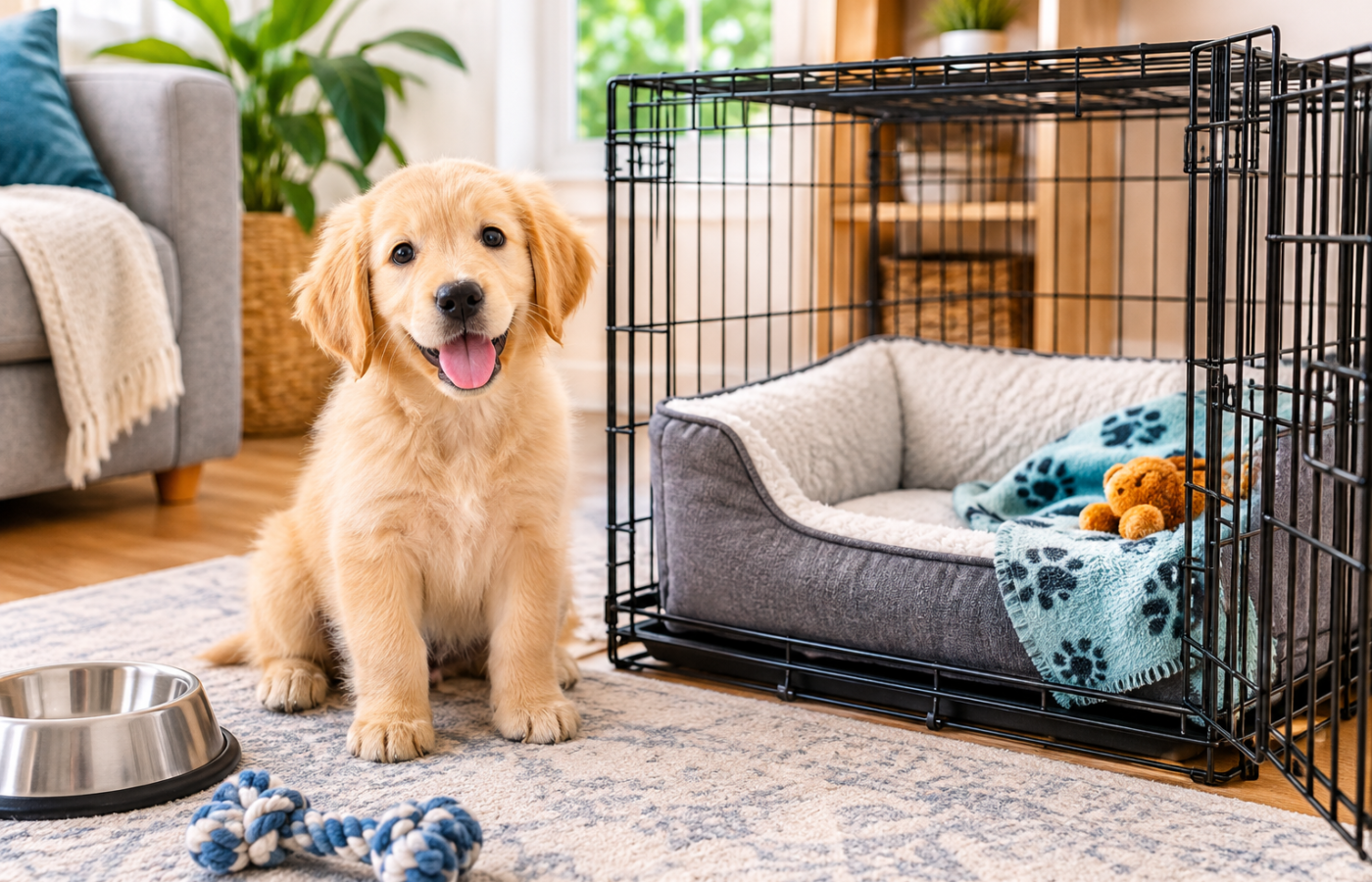
A crate that’s too large defeats part of the purpose — puppies can potty in one corner and sleep in another, undermining the den instinct that makes crate training a puppy work in the first place. The crate should be just big enough to stand up, turn around, and lie down comfortably. Many wire crates come with adjustable dividers specifically so you can size the space up as your puppy grows, rather than buying multiple crates.
For a deeper library of training resources beyond this guide, our Dog Training Books roundup covers structured options by training goal, including puppy-specific picks.
The AKC’s step-by-step crate training guide is a solid additional reference if you want more detail on the incremental-distance method specifically.
Crate Training a Puppy: The Bottom Line
Crate training a puppy is less about a single technique and more about pacing — matching crate time to your puppy’s actual age, never forcing entry, and never releasing during whining. Most puppies show real comfort with the crate within two to three weeks of consistent short sessions, with full nighttime settling often taking a bit longer. Rushing any of these steps is the most common reason owners end up starting over.
FAQ
How long does it take to crate train a puppy?
Most puppies adjust within a few weeks of consistent, short training sessions, though some take a few months — both are normal, and pace matters more than speed.
Should I let my puppy cry it out in the crate?
No — but you should also avoid releasing them mid-whine. Wait for a brief pause in the crying before opening the door, so your puppy learns that calm, not protest, gets them out.
What size crate do I need for crate training a puppy?
Just large enough to stand, turn around, and lie down — too much extra space lets a puppy potty in one corner and sleep in another, which slows progress.
Can I crate train an older puppy or adult dog the same way?
Yes, the same step-by-step approach works at any age, though older dogs with no crate history may need a bit more patience during the open-door introduction phase.
Every puppy adjusts at a different pace — if crying, accidents, or resistance continue well past the timelines above, a certified trainer can help identify what’s specifically getting in the way. Last verified September 2026.